



What Is the Canine Gut Microbiome?
Every dog's digestive tract is home to trillions of microorganisms, mostly bacteria, plus some yeasts and other microbes, collectively called the gut microbiome. Far from being passive passengers, this community does real work: it helps break down fibres the dog's own enzymes can't digest, produces certain short-chain fatty acids that fuel the cells lining the intestine, competes with harmful bacteria for space and resources, and interacts constantly with the immune system that sits just beneath the gut wall. A large share of a dog's immune activity is trained and regulated in and around the gut, which is part of why digestive health and overall health are so closely linked.
The microbiome isn't one fixed thing. It varies between individual dogs, shifts with age, and can be influenced by diet, environment, medications, and stress. A puppy's gut community starts developing at birth and continues maturing through the first months of life, shaped heavily by what it eats and its early environment. By adulthood, most healthy dogs settle into a relatively stable, individual microbial pattern, though "stable" doesn't mean unchanging; it shifts in small ways in response to daily life.
Probiotics vs Prebiotics vs Synbiotics
These three terms get used loosely, so it's worth being precise:
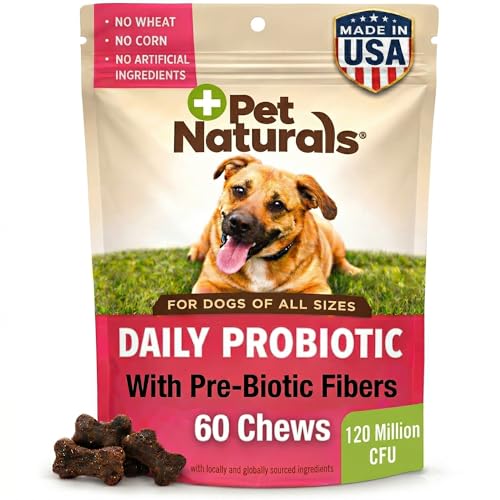
- Probiotics are live microorganisms, usually specific bacterial strains, given by mouth with the aim of contributing to or supporting the existing gut community.
- Prebiotics are not living organisms at all. They're specific types of fibre (such as FOS or inulin, commonly seen on labels) that the resident bacteria can ferment and use as food. Prebiotics feed the community that's already there rather than adding new members to it.
- Synbiotics are simply products that combine both, live cultures plus the fibre meant to help support them.
What Disrupts the Balance (Dysbiosis)
When the gut community's normal balance is disturbed, the result is sometimes called dysbiosis: a shift in the relative numbers and types of gut microbes. Common disruptors include a course of antibiotics (which can't distinguish helpful bacteria from harmful ones), a sudden diet change, intestinal infections, and significant stress. Dysbiosis doesn't always cause visible symptoms, but when it does, softer stools, increased gas, or a temporarily unsettled tummy are typical. It's a shift in balance, not a diagnosis in itself, persistent or severe symptoms deserve veterinary assessment rather than assumptions about the cause.
Strains and CFU, at a High Level
Two label terms are worth understanding conceptually, without chasing a specific number:
- Strain refers to the exact sub-type of bacteria used, for example, a particular strain within the Lactobacillus or Enterococcus groups. Different strains have been studied for different purposes, and a strain used in human research doesn't automatically behave the same way, or at the same dose, in a dog.
- CFU (colony-forming units) is a count of live organisms per serving. A higher CFU number is not automatically a better or more effective product; what matters more is that viable cultures survive manufacturing, shipping, and storage to actually reach the gut. This guide intentionally does not recommend a target CFU or strain, that's a decision for you and your vet, based on your individual dog.
What the Evidence Honestly Shows
Interest in the gut microbiome has grown fast in both human and veterinary research, and it's easy to find confident-sounding claims online. The honest picture is more measured: some clinical research in dogs supports probiotics as a reasonable option for helping manage mild, short-term digestive upsets and for use alongside antibiotic courses, but the evidence base is still smaller and less mature than in human medicine, strain-specific, and not consistent across every product or every dog. Claims that a probiotic will resolve chronic disease, replace veterinary diagnosis, or work identically for every dog go beyond what current research supports. Treat bold marketing claims with healthy scepticism and treat your own vet's read on your individual dog as the more reliable guide.
Diet Matters More Than Any Supplement
It's worth keeping supplements in perspective: for most dogs, the biggest, most consistent influence on gut health is diet, a consistent, appropriate food, fed in stable amounts, with treats and table scraps kept to a sensible minimum. A probiotic is a small addition on top of that foundation, not a substitute for it. If a dog has ongoing digestive issues, the food and feeding routine are usually the first things worth discussing with a vet, before or alongside any supplement.
The Bottom Line
The gut microbiome is a genuinely important part of canine health, and probiotics and prebiotics are legitimate tools some owners use to help support it. But the science is still developing, individual dogs respond differently, and no supplement replaces a good diet or a vet's assessment of a dog who is genuinely unwell. Understanding the basics helps you read labels and marketing claims with a healthier dose of scepticism.