Dog Travel Gear from Airline Carriers to Car Harnesses and Hiking Backpacks
Comprehensive guide to safe automotive, air, and hiking transportation for dogs. Authoritative veterinary guidelines, anatomical parameters, and sub-category master breakdown.
- 4
- Sub-Categories
- 8
- In-Depth Guides
- 12
- Products Reviewed
- Aug 2026
- Last Reviewed


Recommended Products


Sub-Category Micro Hubs
In-depth technical analyses, material specifications, and comparative evaluation.
Airline-Approved Carriers
Detailed evaluation of anatomical parameters, safety standards, and practical recommendations for airline-approved carriers.
Car Safety Harnesses & Crates
Detailed evaluation of anatomical parameters, safety standards, and practical recommendations for car safety harnesses & crates.
Hiking Backpacks & Travel Strollers
Detailed evaluation of anatomical parameters, safety standards, and practical recommendations for hiking backpacks & travel strollers.
Temperature Control & Travel Hydration
Detailed evaluation of anatomical parameters, safety standards, and practical recommendations for temperature control & travel hydration.
Travelling with a dog means matching the right piece of gear to the right mode of transport. A soft-sided airline-approved carrier for a cabin flight is a completely different product from a crash-tested dog car harness or a hiking dog backpack. In short, dog travel gear falls into four categories. There are carriers for flying, restraints for driving, backpacks and strollers for walking or hiking, and climate-control or hydration gear that supports all three.
Choosing correctly protects your dog physically. It keeps you compliant with airline and vehicle-safety rules. And it makes the trip less stressful for everyone in the car or cabin. This hub maps out those categories and the criteria that matter when you're comparing products. It also covers how to think about sizing, safety, and welfare before you buy.
None of the sections below are exhaustive buying guides. Each links through to a dedicated sub-hub with deeper reviews, sizing charts, and, where one exists, a "best of" round-up. Think of this page as the router, not the destination.
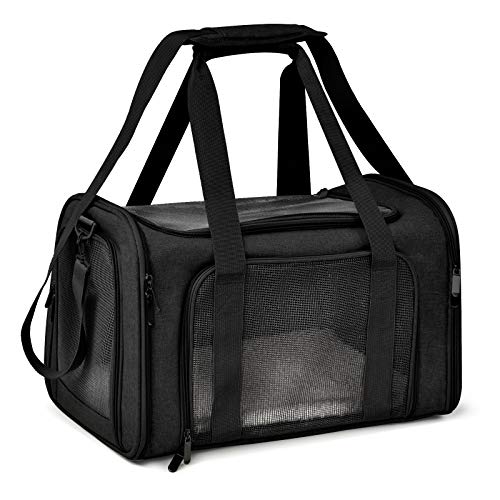
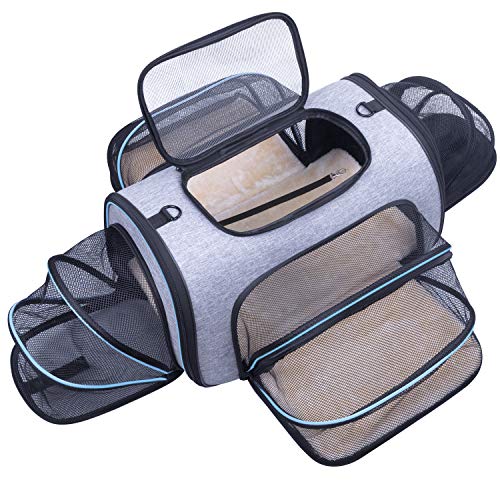
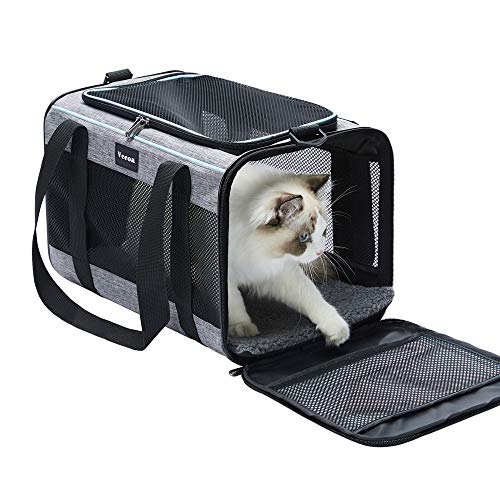
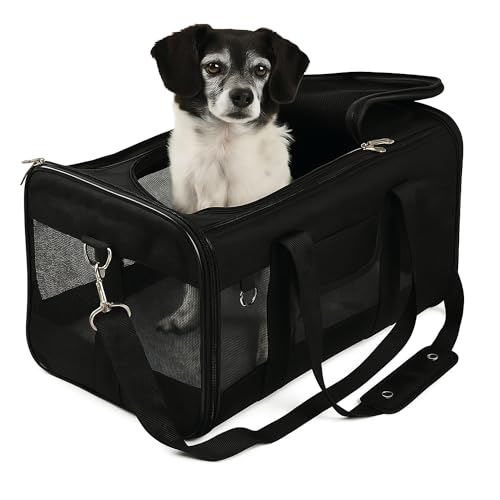
Airline-approved carriers are purpose-built to satisfy a specific airline's under-seat dimensions and ventilation requirements, a narrower bar than "any soft-sided bag will do." These carriers are typically constructed from mesh-panelled, collapsible fabric with a rigid or semi-rigid base. They're sized so the dog can stand and turn around inside. If your trip involves a flight, start at the Airline-Approved Carriers sub-hub, which breaks down cabin-size limits by carrier type and links to our best airline-approved dog carriers round-up for a head-to-head comparison.
Car safety harnesses and crates exist to keep a dog restrained and reduce injury risk in a vehicle. That might be a crash-tested dog car harness that clips into a seatbelt buckle. Or it might be a metal or plastic dog crate secured in the cargo hold. This is the category with the most safety nuance. Not every harness marketed as "crash tested" has been tested to the same standard. The Car Safety Harnesses & Crates sub-hub is worth reading in full before you buy. Our best dog car harness guide compares the options with independent testing behind them.
Hiking backpacks and travel strollers cover the gear that gets a dog moving under their own power over longer distances. They also give an aging, small, or recovering dog a way to still come along. A hiking dog backpack ranges widely. A simple front-carry sling suits puppies, while a structured backcountry pack lets an adult dog carry their own supplies. A travel dog stroller matters most for senior dogs, post-surgery recovery, or very small breeds on hot pavement. See the Hiking Backpacks & Travel Strollers sub-hub for fit and load-capacity guidance.
Temperature control and travel hydration gear, a cooling mat for dogs, insulated crate covers, a portable dog water bottle, and hydration packs, isn't a mode of transport on its own. It's the layer that makes every other category safe in hot or cold conditions. The Temperature Control & Travel Hydration sub-hub covers what actually helps versus what's marketing.
Across all four categories, five criteria decide whether a piece of travel gear is right for your dog.
Sizing comes first and is the most common reason gear gets returned. A dog crate, carrier, or harness that's too small restricts natural movement. One that's too large won't keep the dog secure, and in a moving vehicle, it allows dangerous momentum. Each sub-hub has category-specific sizing guidance, and the section below gives you a general framework to start from.
Ventilation matters most for carriers and crates. Airflow determines how comfortable, and in hot weather how safe, the dog is inside an enclosed space. Look for mesh panels on at least two sides, not just the front.
Safety and crash-testing apply specifically to car restraints. A harness or crate advertised for car use should ideally be crash-tested against a recognised standard. Being described as "heavy duty" on a label isn't enough. The Center for Pet Safety independently crash-tests pet travel products and publishes results, a more reliable reference point than marketing copy alone.
Airline rules apply to an airline-approved carrier and, indirectly, to any dog crate used for cargo hold travel. Airlines set their own under-seat dimensions, weight limits, and breed restrictions, and these change often. The IATA Live Animals Regulations is a useful starting reference for the international baseline. Always confirm exact rules directly with your specific airline before booking. Carrier dimensions and pet policies vary by carrier, and can differ from what a product listing claims.
Materials and durability determine how a product holds up to repeated travel and an anxious or destructive dog. Look for ripstop fabric, reinforced stitching, chew-resistant mesh, and non-toxic finishes. This matters more for backpacks and everyday-use carriers than for a crate that only comes out twice a year.
If you already know which sub-category you need, the money pages for best airline-approved dog carriers and best dog car harness apply these criteria to specific tested products.
Getting the size right depends on measuring your dog, not guessing from breed name alone. A "medium" carrier from one brand can run smaller than a "medium" from another.
| Measurement | Why it matters | How to measure |
|---|---|---|
| Weight | Sets the load rating for carriers, backpacks, and strollers | Use a home scale; weigh yourself holding the dog, then subtract your own weight |
| Length (nose to base of tail) | Determines carrier/crate floor length | Dog standing, measure in a straight line |
| Height (floor to top of head/ears, standing) | Sets minimum carrier/crate ceiling height | Dog standing naturally, not stretched |
| Girth (widest part of chest) | Sets harness strap sizing | Wrap a soft tape just behind the front legs |
As a general rule, a dog should be able to stand up fully, turn around, and lie down flat in a dog crate or carrier without their head or shoulders touching the top or sides. For harnesses, you should be able to fit two flat fingers between the strap and the dog's body. That's snug enough to stay secure in a sudden stop, and loose enough not to restrict breathing or movement.
By car, the goal is restraint, not confinement for its own sake. A loose dog in a moving vehicle is a hazard to themselves, to passengers, and to airbag deployment zones. Options range from a crash-tested dog car harness clipped to the existing seatbelt, to a raised dog car seat for a small breed, to a secured travel dog crate in the boot or cargo area. A back-seat barrier used alongside a harness is another common setup. The Car Safety Harnesses & Crates sub-hub walks through which setup suits which vehicle and dog size.
By plane, rules split into two types. In-cabin travel is under the seat in front of you, and it's size- and weight-limited. Cargo hold or checked travel is the other option. Most veterinary and welfare organisations advise against cargo travel for brachycephalic breeds due to heat and breathing risk. The AVMA's pet travel guidance is a useful independent reference on the health considerations either way. Start at the Airline-Approved Carriers sub-hub for cabin-specific sizing.
On foot, backpacks and strollers extend how far and how comfortably a dog can join you. A fit adult dog can carry their own light pack on a hike. A senior or small dog can instead ride in a travel dog stroller on a long walk or hot pavement. See the Hiking Backpacks & Travel Strollers sub-hub for load limits and terrain fit.
Heat is the single biggest risk across every category on this page. A dog left in a parked car, even briefly and with windows cracked, can overheat within minutes. The same risk applies to an enclosed carrier left in direct sun or a poorly ventilated dog crate in a warm cargo hold. Heat left unaddressed can progress to heatstroke fast. Always plan for shade, airflow, and access to water, and check the Temperature Control & Travel Hydration sub-hub for gear that genuinely helps versus products that just claim to.
Center for Pet Safety and What "Crash Tested" Really Means
On crash safety, be honest with yourself about what a product actually protects against. "Crash tested" on a label doesn't guarantee an independent, standardised test was used. Look for named test protocols or third-party validation such as the Center for Pet Safety rather than taking marketing language at face value. No harness or crate can fully eliminate injury risk in a serious collision. A properly fitted, tested product still meaningfully reduces that risk compared to an unrestrained dog.
On cargo-hold and unattended transport, treat it as a last resort rather than a default. Breathing difficulty, temperature extremes, and stress are all elevated for dogs travelling outside the cabin, and brachycephalic breeds face materially higher risk. If cargo travel is unavoidable, confirm your airline's specific breed and crate requirements well in advance.
Soft-sided carriers are the default for in-cabin flying and everyday errands: they compress slightly to fit under a seat, weigh less, and fold flat for storage between trips. Hard-sided carriers give more crush protection and are the standard for cargo hold or checked travel, where a carrier can be stacked or bumped during handling. For a calm dog making a short cabin flight, soft-sided is usually the better fit; for cargo travel, or a dog that chews or scratches at fabric, a hard-sided or IATA-compliant kennel is the safer call.
A dog meeting their carrier for the first time at the airport or on travel day is set up to be stressed. Start weeks ahead: leave the carrier open in a normal living space with a blanket and treats inside so it becomes a familiar resting spot rather than a novel, alarming box. Feed a few meals near or inside it, then work up to short closed-door periods around the house before ever moving it into a car. The same gradual approach applies to a car crate or car harness. Clip a dog in for short, low-stakes drives before a long trip so the first experience of restraint isn't also the first experience of a multi-hour journey.
Carsickness in dogs is common, especially in puppies whose inner ear balance system is still developing, and it often improves with age and repeated short trips. Feeding a light meal a few hours before travel rather than right before, keeping the car cool, and facing a crate or carrier forward can all reduce nausea. A dog that still struggles with carsickness on longer trips is worth discussing with a vet, since anti-nausea medication is available for dogs that don't grow out of it.
Travel anxiety and carsickness often overlap but aren't the same problem. A dog with travel anxiety benefits from the same gradual carrier and car-restraint conditioning described above, plus familiar bedding or a worn item of clothing that smells like home. For hydration, a spill-proof portable water bottle made for dogs or a leak-proof travel bowl matters more than most owners plan for; offer water at every stop on a road trip and check the Temperature Control & Travel Hydration sub-hub for gear built for the car and trail specifically.
An everyday soft-sided carrier for short trips and vet visits sits at the affordable end of the category. Airline-approved carriers cost more because they're built to specific under-seat dimensions with reinforced structure and better ventilation, and that's not a place to buy the cheapest option that claims compliance. Crash-tested car harnesses and Center for Pet Safety-rated crates also command a premium over generic "car use" gear, and it's justified: this is the one category on this page where a cheaper, untested product genuinely increases injury risk in a collision. Hiking backpacks range widely by load capacity and material, while cooling mats and hydration gear are the most affordable additions and worth having regardless of how often you travel.
Trusting "crash tested" without checking the standard. The phrase alone isn't a certification. Look for a named, independent protocol like Center for Pet Safety rather than taking the label at face value.
Buying carrier size from breed averages instead of measuring. Under-seat carrier dimensions are strict, and a carrier that's a fraction too tall or long can get a dog denied boarding at the gate.
Skipping the practice runs. A dog's first time in a crate, carrier, or car harness should never be travel day itself. Build in short, calm exposure sessions well before departure.
Assuming a cracked window is enough on a warm day. It isn't. Heat builds in a parked car within minutes regardless of a cracked window, and this applies equally to a covered carrier or a crate left in a hot boot.
Choosing cargo hold travel for a brachycephalic dog without checking airline restrictions. Many airlines already restrict flat-faced breeds from cargo travel due to documented heat and breathing risk; confirm this before booking rather than after.
These four categories aren't independent purchases. They're stages of the same trip. A flight typically starts with an airline-approved carrier. It continues with a dog car harness or dog crate for the drive to and from the airport. A cooling mat for dogs or hydration accessory travels inside or alongside whichever carrier you're using that day. A hiking trip swaps the carrier for a hiking dog backpack but keeps the same hydration and temperature-control layer. Work through the sub-hubs above in the order that matches your actual trip: car, then plane or trail, then climate gear. That approach gets you to a complete kit faster than shopping each category in isolation.
What makes a dog carrier airline-approved? It meets a specific airline's under-seat dimensions and ventilation rules, not a universal standard. Always confirm the exact figures with your airline before buying, since limits vary by carrier and even by aircraft type.
Soft-sided or hard-sided, which dog carrier is better for travel? Soft-sided suits in-cabin flying and everyday use; hard-sided or IATA-compliant kennels suit cargo hold travel, where crush protection during handling matters more than compressibility.
What's the safest way for a dog to travel in a car? A crash-tested harness clipped to the seatbelt, a Center for Pet Safety-rated crate secured in the cargo area, or a properly fitted car seat for a small dog, paired with a back-seat barrier if the dog rides loose in the back.
My dog gets carsick on road trips, what can help? A light meal a few hours before travel, a cool car, forward-facing crate placement, and short conditioning trips before a long one. Persistent carsickness in an adult dog is worth a vet conversation.
How can I ease my dog's anxiety before a trip? Gradual, positive exposure to the carrier or crate for weeks beforehand, familiar bedding, and short practice drives rather than a first-ever long trip on travel day.
Are dog strollers useful for senior or injured dogs? Yes. A stroller lets a dog with mobility limits, recent surgery, or arthritis still join walks and outings without the physical strain of covering the distance on foot.
Is raw chicken bones safe for a dog in an airline-approved carrier? This is really a feeding-safety question rather than a carrier question. See our dedicated answer at Is raw chicken bones safe and recommended for Airline-Approved Carriers? for the full explanation before a flight.
Can I use a memory foam bed cover inside a carrier? Padding choice affects both comfort and temperature regulation in an enclosed carrier. Full answer here: Is memory foam bed cover safe and recommended for Airline-Approved Carriers?
Is it safe to give raw chicken bones to a dog travelling in a car crate? Motion and confinement change the choking-hazard calculus versus feeding at home. See Is raw chicken bones safe and recommended for Car Safety Harnesses & Crates?
Should I line a car crate with a memory foam bed cover? Not every cushioning product is appropriate for a secured travel crate. Details at Is memory foam bed cover safe and recommended for Car Safety Harnesses & Crates?
Is a memory foam pad suitable inside a hiking backpack? Weight and heat retention both matter differently on the trail than at home. See Is memory foam bed cover safe and recommended for Hiking Backpacks & Travel Strollers?
For more travel-specific questions, visit the full Carriers & Travel FAQ hub.