Chew, Puzzle and Fetch Dog Toys for Every Kind of Dog
Chew toy rubber Shore hardness, Nina Ottosson puzzle levels, Kong freezing recipes, and tennis ball felt hazards. Authoritative veterinary guidelines, anatomical parameters, and sub-category master breakdown.
- 3
- Sub-Categories
- 6
- In-Depth Guides
- 18
- Products Reviewed
- Jul 2026
- Last Reviewed


Recommended Products


Sub-Category Micro Hubs
In-depth technical analyses, material specifications, and comparative evaluation.
Heavy Chewer Toys
Detailed evaluation of anatomical parameters, safety standards, and practical recommendations for heavy chewer toys.
Puzzles & Mental Enrichment
Detailed evaluation of anatomical parameters, safety standards, and practical recommendations for puzzles & mental enrichment.
Fetch & Tug Toys
Detailed evaluation of anatomical parameters, safety standards, and practical recommendations for fetch & tug toys.
Dog toys do far more than fill an afternoon. The right toy gives a dog a legal outlet for chewing. It works his brain the way foraging and problem-solving would in the wild. It gives you a shared activity that builds trust between you. Veterinary behaviourists group this under "environmental enrichment," structured ways to meet a dog's physical and mental needs indoors (Fear Free Happy Homes on enrichment). A good toy collection covers three jobs at once. It protects your dog's teeth and jaw by giving them something appropriate to gnaw on instead of furniture. It prevents the anxiety and destructiveness that come from an under-stimulated brain. It turns playtime into bonding time, whether that is a tug session, a fetch routine, or you hiding treats in a puzzle feeder together. This page maps out the dog toys categories that matter, how to choose safely for your individual dog, and where to go next depending on what problem you are solving.
Not every dog suits the same dog toys, and lumping them all into one drawer is how owners end up with a $20 plush toy in pieces within five minutes. The three broad families below cover almost every situation you will run into, and each has its own dedicated hub with deeper buying guidance.
Heavy chewer toys are built for dogs who chew with real force. Labradors, mastiffs, working breeds, and honestly a lot of dogs under two years old going through teething and adolescence all need this category. These toys use dense rubber, nylon composites, or reinforced construction designed to survive sustained gnawing rather than a few sessions of light mouthing. Choosing the wrong hardness here is a genuine dental risk, not just a wasted purchase. A rock-hard toy can fracture a tooth just as easily as a bone can. Visit the Heavy Chewer Toys hub for material breakdowns, durability testing, and how to size a chew toy to your dog's bite strength.
Puzzle toys for dogs and mental enrichment solve a different problem: boredom that has nothing to do with jaw strength. Treat-dispensing puzzles, snuffle mats, and interactive dog toys make a dog work for their food or treats the way scavenging and foraging would in a natural environment. This is one of the most reliable ways to reduce problem behaviours linked to under-stimulation (American College of Veterinary Behaviorists on enrichment). These are especially useful for dogs left alone during the day, senior dogs who need gentler engagement, or any dog showing signs of boredom like excessive licking, pacing, or destructive chewing outside of chew time. The Puzzles & Mental Enrichment hub covers difficulty levels, how to introduce a puzzle without frustrating your dog, and rotation strategies so novelty does not wear off.
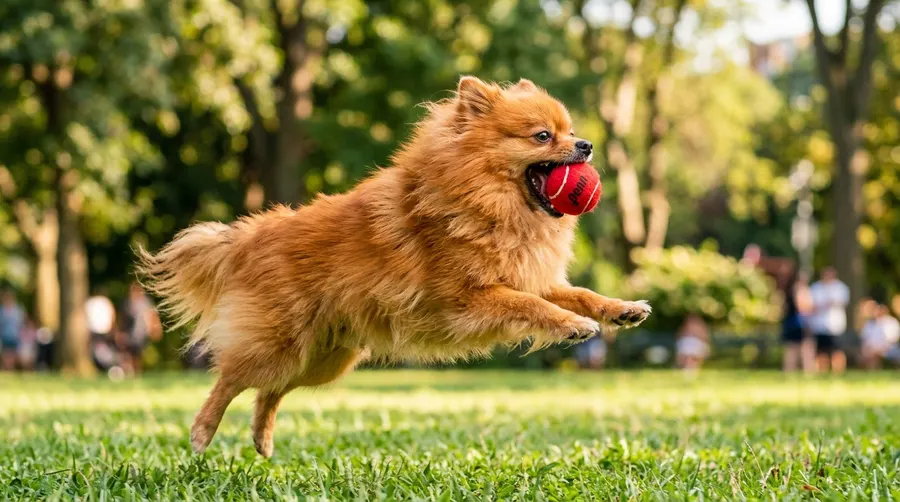
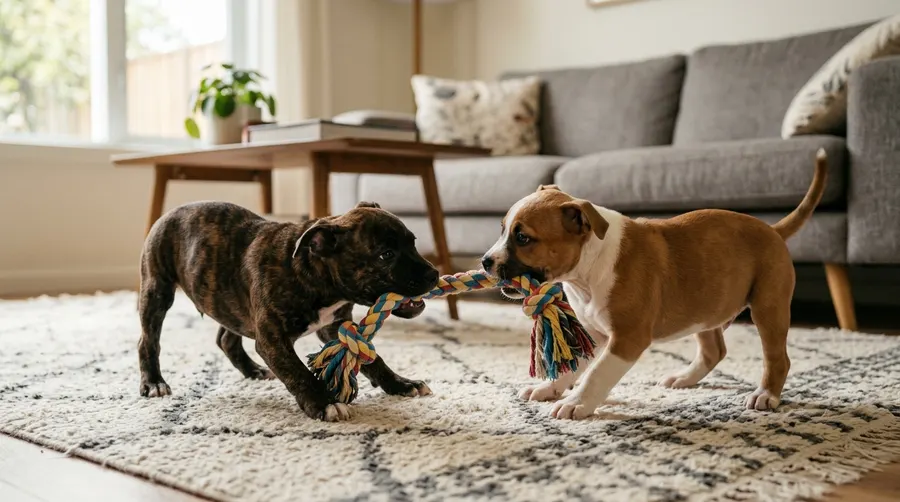
Fetch toys for dogs and tug toys for dogs are about movement, drive, and interaction. Balls, flying discs, tug ropes, and launchers give high-energy dogs, and honestly most dogs, a structured way to burn physical energy while practising impulse control (drop it, wait, release). Tug play in particular gets a bad reputation it does not deserve. Used with basic rules, it is a safe way to build engagement and is not linked to increased aggression in well-socialised dogs. The Fetch & Tug Toys hub breaks down which toys suit which play style, retrieval training basics, and safety around tug technique.
Start with how your dog actually chews and plays, not with what looks appealing on a shelf. A dog who barely dents a rope toy in a year needs a very different product from one who can destroy so-called indestructible dog toys in twenty minutes. Watch your dog's normal chewing style for a week before buying anything new. Do they gnaw slowly and rhythmically, or clamp down and shred? Do they carry toys around gently, or immediately try to disembowel anything soft?
Size and energy level matter just as much as chew style. A toy sized for a Chihuahua is a choking risk in a Great Dane's mouth, and a toy built to survive a beagle will bore a determined mastiff in a single session. As a rough rule, size the toy to your dog's head. Anything small enough to be swallowed whole or lodged in the back of the throat is a hazard, regardless of how gently your dog normally plays (VCA Hospitals on choosing safe toys).
The durability-versus-dental-fracture trade-off deserves its own thought, because it is the one owners get backwards most often. Harder is not always safer. Very rigid materials like real bone, hard nylon, and some antler chews can crack a dog's molars under sustained pressure, particularly in strong chewers who apply their full bite force. A widely used rule of thumb from veterinary dentistry: if you cannot dent a chew with your own thumbnail, or if it would not be comfortable to hit your own kneecap with it, it is too hard for your dog's teeth. This is exactly the calculation covered in detail on our best dog toys for heavy chewers guide, which tests specific products against that standard.
Budget and replacement frequency are worth planning for too. Heavy chewers will go through toys faster than gentler dogs no matter how tough the product. It is often cheaper long-term to buy two mid-durability toys and rotate them than one expensive "indestructible" option that still eventually fails. If your dog is more of a puzzle-solver than a chewer, our best dog puzzle toys guide ranks options by difficulty and cleanability. If fetch is the priority, the best dog fetch toys guide compares throw distance, buoyancy for water dogs, and durability against repeated retrieval.
If your dog is a committed chewer, destroying toys in a day, chewing furniture, or teething as a puppy, start with the Heavy Chewer Toys hub and prioritise material density over novelty. Puppy chew toys sized and hardened for teething make a real difference here. Rotate two or three tough options rather than relying on one, so your dog always has a legal outlet available even when one toy needs a wash or a rest.
If the issue is boredom or under-stimulation, a dog who is destructive when left alone, paces, or seems restless despite enough physical exercise, the Puzzles & Mental Enrichment hub is the better starting point. Interactive dog toys tire a dog out differently than physical exercise does. Even fifteen minutes with a treat puzzle can settle a restless dog faster than an extra walk.
If your dog has energy to burn and loves to move, pulling towards other dogs' balls at the park, spinning in circles when a leash comes out, the Fetch & Tug Toys hub will do more for behaviour than any amount of scolding. Structured fetch or tug sessions with clear start and stop cues also double as obedience practice, which is a bonus most owners do not expect going in.
Safety issues with dog toys cluster around a small number of predictable causes. Almost all of them are preventable with a bit of attention.
Size to prevent choking is the single biggest factor. A toy or toy piece that can be swallowed whole, or that lodges across the back of the throat, is an emergency risk regardless of the dog's normal temperament. This applies to tennis balls too. A standard tennis ball is genuinely too small for the mouths of many medium and large dogs and is a known choking hazard, despite being one of the most commonly sold fetch toys on the market (ASPCA on dog toy safety).
Supervise, especially with anything new. The first few sessions with any new toy, particularly a squeaky toy with stuffing or small removable parts, should be supervised. This lets you see how your dog interacts with it before leaving them alone with it. Squeakers in particular are a common cause of emergency vet visits when dogs manage to extract and swallow them.
Retire damaged toys immediately. Once a toy has a tear, an exposed squeaker, cracked hard plastic, or frayed rope with loose threads, its risk profile changes completely. Small pieces that break off become choking or intestinal obstruction hazards, and frayed rope fibres can cause gastrointestinal blockages if swallowed. Check toys weekly if your dog is a heavy chewer. Do not wait for a toy to fail completely before pulling it from rotation.
Follow the hardness rule and avoid toys that are too hard. As covered above, rigid chews like cow hooves, real bones, and very hard nylon are a leading cause of slab fractures, a specific type of broken tooth, in dogs who chew with real force. If you cannot safely press a fingernail into it, treat it as a hard-chew risk rather than an everyday toy. Reserve genuinely hard chews for supervised, limited sessions rather than all-day access.
When in doubt about a specific toy or material, a quick check with your vet costs nothing and can save an emergency room visit later.
A teething puppy needs softer, more flexible chew toys than an adult chewer, since a puppy's baby teeth and developing jaw are more prone to injury from anything genuinely hard, and a cold or textured teething toy can also soothe sore gums during the teething window. As puppies mature into adolescence, roughly six months to two years for most breeds, chewing intensity often peaks. This is exactly when a durable heavy chewer toy earns its price, since adolescent dogs frequently destroy toys sized and built for a calmer adult.
Adult dogs in good health have the widest range of safe options, and toy choice at this stage is mostly about matching your specific dog's chew style, energy level, and play preferences rather than any life-stage restriction. Senior dogs often shift toward gentler play. Softer puzzle toys, slower-paced fetch with a lighter ball, and toys that do not demand hard jaw pressure suit a dog with worn teeth or arthritis better than the dense rubber chews appropriate for a younger, harder-chewing dog. A senior dog that has always loved tug can usually keep playing, just with shorter sessions and closer attention to any sign of discomfort.
Price and durability do not always move together the way owners expect. A cheap toy that survives one determined chewing session, then gets replaced weekly, can cost more over a year than a single well-built option from a reputable durability tier. At the same time, the most expensive "indestructible" branding on the market does not guarantee it will suit your specific dog. As covered above, matching the toy to your dog's actual chew strength matters more than the price tag alone.
A reasonable approach is to budget for variety rather than a single purchase. Keep at least one toy from each core category, chew, puzzle, and fetch or tug, in rotation, and expect the chew toy to need replacing most often for a genuinely heavy chewer. Buying two or three mid-tier chew toys to rotate is usually a better use of a fixed budget than one premium toy used constantly until it fails, since rotation itself also helps prevent boredom regardless of price point.
Novelty matters almost as much as the toy itself when it comes to mental enrichment. A dog that has access to every toy at all times tends to lose interest in all of them, the way a child ignores a toy box left open all day. Keeping most of the collection out of sight and rotating in two or three toys at a time, swapped every one to two weeks, keeps each one feeling new again when it reappears.
A simple storage system, a bin or basket your dog can learn to associate with playtime, also makes rotation easier to maintain as a habit rather than something that only happens when you remember. Store toys with any residue, drool, dirt, or leftover puzzle treats, in a way that keeps them from developing odor or attracting pests between rotations, and give chew toys and puzzle toys a quick wipe-down or wash on the same rotation schedule so hygiene does not lag behind the toy's actual condition.
Chewing, mental enrichment, and physical play are not separate problems with separate solutions. They usually show up together. A dog who is under-exercised often chews more destructively out of frustration. A dog without mental stimulation often directs that extra energy into whatever is nearest, chewed or otherwise. Most well-rounded dogs benefit from having at least one toy from each category in rotation: something tough to gnaw on, something that makes them think, and something that gets them moving. If you are only solving one piece of the puzzle, say, buying tougher chew toys without addressing an underlying boredom problem, the destructive behaviour may persist even with better-built toys. Treating toy selection as a system, matched to your specific dog's chew strength, energy level, and mental needs, gets far better results than chasing the single most durable or most expensive product on the market.
How do I know if a chew toy is too hard for my dog's teeth? Use the thumbnail test. If you cannot dent the surface with firm pressure from your own fingernail, it is likely too hard for sustained chewing and carries a real risk of tooth fracture in strong chewers. See our safety guidance above and the material comparisons in the Heavy Chewer Toys hub for specifics.
Are puzzle toys worth it if my dog is not a big chewer? Yes. Puzzle and enrichment toys target mental stimulation, not chewing, so they are valuable even for gentle, low-chew dogs, and are often the best tool for a bored or anxious dog. Full guidance is in the Puzzles & Mental Enrichment hub.
Is it safe to give my dog raw chicken bones as a chew alternative? This is a common question with real risk trade-offs depending on how the bones are prepared and your dog's chew style. See our dedicated answer at raw chicken bones safety for heavy chewers and the puzzle-specific version at raw chicken bones safety for puzzle toys.
Can tug-of-war make my dog aggressive? No, not when played with basic rules like teaching a reliable "drop it" and stopping the game if teeth touch skin. Tug is a normal, healthy outlet when structured well. More play-specific guidance lives in the Fetch & Tug Toys hub.
How often should I replace my dog's toys? There is no fixed schedule. Replace on condition, not calendar time. Check toys weekly if your dog chews hard, and retire anything with tears, exposed stuffing, cracked plastic, or an exposed squeaker straight away, as covered in the Toy Safety section above.
Is a memory foam bed cover safe to use as a chew toy substitute? It is not designed as one, and foam fragments are a genuine ingestion risk if a dog chews through the cover. See our full answer at memory foam bed cover safety for heavy chewers and memory foam bed cover safety for fetch and tug dogs. For the complete list of answered questions across every toy category, visit the Toys FAQ hub.