



Finding the Right Leash, A Practical Guide
A leash looks like the simplest piece of dog gear you own, right up until the wrong one causes a rope burn, a dropped grip on a busy street, or a dog that has learned it can drag you wherever it wants. The right leash depends less on brand and more on matching leash type, length, and material to how and where you actually walk your dog. This guide breaks down the real trade-offs, including the ones sellers don't put on the packaging.
Leash Types, What Each One Is Actually For
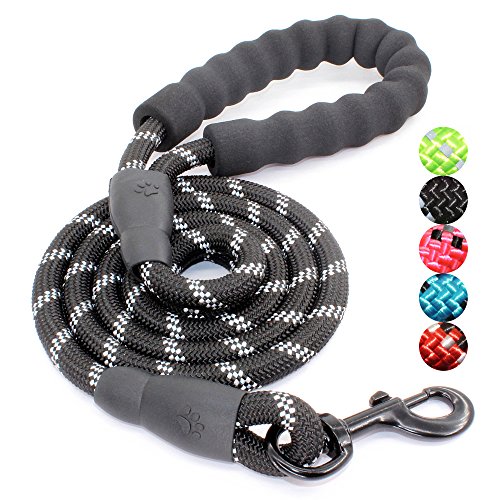
Standard fixed-length leashes (4-6 ft) are the default for a reason. A fixed length means a fixed amount of slack, so you always know exactly how much room your dog has before hitting the end. That predictability makes them the safest choice for sidewalks, vet visits, and anywhere you might need to react fast, like another dog rounding a corner. Length matters more than most buyers realize: 6 ft gives a dog room to sniff and explore, while 2-4 ft keeps them tight to your side for crowded areas or a dog still learning leash manners. If you only own one leash, this is the one, and picking the exact length rather than settling for a generic 6 ft is worth doing.
Long-lines and training leads (15-100+ ft) solve a different problem: supervised freedom to roam and sniff in open, unfenced space without going fully off-leash. They're genuinely useful for recall training or a big sniff walk in a field. The catch is that a long line dragging on the ground is a tangle hazard around legs, trees, or other dogs, and it gives you effectively no immediate control if a dog bolts. It belongs in open spaces away from traffic, never as a substitute for a short leash near cars.
Hands-free leashes attach around the handler's waist, usually with a bungee section built in, and suit running or hiking with a dog that already has decent leash manners. The bungee absorbs a sudden pull better than a rigid leash, but a waist-mounted leash on a strong or unpredictable dog can pull the handler off balance in a way a hand-held leash can't, since you can't quickly brace or drop your arm against the pull.
Slip leads combine a collar and leash into one loop with no buckle, tightening slightly when pulled. Groomers and vets use them constantly because they go on and off in seconds. Positioned correctly, high on the neck just behind the ears, they give precise control; positioned low with constant tension, they put throat pressure on a puller much like a flat collar does. They're a tool for someone who understands proper positioning, not a casual everyday leash for a strong dog.
The Honest Truth About Retractable Leashes
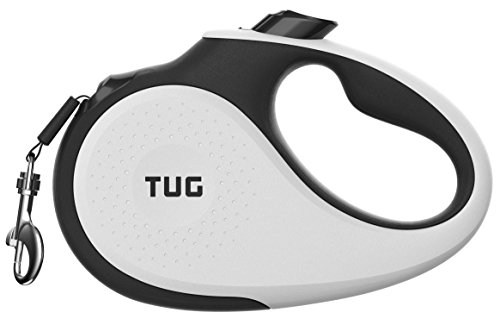
Retractable leashes are enormously popular, and it's worth being straightforward about why: they're genuinely convenient for calm dogs on quiet walks, letting a dog wander and sniff without you constantly paying out slack by hand. But the safety trade-offs are real and worth understanding before you buy one:
- Injury risk from the cord or tape. The thin nylon cord or tape can cause serious rope burns, cuts, or worse to fingers and hands if it runs through your grip at speed or wraps around a leg. This is a well-documented pattern with this leash style specifically.
- Poor real-time control. Because the leash can extend several feet before you react, a retractable gives you meaningfully less ability to stop a dog reaching a hazard than a fixed-length leash does.
- The sudden-stop jolt. When a dog hits the end of the cord at speed, the abrupt stop transmits a hard jolt into the handler's hand and into the dog's neck, a common cause of dropped leashes, finger injuries, and neck strain.
- Locking mechanisms can fail, especially on cheaper units, letting a dog suddenly get much more distance than intended.
Materials, Nylon vs. Leather vs. Biothane
Nylon webbing is the default for a reason: affordable, widely available in every length and width, dries reasonably fast, and holds up to years of daily use. Its weaknesses are stitching that can fray over time and a tendency to absorb water and odor.
Leather softens and molds to the hand over years of use and is very strong for its thickness, part of why trainers favor it for structured heel work. It needs occasional conditioning to avoid cracking and is unpleasant to use wet.
Biothane (polyester webbing coated in a vinyl-like material) is essentially waterproof, wipes clean in seconds, and doesn't absorb odor, a strong option for muddy trails or swimming dogs. The trade-off is a stiffer initial feel until it breaks in and fewer retailers carrying it compared to nylon.
Clip Strength and Width, Matching the Leash to the Dog
The clip connecting the leash to the collar or harness is the single point of failure on any leash. Look for a bolt-snap or solid trigger-style clip rated for your dog's actual weight, not just whatever ships standard on a budget leash; a lightweight spring-clip fine for a 15 lb dog can bend or pop open under an 80 lb dog lunging at a squirrel.
Width matters too: 3/8 to 1/2-inch webbing suits small breeds, while medium and large dogs, especially pullers, do better with 3/4 to 1-inch webbing that spreads force across a wider strap.
When a Harness Attachment Is Safer Than a Collar
Clipping a leash to a flat collar puts every lunge and sudden stop directly on the dog's neck and throat. For a dog that pulls hard, has a narrow airway (common in brachycephalic breeds like pugs and French bulldogs), or has any history of tracheal sensitivity, clipping to a front-clip or back-clip harness instead spreads that force across the chest. It's a simple swap that removes a real, avoidable risk, worth doing before reaching for a specialty "no-pull" leash gadget to solve what is really a collar-placement problem.