


What retractable leashes actually offer
The appeal is straightforward: a retractable leash extends out to 15, 20, sometimes 25+ feet, giving a dog room to roam and sniff without you needing to carry a separate long-line, then reels back in with a button press for close control when needed. For a calm, already well-trained dog on a quiet trail, that flexibility can genuinely work well, and it's part of why they're such a popular product despite the criticism they get from trainers and vets.
The safety issues that come with them
The core problem is the thin cord itself, most retractable leashes use a narrow nylon cord rather than flat webbing, and that thin cord under tension can cause serious rope burn, cuts, or even finger amputation if it wraps around a hand, ankle, or another dog's leg during a sudden pull. The locking mechanism is another weak point: it can fail, slip, or simply not engage fast enough if your dog bolts toward a road, another dog, or a person, and by the time you've reacted, your dog may already be 15 feet away and picking up speed. Vets report a steady stream of injuries linked to these leashes each year, from lacerations to eye injuries when a cord snaps back.
Why they work against training
Beyond the physical risk, retractable leashes actively undermine loose-leash training. The constant spring tension in the handle means a dog learns that pulling harder extends the leash further, the opposite of what you want them to learn about walking calmly beside you. Because the leash length is always shifting, you also lose the consistent feedback loop that makes leash training work: your dog can't learn "the leash goes tight when I'm too far ahead" if the leash length is never fixed.
Where they can make sense
If you have a calm, reliable dog and you're walking in a genuinely open, low-traffic space, a quiet park with good visibility, away from roads, other dogs, and crowds, a retractable leash used thoughtfully (locked to a shorter length near any hazard, never wrapped around a hand) can be a reasonable middle ground between a fixed leash and true off-leash freedom. It's a case where the environment does most of the safety work, not the tool itself.
The safer default for most situations
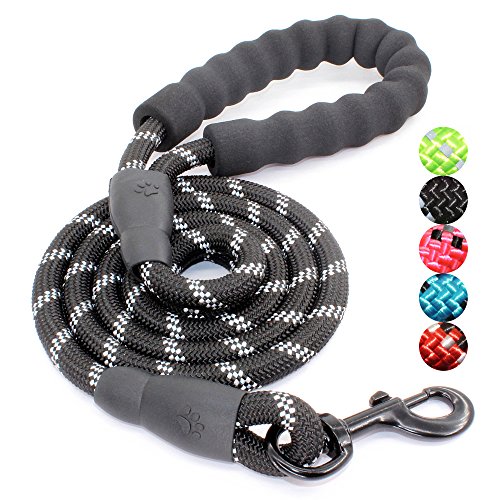
For everyday walks, training, footpaths, vet visits, and anywhere near traffic or other dogs, a standard fixed leash of 4 to 6 feet remains the more reliable and controllable option, you always know exactly how much slack you have, your reaction time to a lunge is immediate, and there's no cord thin enough to cause rope burn. If what you actually want is more roaming room for sniffing and exploring, a proper long-line used in open space achieves that more safely than a retractable leash, since it's flat webbing you gather and pay out by hand rather than a spring-loaded thin cord.