


Why some dogs slip collars and others don't
A flat buckle collar relies on the width of the head being wider than the neck to stay on, pull it forward hard enough, and if the head is narrow relative to the neck, or the dog tucks their chin and pulls backward, the collar can simply slide right off. This isn't a training failure on your part; it's a mechanical mismatch between the collar type and your dog's body shape or a startled reaction. Sighthounds are the classic example because of their narrow skulls, but plenty of other dogs, especially fearful or reactive ones who lunge backward from a sudden noise or scare, can slip a flat collar too.
How a martingale solves the actual problem
A martingale collar has a small secondary loop that tightens as the leash pulls, closing the collar snugly around the neck up to a pre-set limit and then stopping. That mechanism is specifically what a flat collar lacks, it actively closes rather than just sitting at a fixed size, which is exactly what's needed to stop a determined or panicked dog from backing straight out. Fitted correctly, it sits comfortably at rest and only tightens the moment there's real pulling pressure, so it doesn't feel restrictive during normal, calm walking.
Fitting it so it actually works
The fit has to be right for a martingale to do its job. Position it high on the neck, just behind the ears where the head is narrowest, and adjust so the small control loop closes to about a finger-width gap at full tightness, never fully closed, never left gaping. Too loose and your dog can still work their head through; too snug at rest and it's uncomfortable all day. Check the fit again after grooming, weight changes, or a change in coat thickness with the seasons.
Doubling up for extra security
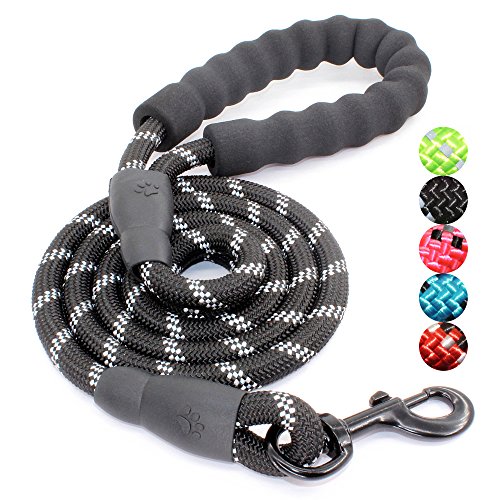
For dogs with a strong flight response, or in genuinely high-risk situations like a vet clinic, a busy event, or off-leash areas near roads, many owners use a double-ended leash clipped to both a well-fitted martingale collar and a harness at the same time. This means if one piece of equipment somehow fails or shifts, the other is still holding, which gives real peace of mind for a dog who's proven they can escape standard gear. It's a common approach among rescue and foster groups specifically because a new or frightened dog is at highest risk of bolting.
When to get more help
If your dog is slipping collars because they're regularly panicking, lunging, or trying to flee, not just an occasional narrow-head issue, that's worth addressing as a behaviour question alongside the equipment fix. A trainer experienced with fearful or reactive dogs can help build confidence and reduce the triggers causing the bolting in the first place, while the martingale and double-leash setup keeps everyone safe in the meantime.