


Why length changes what you're actually training
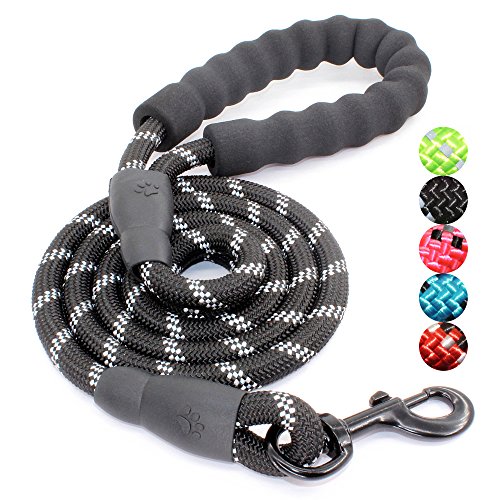
The leash length you choose shapes the kind of walking behaviour you end up reinforcing. A very short leash (2-3 feet) keeps a dog tight to your side, which is useful for formal heel work or navigating a crowded space, but it doesn't teach a dog to self-regulate their own distance from you, you're doing the regulating for them. A 6-foot leash gives enough slack for a dog to walk a little ahead or explore a bit while still letting you feel and respond to tension the moment it starts, which is closer to how loose-leash walking actually works in the real world.
The 4 to 6 foot sweet spot
For most pet dogs learning not to pull, a 4 to 6 foot leash hits the balance point: it's short enough that you can respond within a second or two of the leash going tight (which is when the training actually happens), and long enough that your dog isn't being physically restricted to a tiny bubble around your legs. If you're just starting out or working in a distracting environment like a busy street, the shorter end of that range gives you more control; once your dog is walking politely, the extra foot or two of a 6-foot leash feels more natural for both of you.
Why retractable leashes work against training
Retractable leashes extend to 15-25 feet, and while that sounds like freedom, the constant spring tension actually teaches a dog that pulling is what makes the leash extend, which is the exact opposite of loose-leash training. They also make it much harder to respond quickly if your dog lunges at something, and the thin cord can cause serious rope burn or cuts if it wraps around a hand, leg, or another dog. They're better reserved for supervised sniffing time in an open, low-traffic area once your dog already walks well, not for active training sessions.
Matching length to the environment
Even with a well-trained dog, the right leash length shifts with the setting. Busy footpaths, vet waiting rooms, and crowded events call for a shorter leash, 4 feet or less, so you can keep your dog close and react instantly. Quiet parks or wide, open trails are where a 6-foot leash lets a dog range a bit and sniff without constantly hitting the end of the line. Some owners keep two leashes for this reason rather than trying to make one length do every job.
A separate long-line for exploration
None of this replaces a proper long-line, which is a different tool for a different purpose, giving a dog real freedom to explore and recall-train in open space, not for everyday street walking. If you want to train recall or let your dog sniff further afield safely, a 15-30 foot long-line is the right tool, used in open areas away from traffic and other dogs, not a leash swapped for a longer one on a normal walk.