




How to Choose a Chew Toy That Survives a Heavy Chewer Without Hurting Their Teeth
If you have a dog that reduces a plush toy to stuffing in minutes and cracks a "tough" ball by the weekend, you already know the frustration. But durability is only half the problem. The other half, the one that sends dogs to the emergency vet, is that the toughest toys are often the ones most likely to fracture a tooth or lodge in a gut. Choosing well for a heavy chewer means balancing two competing risks at once: a toy too weak gets torn into swallowable pieces, and a toy too hard breaks teeth. This guide walks through how to strike that balance.
Our recommendations here are built from aggregated verified owner reviews and published manufacturer specifications, not hands-on lab destruction testing. We weigh materials, sizing, real-world longevity and the safety trade-offs owners actually report.
The two real risks, stated plainly
Broken teeth. Slab fractures of the large upper carnassial tooth are one of the most common chew-related injuries, and they usually come from toys that are simply too hard. Nylon bones, antlers, hooves, and hard sterilised bones are the usual culprits. A cracked tooth is painful, often needs extraction or a root canal, and is entirely preventable.
Choking and intestinal blockage. At the other end, a toy that a powerful dog can tear apart becomes a choking hazard, or the swallowed chunk causes an obstruction that needs surgery. Rope toys are a specific offender here: the long stringy fibres can bunch in the intestine. Balls sized to fit fully in the mouth can also lodge in the throat.
Every choice below is about staying in the safe zone between those two failure modes.
The thumbnail and kneecap rule for hardness
There is a simple, honest test vets recommend. Press the toy hard with your thumbnail: if it does not give or dent at all, it is hard enough to fracture a tooth. A second version: rap the toy against your own kneecap. If it hurts, it is too hard for your dog's teeth. This does not mean nylon and other firm chews are banned, plenty of dogs use them safely for years, but it tells you which dogs to keep them away from. A dog that gnaws and shaves at a toy is usually fine on firm nylon; a dog that clamps down and tries to crush is a tooth-fracture waiting to happen and should be on rubber instead.
Materials, rubber versus nylon versus everything else
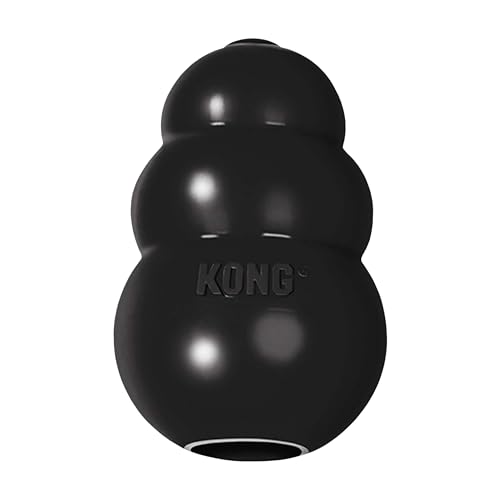
Rubber (KONG-style). Firm natural rubber is the safest heavy-duty material for most powerful chewers because it flexes. That give absorbs bite force rather than transmitting it into the teeth, and a good rubber toy still resists tearing. The stuffable designs add mental enrichment, which tires a dog out faster than chewing alone. Rubber is our default recommendation for hard, jaw-driven chewers.
Nylon (Benebone, Nylabone). Durable nylon lasts a long time and holds flavour well, which keeps dogs engaged. The catch is hardness, so it fails the thumbnail test. Nylon suits dogs that shave and gnaw rather than crush, and it must be supervised because small flakes come off during normal use. Retire nylon chews well before they wear down to a small, swallowable nub.
Avoid the genuinely dangerous "durable" options. Real bones, antlers, hooves, and hard cheese chews are marketed as tough but are among the worst tooth-breakers. Rope toys look harmless but pose a serious blockage risk from swallowed fibres. Just because a product is sold for aggressive chewers does not make it safe.
Size the toy to the dog, every time
The single most common sizing mistake is buying a toy that can fit entirely inside the dog's mouth. If it fits, it can be swallowed or lodged in the throat. Always choose a toy larger than your dog can fully engulf, and match the manufacturer's weight band. A chew rated for dogs under 60 lbs is not suitable for a Mastiff, and an X-Large ring built for 50 lb-plus dogs is a choking risk for a spaniel. When in doubt, size up.
Signs you have a genuinely destructive chewer
You are shopping in this category for a reason, but it helps to be honest about which type of chewer you have. Dogs that tear chunks off and swallow them need tougher, tear-resistant toys and closer supervision than dogs that simply gnaw. If your dog consistently removes and eats material from toys, no chew toy is truly safe unsupervised, and you should consider vet-guided alternatives and active supervision as the baseline rather than the exception.
Supervision and retirement are non-negotiable
No chew toy, however tough, is a babysitter. Supervise chew sessions, especially the first few with any new toy, so you learn how your individual dog attacks it. Inspect toys regularly for cracks, sharp edges, loose pieces, or a size worn down enough to swallow, and retire them the moment any of those appear. Wash stuffable toys so trapped food does not spoil. A worn-out favourite is far cheaper to replace than an emergency surgery or a root canal, so when in doubt, throw it out.
Putting it together
For most heavy chewers, start with a firm rubber toy for its tooth-safe flex, add a well-sized nylon chew if your dog gnaws rather than crushes, and use a treat-dispensing design to burn mental energy. Rotating two or three toys rather than leaving one out constantly also helps, because novelty keeps a bored destroyer more interested and gives you a chance to inspect each toy between sessions. Size everything up, apply the thumbnail test, supervise, and retire early. Do that and you get the durability you came for without trading it for a broken tooth, an emergency surgery, or a vet bill you did not need to pay.