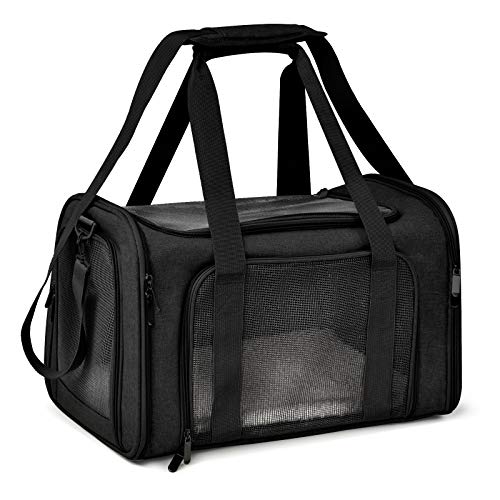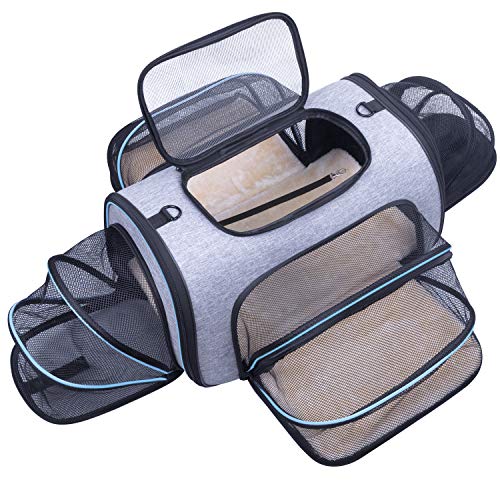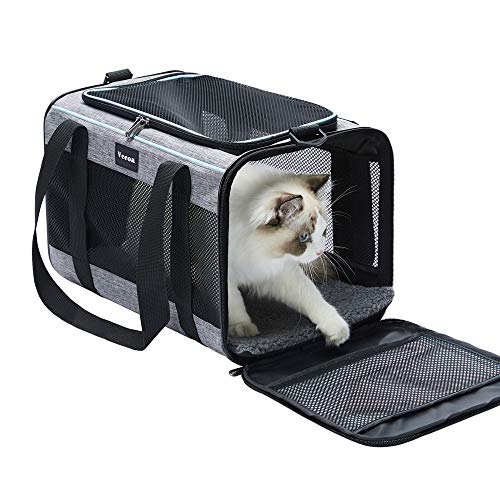

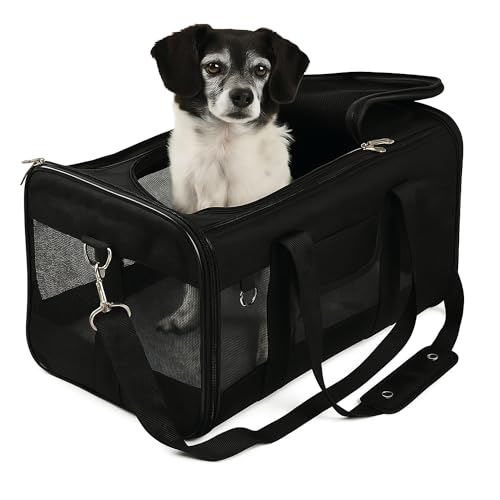


Start well before your travel date
Carrier training works best when it starts weeks, not days, before a trip. Rushing acclimation right before travel, especially a flight, tends to backfire, leaving your dog anxious exactly when they need to be calm. Begin by simply leaving the carrier open and accessible in a room your dog spends time in, with no pressure to go inside straight away, letting curiosity do the work rather than forcing the introduction.
Making the carrier a positive space
Place a familiar blanket, a worn item of your clothing, or a favourite toy inside the carrier so it smells and feels familiar rather than sterile and new. Feed meals or offer high-value treats near, then inside, the carrier's entrance, gradually moving them further in over several sessions so your dog chooses to enter on their own. Avoid closing the door or zipping the carrier during these early sessions, the goal at this stage is simply comfort with the space, not confinement.
Introducing short periods of confinement
Once your dog is voluntarily resting or eating inside the carrier, start closing the door for very short periods, a few seconds at first, while staying nearby and calm. Gradually extend the duration over several days, always ending the session before your dog shows signs of stress, and pair each closed-door period with something positive like a treat-filled toy. This builds tolerance for confinement itself, separate from any movement, which you can introduce next.
Adding movement and real-world practice
Once your dog is settled with the door closed, start carrying the carrier a short distance around the house, then try a brief car ride with the carrier secured, before attempting a longer outing. Each step should feel like a small, manageable increase rather than a jump, and it's worth pausing at any stage where your dog shows renewed anxiety rather than pushing forward on a schedule. For flights specifically, a short practice trip to a quiet public space with the carrier helps your dog experience some ambient noise and movement before the real thing.
Signs you should slow down or get help
If your dog consistently refuses to enter the carrier, shows prolonged distress like heavy panting or trying to escape, or regresses after previously being comfortable, it's worth slowing the process down rather than pushing through on a deadline. A vet visit can rule out any physical discomfort contributing to the resistance, and a qualified dog trainer or behaviourist can offer a more tailored desensitisation plan if general steps aren't working. Starting carrier training as early as possible gives you room to adjust the pace if your dog needs more time.