


Start by measuring your dog, not guessing by breed
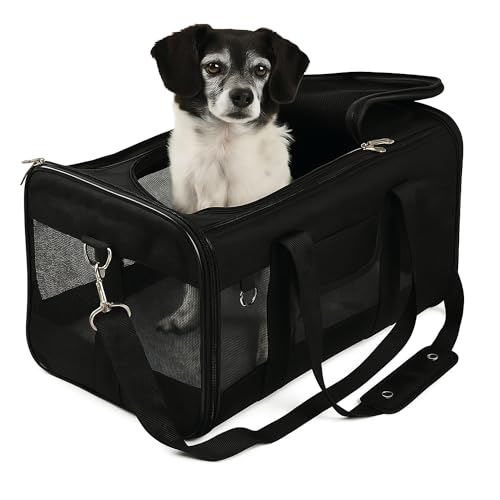
Choosing the right size dog carrier starts with actual measurements rather than assumptions based on breed or age. With your dog standing naturally, measure their length from the base of the neck to the base of the tail, their height from the floor to the top of the shoulders, and their weight. A carrier should let your dog stand fully upright, turn around in a full circle, and lie down with legs extended, cramped sizing is one of the most common carrier mistakes.
Sizing up vs sizing down
It's tempting to size up "just in case," but a carrier that's too large can actually be less comfortable and less safe, since your dog can be thrown around inside it during sudden movement, whether that's a car brake or turbulence on a flight. A carrier that's snug but not restrictive helps your dog feel secure and reduces sliding. If you're between two sizes, most guidance favours the smaller option as long as your dog can still stand, turn, and lie down comfortably inside it.
Matching carrier size to how you'll use it
The right size also depends on how the carrier will be used. A carrier for air travel needs to meet a specific airline's under-seat dimensions, which are often tighter than what you'd choose for car trips or vet visits. A carrier used mainly for walks or public transport has more flexibility, but should still be a size your dog can hold in comfortably for the length of the outing. If you travel by multiple methods, it's worth checking your most restrictive size requirement, usually air travel, and working backward from there.
Weight limits matter as much as dimensions
Every carrier has a maximum recommended weight, and exceeding it can strain seams, zippers, and structural support, even if your dog technically fits inside the dimensions. Check the manufacturer's stated weight limit and compare it to your dog's current weight, with some room to spare if your dog is still growing. For carriers used on flights, remember that airlines often set a combined weight limit for the dog and carrier together, which is a separate consideration from the carrier's own maximum load rating.
Re-checking size as your dog grows or changes
A carrier that fits well now may not fit in six months, particularly for puppies or dogs recovering from injury whose weight can shift. It's worth re-measuring every few months for a growing dog and before any major trip, rather than assuming a carrier that worked last year is still the right fit. If you're ever unsure whether a carrier suits your dog's current size, a quick trial at home, letting them stand, turn, and settle inside it, tells you more than the label alone.