Hiking Backpacks & Travel Strollers for Dogs
Comprehensive technical analysis of material density, anatomical weight distribution, Indentation Load Deflection (ILD) thresholds, and veterinary standards for hiking backpacks & travel strollers.


There are two very different products hiding under one category, and mixing them up is the most common mistake owners make. A dog hiking backpack is a saddlebag-style harness your dog wears and carries themselves, usually loaded with their own water, treats, and a poop-bag roll. A dog carrier backpack is the opposite: a padded, ventilated pouch worn on your back or front that carries the dog. Strollers sit in between, a wheeled option for dogs who can't or shouldn't walk the whole distance.
Which one you need comes down to your dog's size, fitness, and the terrain, not personal preference. A fit, mid-sized dog on a well-formed trail is a great candidate for a self-carrying hiking pack. A toy breed, a senior dog, a recovering post-surgery patient, or a puppy with growth plates still closing is a candidate for being carried or wheeled, not loaded up.
A poorly fitted pack rubs, chafes, and can throw off a dog's balance on uneven ground, so fit matters more than features here.
- Chest and girth measurements first. Measure around the widest part of the ribcage and the base of the neck before buying; packs sized by "breed" alone are unreliable because two dogs of the same breed can differ by several centimetres.
- Weight limit is a total-dog-condition question, not just a number on the box. The commonly cited guideline is that a healthy adult dog can carry roughly 10-15% of their own body weight, split evenly between both sides, but this is a general guideline, not a rule for every dog. Dogs with hip, joint, spine, or heart conditions should carry little or nothing without a vet's sign-off first.
- Balance the load side to side. An uneven pack pulls a dog's gait sideways over a long hike and can cause soreness that shows up a day later, not on the trail itself.
- Check for rubbing after the first 15 minutes, not just at the start. Hot spots often appear once the dog has warmed up and started moving more naturally.
- Never let a growing puppy carry weight. Growth plates in the legs and spine are still developing, and load-bearing exercise before they close is a genuine injury risk, ask your vet when your specific puppy's growth plates close before introducing any pack weight.
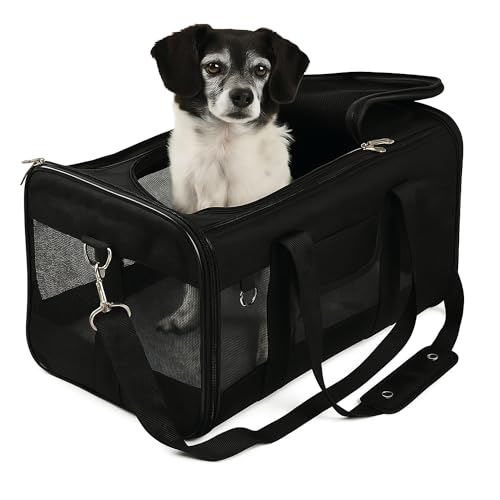
Carrier-style packs (where the dog is the passenger) suit small breeds, ageing dogs, and situations where a dog needs a lift for part of a trip, city errands, transit, or trail sections a dog can't manage.
- Front carriers keep small dogs (generally under around 6-7 kg) close to your chest, which many anxious dogs find calming, but they add real weight to your own back and shoulders on longer outings.
- Backpack-style carriers distribute weight better for you over distance and usually have mesh panels so the dog can see out, but check the dog can turn their head and pant freely, ventilation is not optional in warm weather.
- Weight capacity is about the carrier's structure, not just the dog's comfort. Overloading a carrier rated for a small dog with a heavier one strains zips, straps, and stitching exactly when you need them to hold.
- Practice at home before the real trip. A dog who has never been zipped into a moving carrier can panic on day one of a hike. Short, calm sessions around the house build tolerance first.
A stroller isn't just for tiny "purse dogs", it's a legitimate mobility tool for seniors, dogs recovering from surgery, arthritic dogs on longer outings, or multi-dog households managing a mismatch in fitness levels.
- Look at ground clearance and wheel type for the terrain you'll actually use it on. Small plastic wheels struggle on gravel or grass; larger pneumatic tyres handle parks and light trails far better.
- A secure harness clip inside the stroller matters as much as the frame. A dog should never simply sit loose in the basket, an unclipped dog can jump or fall out, especially if startled.
- Check the weight rating against your dog's actual weight, not their "should be" weight. Overloaded strollers tip more easily on uneven ground or tight turns.
- Introduce it gradually, the same way you would a carrier, a stroller that appears for the first time on a busy trail is a stressor, not a comfort.
Whatever you choose, a few habits protect a dog on the move:
- Watch for signs of overheating or distress any time a dog is confined in a pack, carrier, or stroller, panting that doesn't ease, reluctance to keep going, or unusual stillness are all reasons to stop and check on your dog. If you're ever concerned about how your dog is coping with heat, exertion, or confinement, a vet is the right person to ask, not a product review.
- Build up gradually. A dog's first outing with a loaded pack, a carrier, or a stroller should be short and low-stakes, not a full day hike.
- Bring water and offer it often, whether your dog is carrying it themselves or riding along, exertion and warm weather both increase how much a dog needs, and a dog who is being carried can still get dehydrated.
- Recheck fit through the seasons. A dog's weight and coat thickness change, and a harness or carrier that fit perfectly in spring can rub in a heavier winter coat.
- Introduce it empty and stationary first. Let your dog sniff a carrier or stroller sitting still in the lounge room before it ever moves, let alone leaves the house.
- Short sessions, positive associations. A few minutes wearing an empty hiking pack around the yard, paired with praise or a treat, builds tolerance faster than one long forced session.
- Add movement gradually. Once your dog is relaxed wearing or riding in the gear indoors, try a short walk around the block before attempting a real trail or trip.
- Watch body language, not just behaviour. A stiff posture, tucked tail, or reluctance to move are all signs a dog isn't comfortable yet, even if they're not visibly panicking. If your dog seems consistently distressed by any of this gear rather than just adjusting, it's worth stepping back rather than pushing through.
Go Deeper
Detailed companion guides for hiking backpacks & travel strollers.
Dog Backpack Carriers for Hiking, Weight Limits, Ventilation, and When Your Dog Should Walk vs. Ride
How dog backpack carriers work on the trail, weight ratings, front vs. back carry, ventilation, heat risk, and when a dog should walk instead of ride.
Dog Strollers, Who They're Actually For and How to Choose One
Which dogs genuinely benefit from a stroller, seniors, post-surgery, small or multi-dog, plus weight capacity, terrain wheels, and the internal safety tether.