
Best Winter Dog Coats
Best Winter Dog Coats, ranked from aggregated owner ratings and reviews, not first-hand testing. Real pros, cons, and who each pick is best for.

Our Top 3 Picks
Quick Comparison
| Product | Best for | Buy | |
|---|---|---|---|
| Kuoser Reversible Waterproof Dog Coat | Best Overall | See Amazon | View |
| ASENKU Reversible Plaid Fleece Dog Winter Coat | Best Value | See Amazon | View |
| Lelepet Waterproof Zip-Up Dog Coat with Harness | Best Waterproof | See Amazon | View |
| Lelepet Small-Dog Winter Coat with Adjustable Buckle | Best for Small Dogs | See Amazon | View |
| ASENKU Fleece Puffer Dog Winter Coat (S, L) | Best for Large Breeds | See Amazon | View |
| IECOii Extra-Warm Reflective Turtleneck Dog Coat | Best Reflective / Visibility | See Amazon | View |
How to choose the best winter dog coat
Start by deciding whether your dog needs a coat at all. Thin-coated, small, senior and very lean dogs feel the cold and benefit from one; double-coated northern breeds like huskies and malamutes usually don't and can overheat in one. If your dog shivers, hunches or drags its feet in the cold, a coat earns its place.
Match the coat to your weather. The three jobs, warmth, waterproofing, and both, don't overlap as much as the listings suggest. Fleece linings and quilted puffers are warm but soak up water, so they're for dry cold. A sealed shell sheds rain but adds little insulation on its own. Many coats sold as "waterproof" are only water-resistant, good for a shower or snow, not a downpour, so if rain is your real issue, look for a genuine waterproof shell. For changeable winters, a coat that does both, or a reversible warm/shower design, is the most versatile buy.
Measure before you order. This is where most disappointment comes from. Take two numbers with a soft tape on a standing dog: back length (neck base to tail base) and chest girth (the widest part of the ribcage, behind the front legs). Buy to those, not to weight, two dogs of the same weight can be completely different shapes. If you're between sizes, size up, and pay special attention to chest girth on deep-chested or stocky breeds, which is where snug coats fail.
Check fit for real life. The coat should let the dog walk, run and sit with free shoulders and front legs; puffer bulk is the usual cause of a restricted stride. The belly panel needs to be short enough at the rear not to get soiled during toileting. And consider the closure: buckles are fast and secure on fidgety dogs, hook-and-loop is convenient but collects fur and weakens over time, and zips are quick but can catch long coats.
Don't skip visibility. Winter walks happen in the dark. Reflective trim is a real safety feature that gives drivers extra reaction time, so weight it in your choice if you walk near roads, and add a clip-on light for the darkest routes, since reflectivity only works when light hits it.
Think about one coat versus two. If your winters swing between dry-cold snaps and wet-mild spells, a reversible design that offers a warm side and a shower side saves you buying two separate coats, it won't beat a dedicated waterproof shell in a real storm, but it covers far more days than a single-purpose coat. Owners who face genuinely harsh, wet winters are usually better off pairing a true waterproof shell with a warm layer underneath and accepting that no single coat does everything perfectly.
Bottom line: pick by your single biggest problem, cold, rain, size or darkness, buy a well-reviewed coat that targets it, and measure first. Do that and you'll get a coat your dog will actually wear.
Full Ranking, Reviewed
Best for Owners who want one coat that handles both cold and wet without buying two
- Reversible design: a plush warm side for dry cold days and a water-resistant shell side for drizzle and slush
- Adjustable neck and belly straps with hook-and-loop closure to dial in fit across chest girth
- Leash-port opening on the back so a harness clip can pass through without removing the coat
- Sizing runs from small through larger medium builds, with a size chart based on back length and chest girth
- The most popular coat in this category by a wide margin, which is a strong signal that fit and durability hold up for a lot of everyday buyers
- Two coats in one thanks to the reversible shell, which is genuinely useful for changeable winter weather
- Belly straps give more underside coverage than a simple cape-style coat
- Water-resistant, not fully waterproof, fine for light rain and snow but not for a dog that spends long stretches out in a downpour
- Buyers with deep-chested or very stocky breeds sometimes report the chest girth runs snug, so measure before ordering rather than sizing by weight
Verdict: With tens of thousands of reviews and a reversible warm/water-resistant build, this is the safest first coat for most dogs and the one we would recommend if you only buy one. Just measure the chest carefully and treat it as warm-plus-showerproof rather than a storm shell.

Best for Budget-minded owners who still want a warm, windproof reversible coat
- Reversible with a windproof outer face and a soft plaid fleece lining for warmth
- Wide size range covering small, medium and large dogs
- Hook-and-loop belly and neck straps for adjustment on the fly
- Back opening to route a harness or leash through
- Strong review count for the price bracket, suggesting the value holds up rather than being a one-off bargain
- Windproof outer plus fleece lining is a sensible combination for cold, dry, breezy walks
- Reversible, so you effectively get two looks and two textures from one coat
- Fleece lining is warm but soaks up water, so this is a cold-weather coat rather than a rain coat
- Straps and closures are basic hook-and-loop that can collect fur and lose grip over time
Verdict: If the top pick is more than you want to spend, this reversible fleece coat covers the same warm-and-windproof job for less. Skip it if your main problem is rain, the fleece is the wrong material for wet conditions.

Best for Rainy-climate walks where staying dry matters more than maximum warmth
- Waterproof outer shell designed to shed rain rather than just resist a light shower
- Built-in harness with a D-ring so you can clip the leash to the coat itself
- Fleece lining for insulation under the waterproof layer
- Reflective trim to improve visibility on dark winter walks
- A genuine waterproof shell, which most coats in this category are not, this is the pick if rain is your real problem
- Integrated harness removes the need to layer a separate harness over or under the coat
- Zip-up front can be quicker to get on a cooperative dog than wrestling with straps
- Built-in harnesses rarely fit as precisely as a dedicated harness, so check the load points if your dog pulls hard
- A zip can be fiddly on a wriggly or long-haired dog, and hair can catch in the teeth
Verdict: The one to buy if you walk in real rain rather than the occasional shower. The integrated harness is convenient, but committed pullers may still be better served by a separate, purpose-built harness underneath a plainer coat.

Best for Toy and small breeds that lose heat fast and need a snug, easy-on coat
- Cut and sized specifically for small dogs rather than scaled down from a larger pattern
- Adjustable buckle closure that is quicker to fasten than hook-and-loop on a squirming small dog
- Waterproof outer with a fleece vest lining for warmth-to-weight
- Reflective detailing and windproof outer for cold, dark walks
- Genuinely small-dog proportions, which matters because ill-fitting coats gape at the neck and drag on the ground
- Buckle closure is faster and more secure than hook-and-loop for a fidgety little dog
- Waterproof-plus-fleece build suits small breeds that chill quickly in the wet
- Small-dog range means it simply will not fit medium or large breeds, check the chart carefully at the upper end
- Very short-bodied or barrel-chested toy breeds may still need the buckle and straps adjusted well in from the defaults
Verdict: A sensible default for toy and small breeds, which feel the cold first and are the dogs that most often actually need a coat. The buckle and small-specific cut are the differences that make it worth choosing over a generic downsized jacket.

Best for Larger, thin-coated dogs that need real bulk and length coverage
- Puffer-style quilted construction for more loft and insulation than a thin shell
- Water-resistant and windproof outer for cold, damp conditions
- Size range that extends to large dogs with longer back-length coverage
- Hook-and-loop straps for adjusting chest and belly fit
- Puffer loft delivers more genuine warmth than the thin single-layer coats that dominate this category
- Larger sizing actually covers a big dog's back length instead of stopping short behind the shoulders
- Water-resistant outer copes with snow and light rain on top of the insulation
- Puffer bulk can restrict a very active dog's stride, so watch the shoulders for freedom of movement
- Water-resistant only, sustained heavy rain will eventually get through the quilting
Verdict: The pick for bigger, lean dogs, greyhounds, whippets, boxers and similar, that need warmth and proper length coverage rather than a token cape. Accept the bulk trade-off, and step down to a lighter coat if your dog needs to run flat-out.
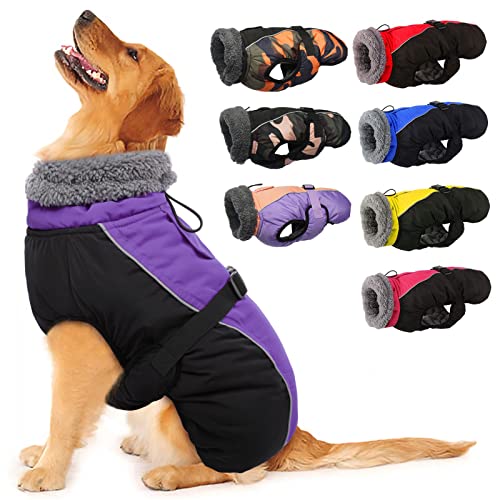
Best for Early-dark winter walks where being seen by drivers matters
- Reflective strips positioned to catch headlights from multiple angles
- Fleece turtleneck that extends warmth up over the neck and chest
- Adjustable buckle closure for a repeatable, secure fit
- Windproof outer for exposed, blustery walks
- Reflectivity is a real safety feature, not decoration, for the short days when most walks happen in the dark
- Turtleneck covers the neck and upper chest, areas thin-coated dogs lose heat from
- Buckle closure gives a consistent fit walk after walk
- Turtleneck coverage is warm but not waterproof, so it is a cold-and-dark coat rather than a wet-weather one
- Reflective strips help but do not replace a proper light or LED collar in very low visibility
Verdict: Worth choosing when your winter walks fall after dark and visibility is the priority. Pair it with a clip-on light for the darkest routes, and pick something waterproof instead if rain rather than darkness is your main concern.

Frequently Asked Questions
Does my dog actually need a winter coat?
It depends on the breed. Thin-coated dogs (greyhounds, whippets, boxers, staffies), small and toy breeds, seniors, puppies and very lean dogs genuinely feel the cold and benefit from a coat. Double-coated cold-weather breeds like huskies, malamutes and Samoyeds usually don't, their undercoat insulates better than any jacket, and a coat can flatten it or cause overheating. The best guide is the dog itself: shivering, hunching, lifting paws off cold ground or refusing to keep walking all mean it's feeling the cold.
How do I measure my dog for the right coat size?
Use a soft tape with the dog standing and take two measurements: back length, from the base of the neck (where a collar sits) to the base of the tail, and chest girth, around the widest part of the ribcage just behind the front legs. Match those to the maker's size chart rather than buying by weight, because dogs of the same weight can be very different shapes. If you fall between two sizes, size up, and double-check chest girth on deep-chested or stocky dogs.
What's the difference between waterproof and water-resistant coats?
Water-resistant coats shrug off light rain and snow for a while but eventually let water through in a sustained downpour, most fleece-lined and reversible coats fall in this group. Truly waterproof coats have a sealed shell built to keep a dog dry in real rain. Many listings use "waterproof" loosely, so if wet weather is your main concern, look specifically for a genuine waterproof shell rather than assuming the label is accurate.
Are reflective coats worth it for winter walks?
Yes, if you walk near roads. Winter walks often happen in the dark, and reflective strips catch headlights and give drivers valuable extra reaction time, that's a real safety benefit, not just styling. Reflectivity only works when light is pointed at it, though, so for the darkest routes pair a reflective coat with an active light source like a clip-on LED or a light-up collar.