
Best Dog Boots
Best Dog Boots, ranked from aggregated owner ratings and reviews, not first-hand testing. Real pros, cons, and who each pick is best for.

Our Top 3 Picks
Quick Comparison
| Product | Best for | Buy | |
|---|---|---|---|
| Breathable Dog Boots for Hot Pavement, Summer Walking & Hiking | Best Overall | See Amazon | View |
| Huafly Tension Knob Twist-Lock Dog Shoes | Best Value | See Amazon | View |
| Bark Brite All Terrain All Weather Neoprene Dog Shoe | Best for Hiking / Rugged Terrain | See Amazon | View |
| Finn Paw Hero Dog Paw Balm, Hot Pavement Protection | Best Hot-Pavement Alternative (Non-Boot Balm) | See Amazon | View |
| DOK TigerToes Premium Non-Slip Dog Socks for Hardwood Floors | Best Indoor Traction (Non-Disposable Socks) | See Amazon | View |
| Dimicoo Waterproof Dog Boots for Winter, Anti-Slip Snow Booties | Best for Winter / Snow | See Amazon | View |
How to choose the best dog boots
Start with sizing, because it's the single biggest reason boots get returned or abandoned in a drawer. Measure the dog's paw directly, width across the widest point and length from pad to nail tip, with the dog standing and weight-bearing, and match those numbers to the specific seller's size chart rather than guessing from breed or body weight. Sizing varies meaningfully between listings, so a chart from one brand doesn't reliably transfer to another. When in doubt, size up: a slightly loose boot is uncomfortable, but a too-tight one cuts off circulation and gets chewed off within minutes.
Match the boot to the actual problem. Hot pavement calls for a breathable mesh boot that won't trap heat against the pad, neoprene and fleece-lined boots are the wrong choice here. Snow and ice call for a genuinely waterproof, anti-slip boot, because slush and rock-salt exposure are the real risks, not just cold air. Hiking and rough or rocky terrain call for a tougher, more abrasion-resistant material like neoprene, which holds up to trail debris far better than thin fabric. Buying one boot to try to cover all three jobs usually means it does none of them particularly well.
Consider the closure style. Hook-and-loop straps are the most common and easiest to size incrementally, but they can loosen with repeated flexing and collect fur over time. Twist-lock or dial closures are quicker to fit and have fewer strap failure points, but are a newer design with less of a durability track record. Whichever closure you choose, the fit should be snug enough that the boot doesn't rotate on the paw when tugged, but loose enough to slide a finger or two underneath.
Don't assume every dog will tolerate boots immediately. High-stepping, freezing up, or trying to shake boots off on the first attempt is completely normal and not a sign of a bad product. Introduce boots indoors for short sessions with treats before attempting a full outdoor walk, and expect the process to take anywhere from a few days to a couple of weeks depending on the dog.
Know when a boot isn't the right tool. A dog that flatly refuses boots isn't necessarily left without options, a paw balm formulated for hot pavement can offer some protection for warm-but-not-scorching conditions and doubles as a paw-pad moisturiser, though it's genuinely a different, lower-protection category than a boot and won't help on surfaces hot enough to blister a paw, or against ice, salt or sharp debris. Separately, if the actual problem is a dog sliding on hardwood or tile indoors rather than anything happening outdoors, a fabric traction sock solves that specific problem far better and more cheaply than an outdoor boot, and an outdoor boot's thicker, harder sole isn't designed for indoor grip in the first place.
Bottom line: measure the paw properly, pick a boot built for the specific surface or season you actually face, and give your dog time to adjust before judging whether boots "work" for them.
Full Ranking, Reviewed

Best for Owners who want one boot that covers summer pavement walks and light trail use without buying a specialist boot for each
- Breathable mesh-style upper built for warm-weather wear rather than insulation
- Marketed for both hot pavement protection and summer hiking, so it's positioned as a general-purpose boot
- Sized as a set (listing runs Size 6), so measure the paw against the seller's chart rather than guessing from the dog's weight
- Rubber or textured sole aimed at grip on pavement and light trail surfaces
- The most widely owned genuine boot in this pool, giving a reasonable basis to trust the fit and durability feedback
- Dual-purpose framing (pavement plus hiking) makes it a sensible default if you don't want to buy a separate boot for every season
- Breathable build is the right call for hot-weather wear, unlike neoprene or fleece-lined boots that trap heat
- No established brand name behind it, it's a generic listing, so don't expect brand-level customer support or a long track record beyond this one listing
- A somewhat lower owner rating means a meaningful minority of buyers had fit or durability complaints; read the sizing feedback before ordering
Verdict: This is the safest first boot to try if your dog needs general paw protection on hot pavement and the occasional hike, backed by the strongest review base of any true boot in this roundup. It's not a specialist rugged hiking boot or a dedicated pavement product, so treat it as the well-rounded middle option rather than the best at any one job.
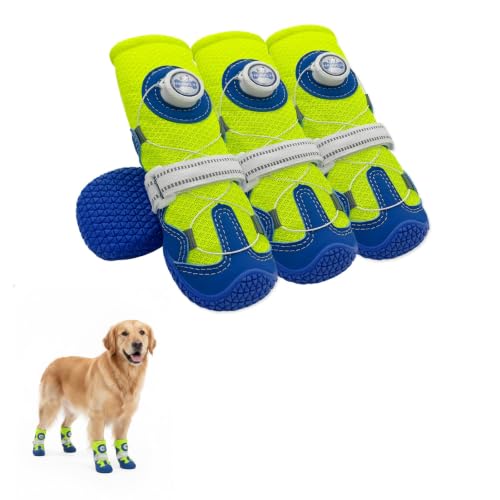
Best for Owners who want a simple on/off boot without wrestling with straps every walk
- Twist-lock tension knob closure instead of hook-and-loop straps, similar in concept to a dial-fit hiking shoe
- Non-slip sole intended for indoor floors and outdoor pavement alike
- Breathable mesh construction for warm-weather comfort
- Sized for small, medium and large dogs per the listing
- Twist-lock closure is genuinely easier and faster to fit than fiddly Velcro straps, especially on a dog that won't hold still
- Non-slip sole gives some cross-over use between indoor hardwood and outdoor pavement
- Simpler mechanism than strap-based boots means fewer failure points like straps losing their grip over time
- A newer listing with limited collective feedback, so durability and long-term fit of the twist-lock mechanism isn't proven at scale yet
- Dial-style closures on pet boots can loosen with repeated flexing during a walk, worth checking the knob periodically rather than assuming it stays locked all day
Verdict: A reasonable budget-friendly pick if the main thing you want is a boot that goes on quickly without strap fuss. The twist-lock idea is sound, but with a modest review count you're taking a bit more of a gamble on long-term durability than with the higher-volume listings in this roundup.

Best for Trail walks, rough or rocky ground, and mixed wet-and-dry conditions where a tougher build matters more than breathability
- Neoprene construction, the same wetsuit-style material used in rugged outdoor gear for flexibility plus water resistance
- Marketed as "all terrain, all weather" rather than a single-purpose summer or winter boot
- Non-slip sole intended to hold up on uneven or rocky trail surfaces better than a thin fabric boot
- Available in multiple sizes including large, which matters for bigger trail dogs
- Neoprene is genuinely more durable and abrasion-resistant against rocks, gravel and rough trail debris than mesh or fabric boots
- "All weather" positioning means it can reasonably handle mud, wet ground and cooler conditions, not just dry pavement
- Bark Brite is a recognisable pet-gear brand rather than an anonymous generic listing
- A newer listing with limited collective feedback, so treat its owner rating as an early signal rather than a proven track record
- Neoprene traps more heat than breathable mesh, so it's the wrong choice for a dog doing hot-pavement walks in summer
Verdict: The best-suited option here for hikers and off-pavement terrain, the neoprene build is a genuinely tougher material choice than the breathable summer boots elsewhere in this list. Reach for a mesh boot instead if your dog's main problem is hot concrete rather than rocky trails.

Best for Dogs that flatly refuse to wear boots but still need some protection on warm pavement, plus everyday dry-paw maintenance
- Balm formulated with olive and avocado oil, beeswax and aloe rather than a synthetic barrier
- Marketed specifically for hot pavement protection, applied directly to the paw pad before a walk
- Lick-safe formulation, which matters because dogs will inevitably lick a balm off their own paws
- 1.75 oz tin, applied by hand rather than worn like a boot
- By far the strongest review record in this entire roundup, highly rated and a real vote of confidence from a large buyer base
- Genuinely useful for dogs that won't tolerate boots at all, or as a backup for the brief walk to the car when boots feel like overkill
- Doubles as general paw-pad moisturiser for dry, cracked pads year-round, not just a summer-only product
- Lick-safe formulation avoids the common worry with topical pet products
- It's a balm, not a physical barrier, it will not protect against a hot enough surface to actually burn a paw, sharp debris, ice, or salt the way a boot does; this is honestly a different product category from the boots in this list
- Needs reapplication before and sometimes during longer walks, unlike a boot that stays protective for the whole outing
Verdict: Not a boot, and it shouldn't be mistaken for one, but it earns its place here because it's the honest answer for dogs that hate boots and because its review numbers dwarf every boot in this pool. Use it for genuinely warm-but-not-scorching pavement or as a paw-pad conditioner, and switch to a real boot on surfaces hot enough to actually blister a paw.

Best for Senior or arthritic dogs sliding on hardwood, tile or laminate indoors, not an outdoor boot substitute
- Grip-textured sole designed to work even when the sock twists on the paw, a common failure point for cheaper traction socks
- Fabric sock construction, not a hard-soled boot, built for indoor floor grip rather than outdoor weather or terrain protection
- Elastic or strap closure to help the sock stay in place during normal indoor movement
- Sold as a set covering multiple paws per package
- By a wide margin the most popular product in this entire pool, a very large sample to trust for everyday indoor performance
- Genuinely useful for a different problem than outdoor boots solve: dogs sliding on hard indoor flooring, especially older or post-surgery dogs
- Fabric construction is far cheaper and easier to size than a rigid boot, which matters if you just need indoor traction rather than weatherproofing
- These are not disposable or built for repeated outdoor wear, the sole material will wear through quickly on pavement, gravel or wet grass, so don't buy these expecting boot-level outdoor protection
- Fit relies on the twist-resistant grip holding up over time; some dogs work socks loose on carpet edges or during zoomies
Verdict: The right pick if your actual problem is a dog sliding around on hardwood or tile, not a dog that needs protection outdoors. Don't confuse this with a disposable outdoor boot, it's an indoor traction product with an enormous, reassuring review base for that specific job.
Best for Dogs walking on snow, ice or salted winter footpaths where paw protection from cold and de-icing chemicals matters
- Waterproof construction aimed at keeping snow melt and slush out rather than just resisting a light splash
- Anti-slip sole intended for icy or wet winter pavement
- Reflective paw detailing for visibility during darker winter walk times
- Available across small, medium and large dog sizing per the listing
- Purpose-built for winter conditions rather than a repurposed summer boot, which matters because snow boots need a genuinely sealed, waterproof build
- Reflective trim is a real safety add for the shorter daylight hours that come with winter walking
- Anti-slip sole is a sensible feature specifically for ice, which a plain rubber pavement sole doesn't always handle well
- A newer listing with less collective feedback, so treat it as a reasonably solid but not exhaustively proven pick
- Waterproof winter boots still need to be checked for snow packing inside the cuff on deep or powdery snow, no fabric boot is fully immune to that
Verdict: The most sensibly targeted winter option in this pool, waterproofing, anti-slip soles and reflective trim are exactly what a snow-and-ice boot needs. It hasn't racked up a huge review count yet, so keep an eye on fit and seam durability through your first cold season with it.
Frequently Asked Questions
How do I measure my dog's paw for boots?
Have the dog stand normally with weight on the paw, then measure the widest point across the paw and the length from the back of the pad to the tip of the longest nail, using a soft tape or by tracing around the paw on paper. Compare both numbers to the specific seller's size chart rather than a generic one, since sizing varies between brands. Measure all four paws separately, as front and back paws often differ, and size up if you're between two sizes.
My dog won't walk normally in boots, is that normal?
Yes, high-stepping, freezing in place, or trying to shake boots off is a very common first reaction and isn't a sign the boots don't fit or that your dog will never accept them. Introduce boots gradually: short indoor sessions with treats and praise, building up over several days before attempting a full outdoor walk. Rushing straight into a walk with brand-new boots is the most common reason owners give up on them too early.
How hot does pavement need to be before my dog needs boots?
Use the 7-second test: press the back of your hand flat on the pavement and hold it there. If it's too hot for you to keep your hand there comfortably for seven seconds, it's too hot for your dog's bare paws. Dark pavement and asphalt absorb heat and can be significantly hotter than the surrounding air temperature suggests, so this test is more reliable than guessing from the forecast.
Is a paw balm a good substitute for boots on hot pavement?
It can help for warm-but-not-scorching conditions and doubles as a general paw-pad moisturiser, but it isn't a true substitute for a boot. A balm sits on the surface of the pad and needs reapplying; it won't stop a genuinely hot surface from burning a paw, and it offers no protection against sharp debris, ice or de-icing salt the way an actual boot does. If the pavement fails the 7-second test, a boot or avoiding that surface entirely is the safer choice over balm alone.