Protective Paw Boots for Dogs
Comprehensive technical analysis of material density, anatomical weight distribution, Indentation Load Deflection (ILD) thresholds, and veterinary standards for protective paw boots.

Recommended Products
See the full ranking →

Dog Boots and Paw Protection, What Actually Matters
Most dog boots that end up unused in a drawer didn't fail because they were bad boots, they failed because they didn't fit, or because the dog was never given a chance to get used to them. Before comparing brands or materials, the two questions that decide whether boots actually get worn are: did you measure the paw properly, and did you introduce the boots gradually instead of strapping them on and heading straight out the door. Get those two things right and almost any decently reviewed boot will do its job.
Dog boot sizing is not like human shoe sizing, and it is definitely not based on the dog's weight or breed. Two dogs of the same weight can have very differently shaped paws, a stocky bulldog and a lean greyhound wear completely different sizes even at similar body weight. The only reliable method is to measure the paw itself:
Measure all four paws, not just one, front and back paws are often different sizes, and left-right differences of a few millimetres are common.
Boots are a job-specific tool, not a year-round accessory for every dog. The situations where they genuinely earn their place are:
- Hot pavement in summer. Asphalt and concrete can reach temperatures that blister a paw pad well before the air temperature feels dangerous to a human standing in shoes.
- Ice, snow and salted footpaths in winter. Rock salt and de-icing chemicals are irritating to paw pads and toxic if licked off afterward; snow and ice can also cause painful ice balls to form between the toes and pads.
- Hiking and rough or rocky terrain. Sharp rocks, hot sand, thorny scrub and broken glass on urban trails are all real risks that a bare paw pad has no defence against.
- Injured, cracked or post-surgery paws. A vet-recommended boot can protect a healing paw pad, a bandage, or a dog recovering from an injury from further damage or contamination.
Before any summer walk on pavement or asphalt, press the back of your hand flat against the surface and hold it there. If it's too hot to comfortably keep your hand there for seven seconds, it's too hot for your dog's bare paws. This simple test is more reliable than guessing from the air temperature, because dark pavement and asphalt absorb heat and can be far hotter than the surrounding air suggests. If the surface fails the test, either put boots on the dog, walk on grass or shaded ground instead, or shift the walk to early morning or evening when the pavement has cooled.
Almost every dog looks comically awkward the first time boots go on, high-stepping, freezing in place, or trying to shake them off. This is a normal reaction to an unfamiliar sensation on the paws, not a sign the boots don't fit or that the dog will never tolerate them. Rushing straight to a full walk in new boots is the most common reason owners give up on them. A better approach:
- Let the dog sniff and investigate the boots before anything goes on, and pair them with treats and calm praise.
- Put boots on indoors for just a minute or two at first, with treats and a relaxed tone, then take them off before frustration builds.
- Gradually extend the indoor time over several short sessions across a few days, letting the dog walk around a familiar room.
- Move to a short trip into the yard or a quiet street once the dog is walking normally indoors, before attempting a full walk.
- Expect some dogs to take a few days and others a couple of weeks, patience here is what determines whether boots become a normal part of walks or get abandoned after one bad first attempt.
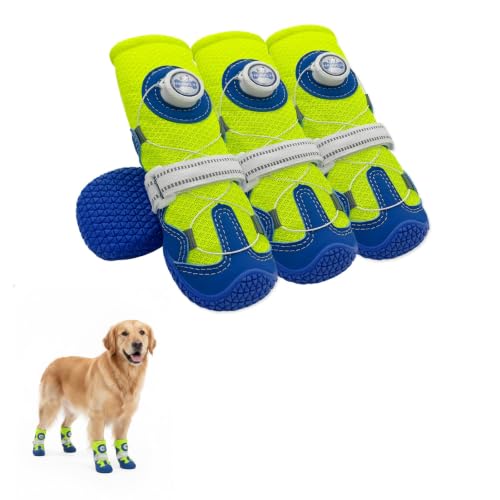
A boot that's too loose will slip off within a few hundred metres, usually without the owner noticing until they look down and see three boots instead of four. A boot that's too tight restricts circulation and is genuinely uncomfortable. The fit you're after is snug enough that a boot doesn't rotate or slide when you gently tug it, but loose enough that you can still slide one or two fingers under the strap. After the boots go on, watch the dog's gait for the first few minutes, persistent high-stepping, chewing at a boot, or reluctance to bear weight on one paw all suggest the fit needs adjusting, not that the dog simply "doesn't like boots."
This is a genuinely common point of confusion when shopping. Traction socks, like the fabric styles designed for hardwood and tile floors, exist to solve a completely different problem than outdoor boots. They're built to give an older or arthritic dog grip on slippery indoor flooring, with a thin fabric sole that grips smooth surfaces. They are not designed, and will not hold up, for outdoor walking, the sole material wears through quickly on pavement, gravel or wet grass, and they offer no real waterproofing or heat protection. If your dog's problem is sliding on your kitchen floor, buy traction socks. If the problem is hot pavement, ice, salt or rough terrain outdoors, you need an actual boot with a proper outsole and closure, or in milder cases, a paw balm as a lighter-touch alternative. Don't expect one product to do both jobs.
Go Deeper
Detailed companion guides for protective paw boots.
How to Measure Your Dog's Paws and Get Boots That Actually Stay On
A practical, step-by-step guide to measuring a dog's paws correctly, reading sizing charts, checking fit once boots arrive, and running the acclimation…
When Do Dogs Actually Need Boots? Hot Pavement, Ice, Trails, and Injury Protection
A practical breakdown of the situations where dog boots genuinely earn their place, hot pavement, winter ice and salt, rough or hazardous trails, and paw…