
Best Dog Car Harness
Best Dog Car Harness, ranked from aggregated owner ratings and reviews, not first-hand testing. Real pros, cons, and who each pick is best for.


Our Top 3 Picks
Quick Comparison
| Product | Best for | Buy | |
|---|---|---|---|
| Kurgo Enhanced Strength Tru-Fit Smart Harness | Best Crash-Tested | See Amazon | View |
| Ruffwear Front Range Dog Harness | Best for Large Dogs | See Amazon | View |
| COOYOO Dog Seat Belt 3-Piece Retractable Set | Best Value | See Amazon | View |
| SlowTon Dog Seat Belt with Bungee (2-Pack) | Best Seat-Belt Tether | See Amazon | View |
| URPOWER Dog Car Seat Cover & Hammock | Best Seat-Cover / Hammock | See Amazon | View |
| BWOGUE Dog Seat Belt (2-Pack, Headrest Restraint) | Best Budget Restraint | See Amazon | View |
How to choose a dog car harness
Start by being honest about what you actually need. If your goal is genuine collision protection, you need a full body harness built for restraint, ideally one that has been crash-tested, and you should treat everything else as a supporting layer. If your goal is simply keeping a dog from climbing into your lap and distracting you, a good tether clipped to a decent harness does that job for a fraction of the price. Both are legitimate. Just do not confuse the two.
Crash-tested or not
The most important question is whether the harness has been crash-tested, and by whom. The gold standard is independent certification from the Center for Pet Safety (CPS), a non-profit that runs a published crash protocol. One tier down is manufacturer crash testing, where the brand tests its own product to a stated standard; the Kurgo Tru-Fit sits here, tested by Kurgo to child-safety-seat load standards. The largest group, including nearly every product marketed as a "dog seatbelt," has never been crash-tested at all. Those still have value for distraction control, but do not buy them expecting crash protection.
Always harness, never collar
Every tether must connect to a body harness, never to a neck collar. A collar tether puts the entire force of a stop on the throat and spine. This is non-negotiable regardless of which product you pick.
Fit above everything
A harness only protects if it fits. Measure your dog's chest girth behind the front legs and follow the manufacturer's size chart rather than guessing by weight. You want two fingers of clearance under each strap and no ability to pull the harness over the head. Re-check fit periodically, especially on growing or seasonally fluffy dogs.
Attachment, seatbelt buckle or LATCH
Look at how the harness connects to the car. The best options tether to the seatbelt buckle or clip directly to a LATCH anchor, which keeps the dog low and secure. Headrest loops are more universal but are only as strong as the headrest they wrap, so reserve them for lighter daily containment.
Bungee versus static
A bungee tether absorbs the jolt of hard braking and is more comfortable day to day. That same stretch, though, means more forward movement in a real crash. For everyday comfort a bungee is kind; for maximum restraint a shorter, crash-tested system is better.
Harness versus crate
For some dogs, an anchored crash-tested crate is safer than any harness, particularly large or anxious dogs. If you go that way, secure the crate to the vehicle; an unanchored crate is a hazard, not a safeguard. A harness suits dogs that ride calmly and vehicles where a crate will not fit.
Where they ride
Buy for the back seat. Front airbags can injure or kill a dog on deployment, so the back seat, restrained, is always the right place. Choose your harness and tether with a rear seating position in mind.
Full Ranking, Reviewed
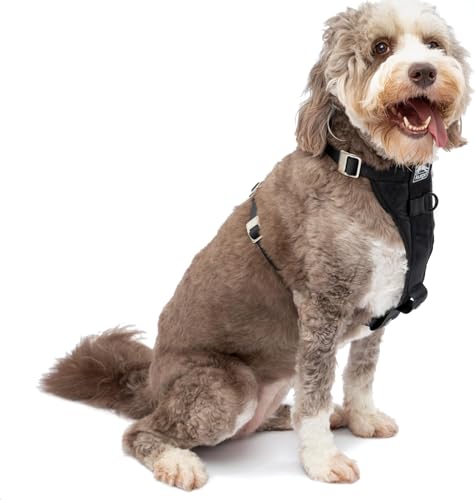
Best for Owners who want an actual restraint harness their dog wears in the car, not just a clip-on tether
- Five adjustment points and a padded chest plate that spreads load across the shoulders instead of the throat
- Steel nesting buckles and a broad chest panel designed to distribute crash forces
- Includes a short seatbelt tether that loops through the buckle or clips to a LATCH anchor
- Sizes span roughly 10 to 110 lb, with the Large rated by Kurgo for dogs up to about 75 lb
- Kurgo states the harness was crash-tested to child-safety-seat load standards, which is far more than most 'safety' harnesses can claim
- The wide chest plate and metal hardware genuinely feel built for restraint rather than just walking
- Doubles as a no-pull walking harness with a front leash ring
- Kurgo's own crash testing is not the same as independent Center for Pet Safety certification, so treat the protection claim as manufacturer-tested, not independently verified
- The many straps take patience to fit correctly, and a loose fit undermines the whole point
Verdict: If you want one product that actively restrains your dog in a collision, a full crash-tested harness beats any collar-clip tether, and the Tru-Fit is the most credible mainstream option here. Just size it precisely and understand the crash claim comes from Kurgo's own lab, not an independent certifier.

Best for Big, strong dogs that need a durable, well-fitted harness to anchor a separate crash-rated tether
- Four adjustment points and a padded, load-spreading chest and belly panel
- Two leash attachment points, including a reinforced webbing loop on the back
- Reflective trim and an ID pocket on the collar
- Sizes from XXS to XL to fit toy breeds through large dogs
- One of the most durable everyday harnesses available, with hardware that holds up to large, powerful dogs
- The wide padded panels are comfortable for long trips and spread any restraint load off the neck
- Fits securely enough to serve as the anchor point for a quality seatbelt tether
- It is a walking harness, not a crash-tested restraint, so on its own it will not protect your dog in a crash
- The plastic back buckle is not designed to absorb collision forces the way a dedicated car harness plate is
Verdict: The best-built everyday harness on this list and an excellent base layer for a big dog, but pair it with a proper crash-rated tether and never rely on it alone for collision protection. For pure walking plus light in-car restraint, it is hard to beat.

Best for Owners who already have a well-fitted harness and want an affordable, adjustable tether kit
- Three-piece set with a retractable seatbelt clip tether, a headrest restraint, and a car-door leash
- Retractable design lets the dog sit, stand and lie down within a limited range
- Nylon webbing with a swivel connector to reduce tangling
- Buckle end fits standard vehicle seatbelt receivers
- Excellent value with tens of thousands of positive owner reviews for everyday distraction control
- The retractable range gives dogs some comfortable movement without letting them roam the cabin
- Two mounting styles (seatbelt buckle or headrest) suit most vehicles
- A tether restrains and reduces driver distraction but is not crash protection, and this one is not crash-tested
- Must be clipped to a body harness, never a neck collar, or a sudden stop can injure the dog's neck
Verdict: A smart, low-cost way to stop your dog wandering the cabin and lunging at the driver. Treat it as a distraction-reduction tool clipped to a good harness, not as a substitute for a crash-tested system.

Best for Multi-dog households wanting shock-absorbing tethers for two seating positions
- Two 2-in-1 tethers that work as either a seatbelt-buckle restraint or a headrest loop
- Elastic bungee section absorbs jolts from sudden braking
- Adjustable length with a 360-degree swivel to prevent twisting
- Heavy-duty nylon webbing with a metal carabiner clip to the harness
- The bungee reduces the harsh yank on the dog during hard stops better than a rigid strap
- Two tethers cover two dogs or two vehicles out of one purchase
- Highly rated by owners for build quality and easy installation
- Bungee stretch means more forward travel in a serious impact, so it is comfort-focused, not crash-rated
- Like all tethers it only works safely clipped to a harness, not to a collar
Verdict: The most comfortable everyday tether here thanks to the shock-absorbing bungee, and the two-pack is genuinely useful. Buy it for daily distraction control and comfort, and layer a crash-tested harness underneath if collision protection is your priority.
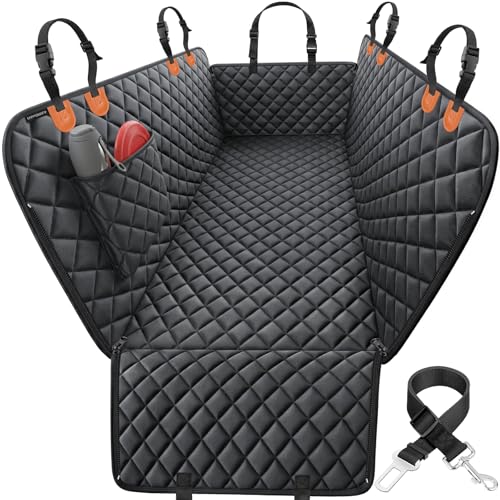
Best for Protecting the back seat and creating a contained hammock space for the dog
- Converts between a flat bench cover and a hammock that blocks the footwell gap
- 600D waterproof Oxford fabric with a non-slip backing
- Side flaps with zippers for door protection and easier loading
- Seat-anchor straps and headrest loops to hold it in place
- The hammock design stops a dog sliding into the footwell and keeps hair, mud and scratches off upholstery
- Waterproof, wipe-clean fabric that holds up to muddy paws and shedding
- Fits the back seat of most cars, SUVs and trucks
- A seat cover contains the dog but provides no crash restraint whatsoever
- Must be combined with a tether or crate, because a hammock alone still lets the dog become a projectile in a crash
Verdict: The best cabin-protection layer here and a genuine comfort upgrade for the dog, but it is a cleanliness and containment product, not a safety restraint. Always use it together with a proper harness-and-tether or crate.

Best for Budget buyers wanting a simple, adjustable headrest tether for two seats
- Two adjustable leads that loop around the headrest posts
- Length adjusts from about 18 to 30 inches
- Nylon webbing with a swivel clip that attaches to a harness
- Works in almost any vehicle with a removable or looped headrest
- Very inexpensive two-pack that reliably keeps a dog in its seating area
- Simple headrest loop fits vehicles that lack a usable seatbelt-buckle option
- Adjustable length lets you keep the dog seated and away from the driver
- A short static tether with no shock absorption and no crash testing
- Only safe clipped to a harness, and a headrest loop is only as strong as the headrest it is attached to
Verdict: A cheap, no-frills way to keep a dog contained and away from the driver. It covers the basics of distraction control on a budget, but do not mistake a static headrest tether for crash protection.
Frequently Asked Questions
Are dog car harnesses actually crash-tested?
A few are, but most are not. The gold standard is independent certification from the Center for Pet Safety (CPS), which publishes a list of restraints that pass its crash protocol. Below that, some brands crash-test their own products to a stated standard, such as Kurgo with the Tru-Fit. The majority of products sold as dog seatbelts, including most tethers and headrest loops, have never been crash-tested at all. Always check who did the testing before trusting a safety claim.
Can I attach the seatbelt tether to my dog's collar?
No, and this is the single most important safety point. A tether clipped to a neck collar concentrates the entire force of a sudden stop or crash on the throat and cervical spine, which can cause serious or fatal injury. Every restraint must connect to a body harness that spreads the load across the chest and shoulders. If a product only lets you clip to a collar, do not use it in a moving car.
Is a harness or a crate safer for my dog in the car?
It depends on the dog and the equipment. A strong, properly anchored crate is one of the safest options for many dogs, and CPS has certified specific crates. But an unsecured or flimsy crate can be more dangerous than a harness. A well-fitted crash-tested harness tethered in the back seat is excellent for dogs that ride calmly. Match the choice to your dog's size and temperament, and whichever you pick, make sure it is secured to the vehicle and correctly fitted.
Where in the car should my dog ride?
In the back seat, restrained by a harness and tether or secured in an anchored crate. Keep dogs out of the front seat because a deploying airbag inflates with enough force to injure or kill an animal at close range, just as it can a small child. Also keep the dog's head inside the vehicle rather than out the window, where it is exposed to debris and the risk of ejection.