

Most dog owners already own shampoo. What trips people up isn't the product, it's the process around it, the parts that happen before the bottle comes out and after the water goes off. Bathing looks simple, so it's easy to skip steps that matter: a quick wet-lather-rinse can leave a dog with soap residue against the skin, mats sealed in tighter than they started, or a chill on a cold floor. None of this requires special equipment. It requires doing the steps in the right order.
Brush Before You Wet Anything
Water tightens mats and tangles rather than loosening them. Run a slicker brush or comb through the coat completely dry, working out any knots, especially behind the ears, in the armpits, and around the tail base, where mats form first. A mat that's merely annoying dry becomes a felted knot once it's wet and full of shampoo, and at that point the only fix is scissors or clippers close to the skin. Ten minutes of brushing beforehand saves a much worse ten minutes later.
This is also a good moment to check the skin itself. Part the coat in a few spots and look for redness, flaking, scabs, or anything that looks like a hot spot. A bath won't fix a skin problem, and hot water on an already-irritated patch can make a dog more reluctant to be bathed at all.
Get the Water Temperature Right
Dog skin is thinner and more sensitive than human skin, so water that feels comfortably warm to your hand can be genuinely hot against a dog's body. Aim for lukewarm, close to body temperature, noticeably cooler than a shower most people would use for themselves. Test it on the inside of your wrist before it touches the dog.
Water that's too hot dries out skin and can scald sensitive areas like the belly and groin. Water that's too cold makes the whole experience unpleasant and tenses a dog up, which makes everything after, rinsing, drying, nail contact, harder. Lukewarm is the number that works for nearly every dog, every time.
Protect Ears and Eyes Before the Water Starts
Water trapped in the ear canal is one of the more common, avoidable causes of ear irritation after a bath, particularly in floppy-eared breeds where airflow is already limited. Loosely placing cotton balls just inside the ear opening (not pushed down the canal) before you start blocks most stray water without restricting hearing or comfort. Remove them once the bath is done.
For the face, avoid direct spray. Use a wet washcloth to clean around the eyes, muzzle, and the outer ear, rather than aiming a hose or shower head at the head area. Shampoo that runs into a dog's eyes stings the same way it would in yours, and a startled reaction near the face is how bath time turns into a wrestling match.
Wet, Lather, and Actually Rinse It All Out
Wet the coat thoroughly down to the skin, a dog's outer coat can look soaked while the undercoat stays mostly dry, especially on double-coated breeds. Apply shampoo starting at the neck and working back, which also creates a barrier that discourages fleas from running toward the face. Massage it in rather than just smearing it across the surface; this is what actually lifts dirt and loose hair out of the coat.
Then rinse. This is the step most people underdo. Shampoo residue left in the coat is one of the most common causes of post-bath itching, and it's easy to assume a coat is clean when it still has suds trapped near the skin. Keep rinsing well past the point where it looks clear, run a hand against the grain of the coat and check for any slipperiness, which means there's still soap in there. On long or thick coats, this can take genuinely longer than people expect.
Dry Thoroughly, Not Just "Mostly"
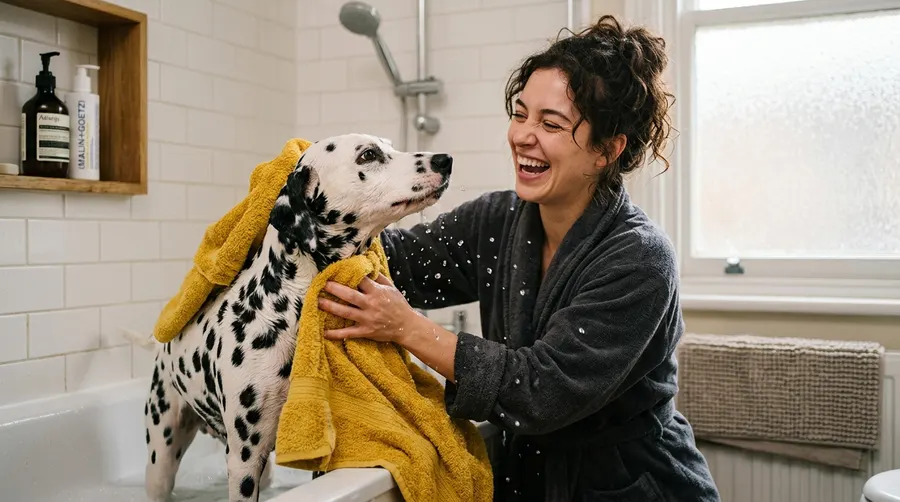
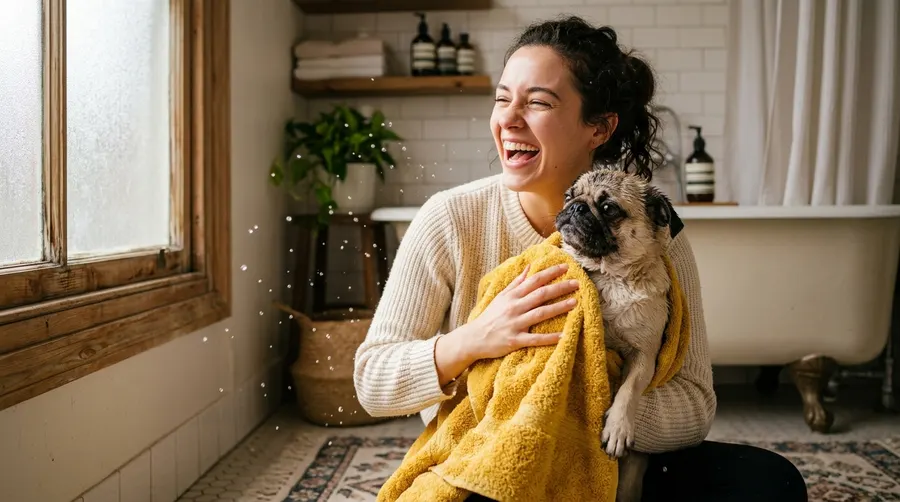
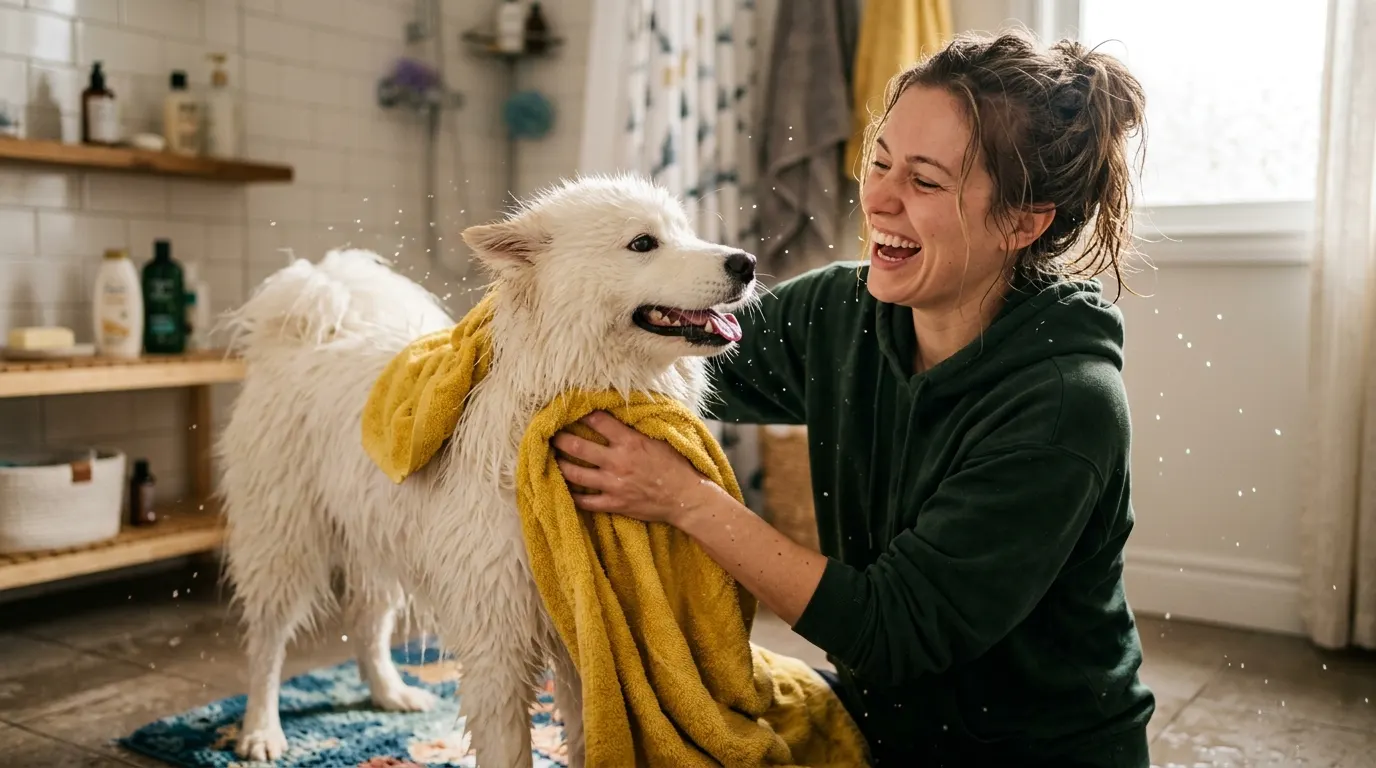
Towel off as much water as possible first, then either air-dry in a warm space or use a dryer on a cool or low-heat setting held a reasonable distance from the skin, human hair dryers on high heat can burn. A coat that stays damp for hours, especially at the skin and in skin folds, creates the humid environment yeast and bacteria need to take hold. This matters even more for dogs with skin folds (bulldogs, pugs) or thick undercoats, where trapped moisture doesn't evaporate on its own.
Brush again once the coat is dry. This finishes the job the pre-bath brushing started and leaves the coat looking noticeably better than air-drying alone.
How Often Is Actually Too Often
There's no single number that fits every dog, a short-haired dog that swims daily needs different handling than an indoor dog with a low-oil coat, but the pattern that causes problems is consistent: bathing so frequently that the skin never gets to rebuild its natural oil barrier. Those oils protect against dryness and minor irritants, and stripping them out repeatedly is what pushes a dog toward flaky, itchy, irritated skin, the opposite of what the bath was meant to fix.
Signs a dog is being bathed too often include a dull or dry-looking coat, flaking skin, and itching that shows up mainly after baths rather than before them. If that pattern appears, stretching out the interval between baths is usually the fix, not switching shampoos. A dog that genuinely needs frequent washing, due to allergies, a skin condition, or a specific vet-directed routine, is a different situation, and the shampoo and frequency for that should come from a vet, not a general guideline.
The Short Version
Brush dry first. Use lukewarm water. Protect the ears before you start and keep shampoo away from the eyes. Rinse for longer than feels necessary. Dry the coat fully, including skin folds. And resist bathing more often than the coat actually needs, over-bathing causes more skin problems than it solves.