


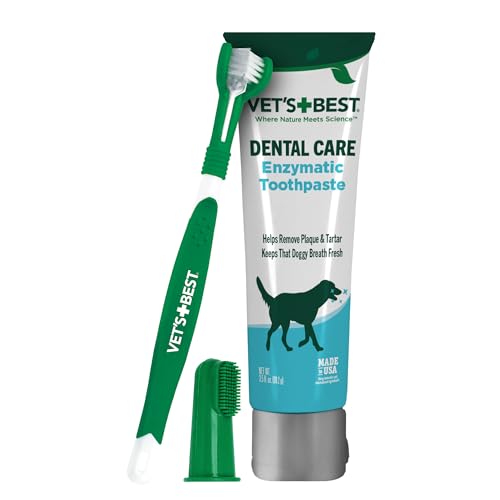

Tooth Brushing for Dogs, Introducing Dog Toothpaste and a Finger Brush
Most dogs aren't born tolerating a toothbrush in their mouth, and rushing the process is the main reason tooth-brushing attempts fail. Building the habit gradually gets far better long-term results.
Start with taste, not tools
Begin with dog-specific toothpaste alone, poultry and beef flavours are common and most dogs find them genuinely appealing. Let your dog lick a small amount off your finger for a few days with no brushing involved at all. This step matters more than people expect: it turns the flavour into something your dog actively wants, rather than something that arrives attached to an unfamiliar tool.
Introduce touch gradually
Once your dog is comfortable licking the paste off your finger, start gently rubbing your finger along the outside of their teeth and gums for just a few seconds, then stop and reward. Do this daily, slowly increasing the time and the area covered. Only move to a finger brush or soft-bristled dog toothbrush once your dog is relaxed with finger contact.
Technique, The Gumline, Plaque, and Tartar
Focus on the outer surfaces of the teeth, angling the brush slightly toward the gumline, that's where plaque and tartar build up fastest, particularly on the back molars. You don't need to brush the inside surfaces; a dog's tongue does a reasonable job of keeping those cleaner naturally. Small circular motions, a few seconds per section, and stop before your dog gets frustrated rather than pushing for a "complete" job every time.
Why Xylitol Rules Out Human Toothpaste
Never use human toothpaste. Many contain xylitol, which is highly toxic to dogs even in small amounts, and the fluoride levels in human formulas aren't meant to be swallowed the way a dog inevitably will. Dog toothpaste is designed to be safely swallowed.
Keeping it realistic
Daily brushing is the gold standard for preventing plaque and tartar buildup, but even 3-4 times a week makes a meaningful difference over not brushing at all. Dental chews and appropriate chew toys can support the routine, though they're a supplement to brushing, not a replacement for it.
Timing sessions well
Pick a moment when your dog is naturally calm, after a walk rather than when they're wound up, and try to attach brushing to an existing routine, like just before bed, so it becomes a predictable part of the day rather than something sprung on them.
When brushing isn't enough
If you notice persistent bad breath, red or bleeding gums, loose teeth, or your dog pawing at their mouth or avoiding food, that's beyond a home-care issue, it points to dental disease that needs a vet's assessment, and possibly a professional dental clean under anaesthetic.