
Best Dog Toothbrush
Best Dog Toothbrush, ranked from aggregated owner ratings and reviews, not first-hand testing. Real pros, cons, and who each pick is best for.


Our Top 3 Picks
Quick Comparison
| Product | Best for | Buy | |
|---|---|---|---|
| Vet's Best Dog Toothpaste & Toothbrush Dental Care Kit (3.5 oz) | Best Overall Kit | See Amazon | View |
| Arm & Hammer Tartar Control Dog Dental Kit, Beef Flavor (3-Piece) | Best Value | See Amazon | View |
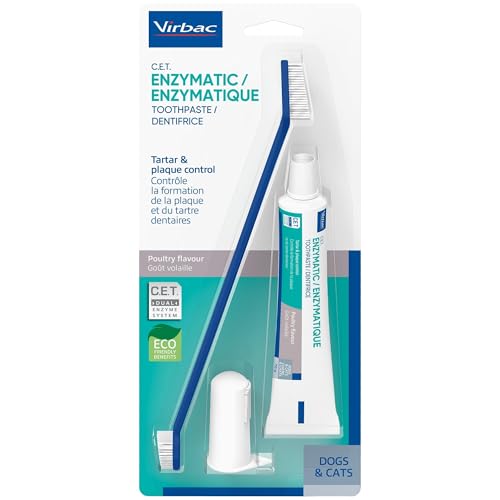
| C.E.T. Oral Hygiene Kit for Dogs, Poultry Flavor Toothpaste with Toothbrush | Best Toothpaste + Brush Combo | See Amazon | View |
| C.E.T. Enzymatic Toothpaste for Dogs and Cats, Poultry (2.5 oz) | Best Enzymatic Toothpaste | See Amazon | View |
| Jasper 360° Finger Toothbrush for Dogs & Cats (Blue, 2-Pack) | Best Finger Brush | See Amazon | View |
| Dual-Head Dog Toothbrush with Soft Bristles, Non-Slip Handle | Best for Small Dogs | See Amazon | View |
What to look for in a dog toothbrush
Head size that fits the mouth. The most common mistake is a brush head that is too big. Large and medium dogs do well with a standard dual-ended brush, a big head for the back molars, a small head for the front teeth. Toy and small breeds need a genuinely small head with soft bristles, or you simply cannot reach the back teeth or brush the gumline gently.
Soft bristles, always. Dog gums are thinner and more delicate than ours. Soft bristles remove plaque effectively without cutting or irritating the gums. Firm bristles do more harm than good.
A handle that keeps your fingers safe. A handled brush lets you reach the back of the mouth without putting your fingers between the molars. Finger brushes are wonderful for control and for nervous dogs, but only for dogs you completely trust not to bite.
The right format for your dog's stage. Choose a finger brush to introduce brushing to an anxious dog, a small soft head for a toy breed, and a dual-ended handled brush as the everyday default for medium and large dogs.
Brush plus paste, or brush alone?
If you are starting from zero, buy a kit. A kit pairs a dog-safe enzymatic toothpaste with a compatible brush so you are not guessing on compatibility, and it is usually cheaper than buying the two separately. If you already own a brush your dog tolerates, buy the paste on its own as a refill, it works out cheaper per use.
The toothpaste rule you cannot ignore
Only ever use toothpaste formulated for dogs. Never use human toothpaste. It commonly contains fluoride, which is toxic to dogs in sufficient quantity, and often xylitol, which is dangerously toxic to dogs even in small amounts. Dogs swallow rather than spit, so anything in the tube goes down. Choose an enzymatic dog toothpaste in a flavour your dog likes; the enzymes help break down plaque while the brush does the mechanical work.
Look for the VOHC seal
When comparing pastes, gels or dental chews, the Veterinary Oral Health Council (VOHC) Seal of Acceptance tells you a product met a standard for reducing plaque or tartar in trials. It is a helpful tie-breaker, not a requirement, and no product replaces the mechanical action of brushing.
Set your expectations honestly
Brushing daily is the gold standard and it meaningfully slows dental disease, but it is prevention, not a cure. It does not remove tartar that has already hardened below the gumline, only a professional veterinary cleaning can do that. If you see persistent bad breath, red or bleeding gums, or your dog is reluctant to eat, book a vet visit.
Full Ranking, Reviewed
Best for Most owners starting a home brushing routine from scratch
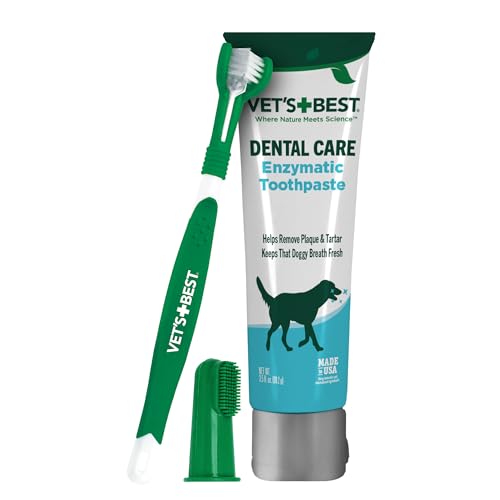
- Enzymatic dog toothpaste paired with a dual-ended toothbrush in one kit
- Larger 3.5 oz tube, so you are not refilling as often as smaller tubes
- Formulated with aloe, neem oil and enzymes intended to help loosen plaque
- Dual-head brush covers both large back molars and smaller front teeth
- Everything you need to start is in one box, no guessing on compatibility
- One of the most widely owned dog dental products on the market, with strong owner feedback
- Natural-ingredient formula appeals to owners avoiding synthetic additives
- The bundled brush head is large and can be awkward for toy breeds
- Some dogs are lukewarm on the flavour compared with strong poultry pastes
Verdict: The safest default pick: a complete, well-proven kit that gets a first-time brusher everything in one purchase. It is the kit we would hand a friend who has never brushed a dog's teeth before.

Best for Budget-conscious owners who want a toothbrush, fingerbrush and paste together
- Three pieces: enzymatic toothpaste, a standard toothbrush and a slip-on fingerbrush
- Baking soda plus enzymes, targeting tartar and odour
- Beef flavour that tends to win over food-motivated dogs
- Fingerbrush option makes the first few sessions less intimidating
- Two brush styles in one kit lets you find what your dog tolerates
- Widely available and consistently one of the lower-cost complete kits
- Strong, well-established owner review base
- The fingerbrush is thin and wears out faster than a handled brush
- Beef flavour is polarising; some dogs prefer poultry pastes
Verdict: The most kit for your money. Two brush formats plus paste means you can experiment with what your dog accepts without buying multiple products.
Best for Owners who want the paste vets most often recommend, bundled with a brush
- C.E.T. enzymatic poultry-flavour toothpaste, a long-standing vet-clinic staple
- Includes a full-size dog toothbrush sized for the paste
- Dual-enzyme (glucose oxidase and lactoperoxidase) system marketed for plaque control
- Poultry flavour that most dogs accept readily
- The C.E.T. paste is the brand many veterinary clinics stock and suggest
- High owner satisfaction across a large review base
- Poultry flavour has a strong track record for palatability
- Costs more than supermarket-brand kits for a similar tube size
- The included brush is basic; keen brushers may upgrade separately
Verdict: If you want the toothpaste veterinary teams reach for, paired with a matching brush, this is the combo to buy. The paste is the real draw here.

Best for Owners who already own a brush and just need a trusted dog-safe paste
- Toothpaste only, so you can pair it with any brush your dog already tolerates
- Dual-enzyme formula intended to support ongoing plaque and tartar control
- Poultry flavour dogs generally take to without a fight
- Safe to swallow and formulated with no foaming agents, unlike human toothpaste
- One of the best-regarded options in this group, with a large owner base
- Buying paste on its own is cheaper per use if you keep your existing brush
- Widely recommended enzymatic formula from a veterinary-focused brand
- No brush included, so it is not a starter purchase on its own
- The 2.5 oz tube is smaller than some all-in-one kits
Verdict: Our pick when you only need the paste. It is a dog-safe enzymatic toothpaste with a large, satisfied owner base, ideal as a repeat-buy refill.

Best for Nervous dogs and owners easing into brushing with gentle finger control
- 360-degree bristle design wraps the whole fingertip so angle matters less
- Silicone construction the brand markets as denser-bristled than typical fingerbrushes
- Two-pack, so you always have a spare or one per pet
- Slips over your finger for close, controlled contact along the gumline
- Finger control feels less threatening to dogs new to brushing
- Full wrap-around bristles reach teeth from several angles at once
- Strong owner ratings and comes as a pair
- Puts your finger near the back teeth, so not for dogs that may nip
- Silicone bristles are gentler but less effective on stubborn tartar than firmer brushes
Verdict: The best way to introduce brushing to an anxious dog. The finger format gives you fine control while your dog gets used to the sensation. Skip it if there is any bite risk.

Best for Small breeds and puppies with tight mouths and delicate gums
- Dual-head design with a smaller brush end suited to little mouths
- Soft bristles aimed at sensitive gums and smaller teeth
- Non-slip handle for steadier control during quick sessions
- Compact head reaches the back molars in toy and small breeds
- Small head fits where full-size adult brushes cannot
- Soft bristles are gentler on the thin gums of small dogs and puppies
- Very well rated by owners
- Soft bristles need more passes to shift plaque than firmer brushes
- Toothbrush only; you supply your own dog-safe enzymatic paste
Verdict: The right brush shape for a small mouth. If a standard brush head has felt too big and clumsy for your toy breed, this smaller soft-bristled option is the fix.


Frequently Asked Questions
Can I use human toothpaste on my dog?
No. Never use human toothpaste on a dog. It commonly contains fluoride, which is toxic to dogs if swallowed in enough quantity, and many sugar-free pastes contain xylitol, which is dangerously toxic to dogs even in tiny amounts and can cause a life-threatening drop in blood sugar. Dogs cannot rinse and spit, so they swallow it. Always use a toothpaste made specifically for dogs, ideally an enzymatic one.
How often should I brush my dog's teeth?
Daily is the gold standard, because plaque starts hardening into tartar within about 24 to 48 hours. If daily genuinely is not possible, brushing three times a week is still a worthwhile improvement over not brushing at all, but aim for every day. Short, consistent sessions beat occasional long ones.
Does brushing replace a professional dental cleaning at the vet?
No. Brushing slows the build-up of plaque and tartar and stretches the time between cleanings, but it is prevention, not treatment. It cannot remove hardened tartar below the gumline. Only a veterinary dental cleaning, usually done under anaesthesia, can safely address disease that has already taken hold. Think of brushing as daily maintenance alongside, not instead of, vet dental care.
My dog has bad breath and red gums, is that normal?
No, and it should not be ignored. Persistent bad breath, red or bleeding gums, visible brown tartar, reluctance to eat, or loose teeth are common early signs of periodontal disease, which is very common in dogs. Book a veterinary dental exam. Starting a brushing routine helps prevent future build-up, but existing disease needs a vet's assessment.