


Owning one is not the same as using it right
Most cooling vest guides stop at "soak it, wring it out, put it on." That's the easy 20% of getting real benefit from one. The other 80% is a handful of habits around timing, fit, and fabric care that determine whether the vest is doing meaningful work on a hot walk or just sitting there damp and useless. This is the part that gets skipped, and it's the part that decides whether the vest earns its price.
The physics in one paragraph
Evaporative cooling only happens when liquid water changes to vapor, and that phase change pulls heat energy from whatever the water is touching, in this case, your dog's skin, through the fabric. The rate depends on two things: how much surface area is wet, and how readily the surrounding air can absorb more moisture. A vest that's only damp in patches, or one being worn in air that's already carrying a lot of moisture, evaporates slowly and cools accordingly little. This is also why a light breeze noticeably improves performance, moving air constantly replaces the humid layer right at the fabric surface with drier air, speeding up evaporation. A vest worn somewhere still and shaded won't cool nearly as well as the same vest worn while walking or with a fan nearby.
Soaking and wringing, done properly
Cold water works faster than room-temperature water because it starts the fabric further from body temperature, but the bigger variable is saturation: a vest that's merely misted will dry out in minutes, while one that's fully submerged and then wrung to "damp, not dripping" holds moisture for a genuinely useful stretch. Wring firmly enough that it doesn't drip when held up, a dripping vest is uncomfortable and doesn't cool any faster than a properly wrung one, it just wastes water down your dog's legs.
Gel and phase-change vests need different handling
These work by direct contact rather than evaporation, so the failure mode is different. Follow the maker's chilling time exactly, freezing packs meant only for the fridge can get cold enough to be uncomfortable or, in extreme cases, risk skin irritation against bare or thin-coated skin, so always check the product's guidance rather than assuming colder is better. Because gel vests don't rely on airflow or humidity, they're the more reliable choice for muggy climates or still, shaded conditions where an evaporative vest would struggle, but they're heavier, and that added weight matters for small, senior, or already-fatigued dogs.
The mistake that undoes the whole point
The single most common failure isn't skipping the vest, it's leaving a dried-out one on. Once the fabric is fully dry, it stops cooling and starts behaving like an extra layer of clothing, which is the opposite of what you want on a hot dog. In warm, dry, breezy conditions this can happen well within an hour of active walking. If you can't remember the last time you re-wet it, assume it's dry and check. A dark-colored vest left on in direct sun compounds this, since dark fabric absorbs more solar heat once it's no longer evaporating enough to offset it.
Fit, the difference between contact and decoration
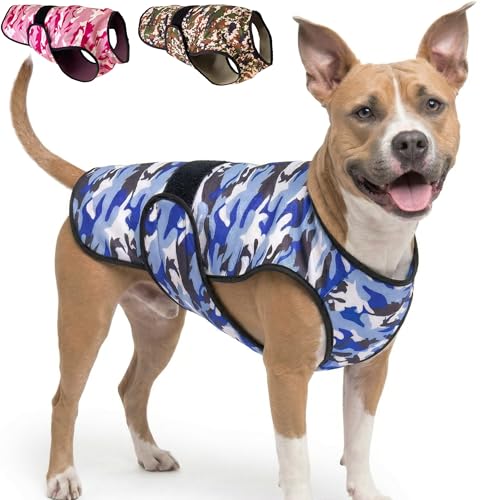
A vest only transfers heat where it's actually touching skin or a thin coat. A loose, flappy fit looks fine but loses most of its function, because air gets between the fabric and the dog rather than pulling heat straight off it. Measure chest girth at the widest point behind the front legs and back length from the base of the neck to where you want coverage to end, then match to the specific brand's chart, sizing varies enough between makers that "medium" on one label can be "large" on another. Re-check fit every few months on a growing puppy or a dog whose weight has shifted; a vest that fit well in spring can be loose or tight by peak summer.
When a vest genuinely helps, and when it's not doing much
A cooling vest earns its keep on structured, moderate-length walks or light activity in dry heat, especially for dogs that run warm: thick-coated breeds, working or high-drive dogs that won't self-limit, and dogs recovering from illness where minimizing heat load matters. It's less useful in a few common scenarios owners assume it covers: sitting in a backyard with shade and water already available (the fundamentals are doing the real work there), short car trips (a vest does nothing against a hot car interior and shouldn't be treated as if it does), and swimming or already-wet play, where the dog's own soaked coat is already providing a similar effect. In genuinely humid climates, temper expectations across the board, evaporative technology has a hard physical ceiling there regardless of brand or price.
Maintenance that extends the vest's working life
Rinse out sweat, dirt, and any pool or lake water after use, and let the vest dry fully between soaks rather than storing it damp, trapped moisture in a rolled-up vest is a reliable way to grow mildew, which then smells and can irritate skin on the next wear. Most fabric vests tolerate a gentle machine wash; check the label before tumble drying, since heat can degrade the fibers that hold water for evaporative cooling. Replace a vest once the fabric stops holding water the way it used to, or once elastic and straps have stretched out enough that a properly sized vest no longer sits snugly.