Cooling Vests & Sun Protection for Dogs
Comprehensive technical analysis of material density, anatomical weight distribution, Indentation Load Deflection (ILD) thresholds, and veterinary standards for cooling vests & sun protection.


Recommended Products
See the full ranking →

Dog Cooling Vests, What Actually Matters
A cooling vest is a genuinely useful tool for hot-weather walks, but it's still a tool with real limits, not a force field against heat. Before comparing colours and price, it helps to understand what these vests actually do, how the two main technologies differ, and where they stop being enough on their own. Get that right and a cooling vest becomes one sensible layer in a hot-weather routine. Get it wrong, and it becomes a false sense of security on the one day it matters most.
Almost every vest sold for dogs falls into one of two categories, and they cool a dog in genuinely different ways.
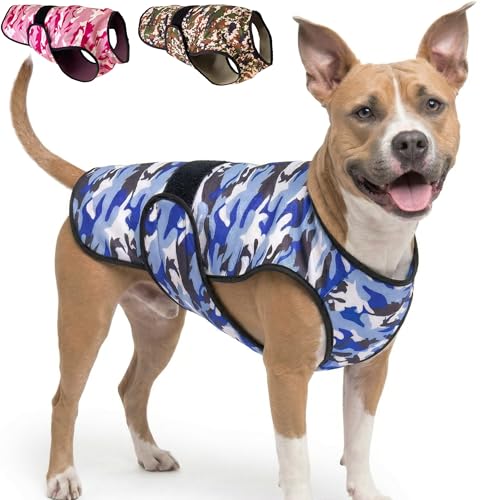
Evaporative vests are the vests in this roundup, soaked in cold water, wrung out, and worn damp. As the water evaporates off the fabric, it pulls heat away from the dog's skin, the same basic principle behind a wet towel feeling cool on a hot day. This is a mild, steady cooling effect rather than a dramatic temperature drop, and it depends entirely on the water actually evaporating.
Gel or phase-change vests work differently: they contain a gel or cooling pack that's chilled in the fridge or freezer before wearing, and they cool through direct contact rather than evaporation. These tend to feel colder faster at the start of a walk but the effect fades as the gel warms toward ambient temperature, and they don't need water to work, which also makes them a useful option in humid climates where evaporative vests struggle.
Neither type is objectively "better", they suit different situations. Evaporative vests are lightweight, need no fridge or freezer, and are easy to re-activate on the go with any water source. Gel vests give a stronger initial chill and work regardless of humidity, but they're heavier, need pre-planning to chill, and the cooling effect tapers off as the pack warms.
An evaporative vest is not a set-and-forget garment. Once the fabric dries out, it stops cooling and becomes, at best, a slightly damp piece of clothing. In hot, dry, breezy conditions, that can happen within an hour or two of active walking. The practical routine is simple: carry water on any walk long enough to need one, and re-soak the vest, even a partial splash, well before it feels fully dry to the touch. Waiting until the dog seems to be struggling again is waiting too long.
Evaporation only works efficiently when the surrounding air is dry enough to absorb moisture. In humid conditions, the air is already close to saturated, so water evaporates off the vest far more slowly, and the cooling effect drops off with it. This is the single biggest gap in evaporative-vest marketing: a vest that performs well in a dry 35°C climate can do noticeably less in a humid one at the same temperature. If you live somewhere genuinely humid, treat an evaporative vest as a modest assist rather than a primary cooling strategy, and lean more heavily on shade, water access and timing (below).
A cooling vest only works if it sits against the dog's skin or close to it, a loose, flapping vest loses contact and airflow does the rest of the drying, not the cooling. Measure chest girth (the widest part of the ribcage, just behind the front legs) and back length, and match to the maker's size chart rather than guessing from weight, since two dogs of the same weight can be very different shapes. A harness-style back opening (like several picks above) is worth prioritising if your dog already wears a harness, since it avoids layering gear on top of gear.
Most cooling vest fabric provides some incidental UV coverage simply by covering the back and sides, but that's different from a fabric explicitly rated for sun protection (an SPF rating on the garment itself). If your dog spends real time in direct sun, thin-coated breeds, light-coloured or pink-skinned dogs, or dogs with a recently clipped coat are all more sun-exposed, a vest with an explicit SPF rating is doing more deliberate work than one that just happens to cover the back. Either way, a vest covers the torso; exposed areas like the nose, ears and belly aren't protected by a vest and may need a dog-safe sunscreen or simply more shade.
This is the most important section in this guide: a cooling vest helps, but it is not a substitute for the fundamentals of hot-weather safety.
- Shade and fresh water matter more than any garment. A dog without access to both is at risk regardless of what it's wearing.
- Avoid the hottest part of the day. Early morning and evening walks are far safer than midday heat, especially in direct sun.
- Check the pavement. If it's too hot for the back of your hand held on it for five seconds, it's too hot for paws, a vest does nothing to protect paw pads.
- Never leave a dog in a parked car, even briefly, even with windows cracked. Car interiors heat far faster and far higher than most owners expect, and it remains one of the most common causes of preventable heatstroke.
- Some dogs overheat faster than others. Brachycephalic (flat-faced) breeds like bulldogs, pugs and boxers have compromised airways and struggle to pant off heat efficiently. Senior dogs, overweight dogs, and dogs with heart or respiratory conditions also have less capacity to cope with heat stress. These dogs need more caution, not more vest.
A cooling vest is a genuinely useful piece of the puzzle for hot-weather walks. Used alongside shade, water, sensible timing and an honest read of your dog's individual heat tolerance, it's a smart buy. Used as a replacement for those basics, it isn't enough, and no vest on the market changes that.
Go Deeper
Detailed companion guides for cooling vests & sun protection.
How Dog Cooling Vests Actually Work, And How to Use One Right
The evaporative science behind cooling vests, the usage mistakes that cancel them out, and which situations they actually help with versus which they don't.
Recognizing and Preventing Heatstroke in Dogs
A safety deep-dive on the early and emergency signs of canine heatstroke, first-aid steps, highest-risk dogs, and prevention that goes beyond a vest.