


Why the leash style matters more than the brand
Most leash shopping advice jumps straight to color and padding, but the bigger decision is category. A 6-foot standard leash, a 30-foot long-line, a hands-free running leash, a slip lead, and a retractable leash are not interchangeable tools, each trades control, freedom, and safety differently. Picking the wrong category for the situation is a more common source of walk problems than picking the wrong brand within a category.
Standard (fixed-length) leashes
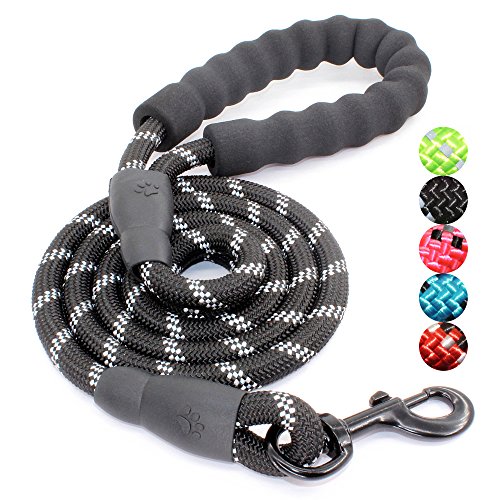
The fixed-length leash, typically 4 to 6 feet, is the default for a reason: it gives a consistent, predictable amount of slack, which matters most in the situations where control is non-negotiable (sidewalks, vet waiting rooms, anywhere near traffic or other dogs). Because the length never changes, both you and the dog learn where the boundary is, which is part of why fixed-length leashes are generally considered the safer everyday choice compared to mechanisms that vary in tension.
Material matters here. Nylon webbing is the standard, light, inexpensive, widely available in different widths (thicker webbing generally holds up better against a strong puller). Leather softens and gets more comfortable over time and resists abrasion well, but costs more and needs occasional conditioning. Biothane (a coated webbing) is waterproof, wipes clean of mud in seconds, and doesn't absorb odor the way nylon can, a genuine advantage for muddy-trail or beach walkers, at a higher price point than plain nylon.
Long-lines
A long-line is a lightweight leash running anywhere from about 10 to 50 feet, used almost exclusively for training and supervised freedom rather than everyday walking. It lets a dog range, sniff, and practice recall at a distance while you retain a physical connection if things go wrong. Long-lines are covered in depth in our companion guide on using a long-line for recall training, the short version here is that they solve a different problem than a standard leash: freedom with a safety net, not close-quarters control.
Hands-free leashes
Hands-free leashes attach around the waist (sometimes with a bungee section to absorb sudden pulls) and free up both hands, useful for runners, hikers, people walking multiple dogs, or anyone who needs a hand free for a stroller, poop bags, or hiking poles. The bungee give is a real feature, not a gimmick: it reduces the jolt transmitted to your lower back when a dog lunges or suddenly changes direction, compared to a rigid leash held in-hand. The trade-off is reduced fine control, because the leash is anchored to your body rather than held and adjustable in-hand, hands-free designs work best with dogs that already walk reasonably well and don't need constant correction.
Slip leads
A slip lead combines collar and leash in one piece of rope or webbing that tightens as the dog pulls and loosens when they stop. They're common in shelters and vet clinics because they go on in seconds without fitting a separate collar. The honest caution: because a slip lead has no fixed stopping point, it can keep tightening around the neck if a dog lunges hard and doesn't yield to the pressure, which is a real welfare concern for dogs that pull hard, panic, or haven't been taught to respond to leash pressure. Slip leads are best treated as a quick-transport tool for calm, leash-trained dogs, not a long-term walking solution for a puller.
Retractable leashes, the honest safety picture
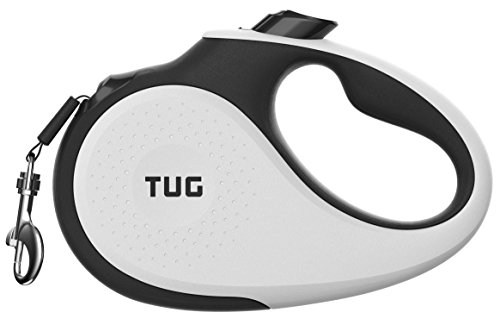
Retractable leashes are popular because they offer variable length from a single handle, extending and retracting a thin cord or flat tape as the dog moves. The safety concerns are well documented enough that they deserve a straight answer rather than a footnote:
- Thin cord causes real injuries. The cord on many retractable leashes is narrow enough that if it wraps around a hand, leg, or ankle, the dog's or a person's, a sudden pull can cause friction burns, lacerations, or in more severe cases, deeper tissue damage.
- Entanglement risk around people, dogs, and objects. Because the line is thin, low to the ground, and often not visible at a distance, other dogs, cyclists, and pedestrians can walk into it before anyone notices.
- Less control exactly when you need it most. A dog can get 10, 20, or more feet away before you can react to an oncoming car, a loose dog, or wildlife, and disengaging the lock quickly enough to reel a dog back in a real emergency is harder under stress than it sounds.
- Mechanism failure. The locking button and internal spring are wear parts; a lock that fails to catch, or a handle that's dropped and goes skittering (which can itself frighten a dog into bolting), are recurring complaints in user feedback across the category.
Clip strength, the part nobody checks
The clip is the weakest structural point on almost any leash. Bolt snaps (a spring-loaded barrel mechanism) are generally sturdier under sideways and pulling force than lighter trigger-hook clips, which can bend or pop open under a hard, sudden lunge. If you have a strong or reactive dog, checking the clip's rated weight and mechanism type is worth more than checking the webbing width, the webbing rarely fails first.
Matching leash to scenario
- Everyday walks, city streets, vet visits: standard fixed-length leash, 4-6 ft.
- Recall practice, sniff walks, open fields: long-line, 15-30 ft.
- Running, hiking, multiple dogs: hands-free leash with bungee.
- Quick shelter/vet transport of a calm, trained dog: slip lead.
- Open, quiet space with a non-pulling, reliable dog: retractable leash, used with awareness of its limits.