



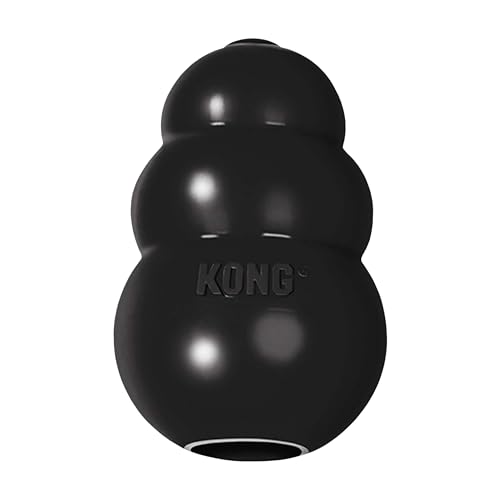
Two failure modes, one decision
Every "indestructible" chew toy claim is selling you half the story. A heavy chewer's gear has to survive two opposite failure modes at once, and most owners only ever think about one of them. The first is durability failure: a toy that comes apart lets your dog swallow chunks, and swallowed chunks either pass or they don't. The second is hardness failure: a toy that never gives at all transmits every bit of bite force straight into the tooth enamel, and enamel loses that fight. Picking gear for a strong chewer is really a running trade-off between these two risks, not a single "how tough is it" question.
The hardness test, and why it exists
Vets commonly recommend a simple check before handing any chew to a dog that bites down hard: press it firmly with your thumbnail. If the surface doesn't dent or flex at all, it's rigid enough to crack a tooth under real bite pressure. A second version of the same idea is to rap the item against your own kneecap; if that stings, it's too hard for a jaw.
The reason this matters is mechanical, not superstitious. Dog teeth are strongest at the enamel surface but the enamel is thin, and the large upper fourth premolar (the "carnassial" tooth dogs use to shear and crush) takes the brunt of hard chewing. When that tooth meets an object that won't give, the crack runs along the enamel-dentin boundary, most often as a slab fracture that shears off a chunk of the tooth and can expose the pulp underneath. An exposed pulp is not a cosmetic problem: it's a direct line for bacteria into the root, it's painful the moment it happens even if the dog doesn't show it clearly, and it typically ends in either a root canal or an extraction. Neither is cheap, and both were avoidable with a softer toy.
Why "indestructible" natural chews are usually the worst offenders
Antlers, real bones, hooves, and hard cheese or bully-stick-style "long lasting" chews are marketed on toughness, and toughness is exactly the problem. Deer antler and cooked or sterilised bone are both harder than most nylon and don't flex under bite pressure at all, which is why vets see a disproportionate number of fractured carnassials in dogs chewing these items. They also splinter rather than compress, so a cracked antler or bone edge can be sharp enough to cut gums or, if swallowed, the digestive tract. "Marketed for aggressive chewers" is a sales claim, not a safety rating; read it as a hint to check the toy's hardness yourself rather than a guarantee.
Choking, when the toy itself becomes the hazard
A toy small enough to be taken fully into the mouth can lodge across the back of the throat, especially with a strong, sudden bite that launches it backward, which is a known way tennis-ball-sized objects cause airway obstruction in bigger dogs. The fix is sizing, not material: choose chews and balls that are clearly too large to be swallowed whole or wedged crosswise in the throat, and size up rather than down whenever a dog is between size bands on a product's chart.
Blockage, what happens after a chunk goes down
Choking is the sudden, visible danger; a swallowed chunk that makes it past the throat creates a slower, quieter one. Rubber, nylon and rope fragments don't digest, and a large enough piece can lodge in the stomach outlet or the intestine, creating a mechanical blockage. This is a genuine emergency, not a wait-and-see situation, because a fully obstructed gut can affect blood supply to the tissue within a day or two.
Signs that point to a possible blockage include repeated vomiting (especially if your dog can't keep water down), a hunched or painful stance, straining without producing anything, a visibly swollen or tender abdomen, lethargy paired with a sudden loss of appetite, or you directly witnessing your dog swallow a large piece. Any of these, especially combined with a chewed-up toy missing a chunk, warrants a same-day call to your vet or an emergency clinic rather than a "let's watch it" approach.
Supervision that actually reduces risk
"Supervised" doesn't mean the toy is in the room with you; it means you're watching how your specific dog attacks it, at least for the first several sessions with anything new. Some dogs lick and gnaw a chew for months without incident; others locate the weak point in ten minutes and start swallowing. You only find out which dog you have by watching the first few uses closely, then adjusting: unsupervised time is for toys you've already confirmed your dog treats gently.
A retirement checklist worth keeping
Check chews regularly, not just when they look obviously destroyed. Retire anything that has a crack or split you can see or feel, a chunk visibly missing, a section worn down small enough to fit fully in the mouth, sharp or splintered edges, or loose parts like squeakers or stuffing starting to show. For stuffable rubber toys, wash them regularly too; trapped food residue isn't a fracture or choking risk, but it does go rancid and can upset a sensitive stomach. When in doubt, the cost of a replacement toy is always lower than the cost of a vet visit.