



Three materials, three different bargains
"What's the toughest chew?" is the wrong first question for a strong chewer. The better one is "what am I trading away for that toughness?" because rubber, nylon and edible chews each solve durability differently, and each brings its own downside along with it. None of the three is simply better than the others across the board; the right pick depends on how your specific dog chews, not just how hard they bite.
Rubber, gives a little, and that's the point
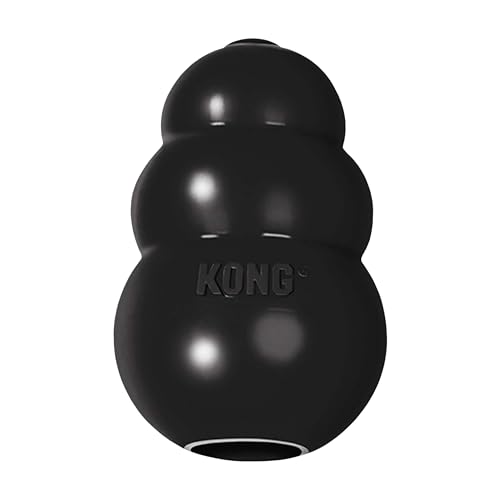
Firm natural rubber (the KONG-style formulation is the best-known example) is popular with vets for power chewers precisely because it flexes under pressure instead of resisting it outright. That give absorbs bite force before it reaches the tooth, which is the main reason rubber tends to be gentler on teeth than nylon or bone even when a dog is chewing just as hard. Stuffable rubber designs add a second benefit: packing them with food turns a few minutes of chewing into a longer session of licking and working the toy, which tires a dog out mentally as well as physically.
The trade-off is that rubber isn't infinitely tough. A genuinely determined chewer can eventually work off small bits at the rim of a stuffed cavity or wear through thinner-walled rubber toys, so "rubber" isn't a synonym for "supervision optional." It also doesn't do much for dental cleaning on its own; the softness that protects teeth means it isn't scraping plaque the way a harder surface would.
Nylon, hard, long-lasting, and honest about the catch
Durable nylon chews (Nylabone and Benebone-style products are the common examples) last a genuinely long time compared to rubber or anything edible, and manufacturers often infuse flavour all the way through the material rather than just coating the surface, which keeps a dog interested for weeks rather than days. That longevity is exactly why nylon is popular for heavy chewers who gnaw and shave rather than bite down and crush.
The catch is hardness: firm nylon routinely fails the thumbnail test, which means it carries the same tooth-fracture risk profile as bone or antler for a dog that clamps down hard rather than gnawing. It also sheds small flakes as a dog works on it, which is normal wear but means the chew needs occasional inspection, and nylon doesn't digest, so a swallowed shard stays in the stomach rather than breaking down. Nylon suits gnawers well; it's a poor match for a dog that bites to crush.
Edible chews, digestibility varies more than the packaging suggests
"Edible" doesn't mean "harmless if swallowed whole," and it doesn't mean every edible chew digests the same way. Bully sticks (dried muscle, single-ingredient) are relatively digestible because they're closer to a protein your dog's gut already knows how to break down, though the last few inches, once soft and small enough to be swallowed in one gulp, are a genuine choking risk and should be taken away rather than let a dog finish. Rawhide is a different story: it's processed animal hide, it's much less digestible, and pieces that are gulped rather than chewed down can swell in the stomach and have been linked to blockages requiring surgical removal. Compressed or pressed rawhide is denser and harder than rolled rawhide, which makes it last longer but pushes it closer to nylon's hardness risk rather than solving the digestibility problem. Purpose-made dental chews sit somewhere in between: many are formulated to crumble or break down more readily than rawhide, though they're also calorie-dense enough that they need to be counted as part of a dog's daily food, not treated as free extras.
The dental-benefit trade-off nobody advertises
Chewing does help control plaque, but the mechanism is mechanical abrasion, meaning the harder and more textured a chew is, the more scraping it does, and the more scraping it does, the closer it sits to the hardness threshold that risks a fracture. There's no material that maximises dental cleaning with zero fracture risk; softer options like rubber and well-chosen dental chews clean less aggressively but protect teeth better, while harder nylon and compressed chews clean more but carry more risk for a hard-biting dog. Matching this trade-off to your dog's actual bite style, not the toughest option on the shelf, is the real decision.
Matching material to chewing style
A light gnawer who mouths and licks rather than crushes can usually handle nylon, edible chews and rubber interchangeably with normal supervision. A moderate chewer who wears through soft toys but doesn't crack hard nylon does well rotating rubber and nylon, using edible chews as a supervised, finish-before-it's-swallowable treat rather than a free-access toy. A genuine power chewer who cracks or dents firm nylon should lean on rubber as the default, treat edible chews as a closely supervised occasional item taken away before the last small piece, and skip hard nylon shapes, antlers and rawhide altogether.