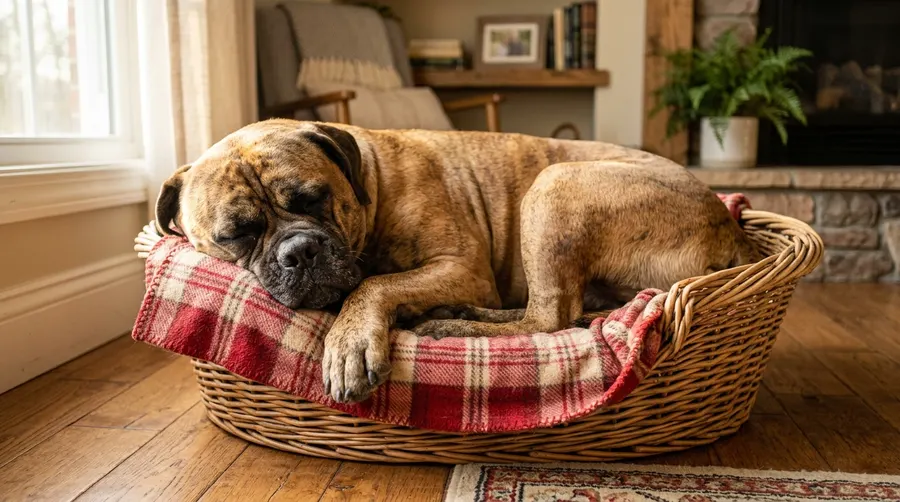
Senior Mobility Mats for Dogs
Comprehensive technical analysis of material density, anatomical weight distribution, Indentation Load Deflection (ILD) thresholds, and veterinary standards for senior mobility mats.

As dogs age, the smooth timber, tile, or laminate floors that never bothered them as puppies can become one of the biggest daily obstacles they face. Senior mobility mats, anti-slip traction mats designed to give older or arthritic dogs a secure grip underfoot, address a problem that is easy to overlook until a dog starts hesitating at the top of the stairs or struggling to stand up on a hard floor.
A young, healthy dog compensates for a slippery floor without much thought, using muscle strength and quick reflexes to catch themselves. As joints stiffen, muscle mass declines, and reaction time slows, that same slippery surface becomes genuinely risky. A slipping paw can trigger a fall, a wrenched joint, or simply a moment of fear that makes a dog reluctant to move confidently through the house at all.
This matters beyond comfort. Repeated slipping and awkward compensating movements can accelerate wear on joints that are already under strain from arthritis or age-related stiffness, and a fall can cause an acute injury on top of an existing chronic condition. Mobility mats reduce this risk by giving paws something to grip, which lets an older dog walk, stand, and rise from lying down with far more confidence.
Beyond physical safety, secure footing has a real effect on a dog's willingness to move. Dogs that feel unstable on hard floors often become more sedentary, avoiding areas of the house or hesitating before crossing open floor space, which can compound the muscle loss and stiffness that come with reduced activity. Restoring confident footing can help keep a senior dog more active and engaged rather than avoiding movement altogether.
Strategic placement matters more than simply covering as much floor as possible. The areas that cause the most trouble for senior dogs are typically the ones involving a change in posture or direction: getting up from a lying position, navigating from one room to another across a slick threshold, and standing at food and water bowls.
Around feeding stations, a non-slip mat under both bowls stops a dog's paws sliding forward with each bite, which is a small but common source of neck and shoulder strain in older dogs. Near favourite resting spots, a mat placed where the dog usually gets up gives them secure footing for the specific moment when joints are stiffest, right after rising from rest.
Hallways, entryways, and the base of any stairs a senior dog still uses are worth prioritising too, since these are transition points where dogs often build momentum or change direction quickly. If your home has multiple hard-floor rooms, creating a connected "path" of runner-style mats between key areas, the dog's bed, the water bowl, and the door to the yard, can make a noticeable difference without needing to cover every square metre of flooring.
While traction is the primary function, many mobility mats also incorporate a layer of orthopedic padding, offering cushioned support under bony pressure points like hips, elbows, and shoulders when a dog lies down on them. This dual function, grip plus support, is particularly useful for dogs that spend a lot of time resting directly on hard floors near the family, rather than always retreating to a bed.
Some mats use a rubberised, textured surface similar to a bath mat, which grips well but offers no real cushioning, making them best suited to standing and transition zones rather than resting spots. Others use a denser foam base with a non-slip backing, giving genuine orthopedic support for lying down while still resisting sliding when a dog readjusts position. Matching the mat type to its intended location, grip-focused near doorways and bowls, cushioned near resting areas, gets the most benefit from each type.
Washable, low-pile mats are generally easier to keep clean and hygienic for senior dogs, who may have more accidents or drool more than they once did, and a mat that can go straight into the wash reduces the ongoing maintenance burden considerably.
Traction mats are a genuinely useful environmental fix, but it is worth being honest about their limits. A dog who is slipping, struggling to rise, reluctant to walk on certain surfaces, or showing new hesitation on stairs may be dealing with an underlying issue, arthritis, hip or elbow dysplasia, spinal changes, or general age-related muscle loss, that mats alone will not resolve.
If you notice new or worsening mobility changes, especially anything sudden, asymmetrical, or accompanied by signs of pain such as whimpering, reluctance to be touched, or reduced appetite, it is important to have your dog assessed by a vet rather than assuming a rug will fix the underlying problem. A vet can identify the specific cause of the mobility change and recommend a combined approach, which might include pain management, joint supplements, physical therapy, or weight management alongside environmental changes like mobility mats.
Used as one part of a broader plan, alongside appropriate vet care, a joint-friendly diet, and a suitable exercise routine, mobility mats can meaningfully improve a senior dog's day-to-day comfort and confidence at home, particularly in reducing the anxiety and physical risk associated with hard, slippery flooring.
The best mobility mat is one that stays exactly where you put it and survives daily paw traffic without curling at the edges or sliding on the floor itself. Look for a non-slip backing on the underside of the mat, not just a textured top surface, since a mat that slides on the floor defeats the purpose entirely. Interlocking or wide-format mats tend to stay flatter over time than smaller individual pads, which can bunch up at the corners.
For households with multiple senior or arthritic dogs, or homes with extensive hard flooring, runner-style mats that cover longer stretches of hallway offer more consistent protection than isolated mats scattered around problem spots, and they are often more cost-effective per square metre of coverage than buying several smaller mats separately.
Go Deeper
Detailed companion guides for senior mobility mats.
Non-Slip Flooring & Traction Mats for Senior and Arthritic Dogs, Why Slick Floors Are a Hidden Hazard
Why hardwood, tile, and laminate floors are a fall risk for arthritic dogs, which mat materials actually grip, and how to map high-traffic routes first.
Helping a Senior Dog Get Around the Home, Ramps, Mats, and Room Setup That Actually Help
How ramps, mats, and raised bowls solve different mobility problems, room setup for a stiff dog, and the signs that mean it's time for a vet workup.