


Pet water fountains are sold on a simple promise: dogs prefer moving water, so a fountain gets your dog to drink more, supporting kidney and urinary health. That claim has real grounding, but it comes with maintenance obligations a plain bowl doesn't have, and skipping them can turn a hydration upgrade into a bacteria problem.
Does moving water really encourage more drinking?
The instinct behind fountains isn't marketing invention. Many dogs and cats show a genuine preference for moving or trickling water over still water, likely rooted in an instinct that still water is more likely stagnant or contaminated in the wild. This preference is more consistently documented in cats than dogs, but plenty of dog owners do see their dogs drink more readily, or for longer, from a fountain.
It's not universal, though. Some dogs are indifferent and drink the same from either source; others are initially wary of the pump noise or movement and need days to warm up. If your goal is specifically increasing intake, because of a health condition, a hot climate, or a dog that under-drinks, a fountain is worth trying, but it's not a guaranteed fix, and not a substitute for addressing why the dog is under-drinking in the first place. A sudden drop or spike in a dog's water intake is worth mentioning to a vet regardless of the water source, since both can signal medical issues.
The maintenance trade-off nobody puts on the box
A fountain is not a "fill it and forget it" upgrade over a bowl. It's a small recirculating water feature, and recirculating features grow biofilm, a slimy, bacteria-laden layer that forms on any wet surface left undisturbed, whether the filter, the pump housing, or the reservoir walls. It forms faster in warm rooms, and faster still with any sunlight, which adds algae to the mix.
A bowl needs a wash, ideally daily. A fountain needs more:
- The reservoir and basin should be washed on roughly the same schedule as a bowl, since saliva and debris contaminate the water regardless of whether a filter is running.
- The filter cartridge is what owners most often neglect. Most carbon filters are rated for roughly 2-4 weeks, not because they suddenly stop working but because a saturated filter can release back some of what it trapped, and the wet material itself becomes a biofilm surface over time.
- The pump needs periodic full disassembly and scrubbing, most fountains come apart for exactly this reason. An impeller housing that's never been opened is very likely growing a slime layer no bowl rinse will reach.
- A full deep clean with diluted vinegar or a pet-safe descaler is worth doing roughly monthly, more often in hard-water areas where mineral scale can slow or seize the pump.
Pump noise, a real factor, not a minor one
Every fountain has a pump, and every pump makes some sound, usually a low hum or trickle, sometimes a more noticeable whirring depending on water level. This matters two ways.
First, a genuinely noisy or vibrating pump can put off a noise-sensitive dog, sometimes permanently, if a dog associates the water source with an unsettling sound, it may avoid the bowl altogether, a worse outcome than skipping a fountain entirely. Introduce a new fountain gradually and watch for hesitation in the first few days.
Second, water level directly affects noise. Most fountains get louder as the reservoir empties and the pump starts drawing air alongside water. Keeping it topped up isn't just about supply, it materially quiets the unit, so a fountain that seemed fine on day one can get progressively louder over a week without proactive refilling.
Material matters more with a fountain than a bowl
With a plain bowl, material is mostly aesthetic. With a fountain, it affects hygiene over time too:
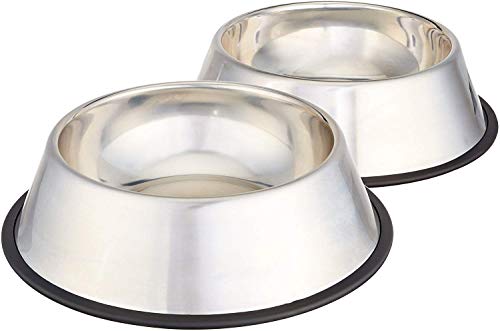
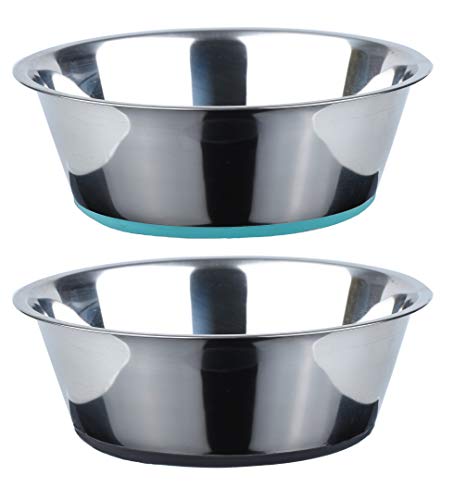
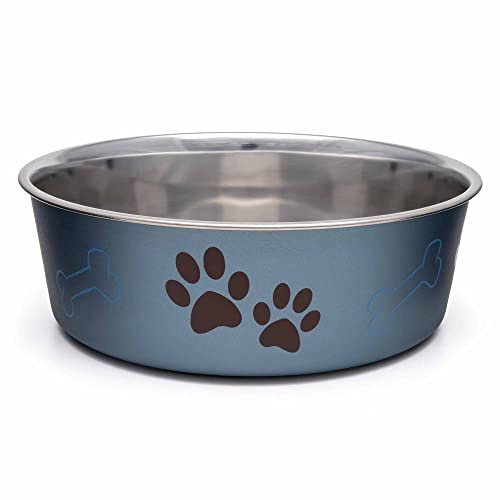
- Stainless steel is easiest to keep genuinely clean, resists scratching, scratches on a soft surface become places for biofilm to cling, and doesn't leach anything into the water. It's the safest long-term bet, though some fountains pair a steel bowl with a plastic pump housing underneath.
- BPA-free plastic is common and inexpensive, but scratches easily with normal brushes, and scratched plastic is measurably harder to fully sanitise than smooth steel or ceramic.
- Ceramic looks good and cleans well while intact, but is the most fragile option in a design handled repeatedly for cleaning, and a hairline crack can harbour bacteria no scrubbing reaches.
So, fountain, bowl, or both?
A plain bowl remains completely adequate for most healthy dogs, is trivial to clean, and has no moving parts to fail. A fountain is worth choosing when your dog shows a genuine preference for moving water, when you're specifically trying to encourage drinking, or when you're willing to actually stay on top of filter and pump cleaning. What it's never worth choosing for is the assumption it's maintenance-free, it's the opposite. It only delivers on the hydration promise if you treat the filter and pump schedule as seriously as feeding the dog.