Automatic Feeders & Water Fountains for Dogs
Comprehensive technical analysis of material density, anatomical weight distribution, Indentation Load Deflection (ILD) thresholds, and veterinary standards for automatic feeders & water fountains.


Recommended Products
See the full ranking →

Automatic Dog Feeders & Water Dispensers, An Honest Buyer's Guide
An automatic feeder can turn the daily scramble of "did anyone feed the dog?" into a solved problem. Set a schedule, load the hopper, and your dog gets the same portion at the same time whether you're running late at work or still asleep. Used well, these devices bring genuine consistency, and consistency is quietly one of the best things you can give a dog's digestion and waistline.
But let's be straight before you spend a cent: an automatic feeder is a convenience appliance, not a caretaker. Motors jam. Batteries die. Wi-Fi drops. Hoppers run empty. None of that matters much for a healthy dog on a normal diet, a late or skipped meal is a minor inconvenience. It matters enormously for a diabetic dog on insulin, a dog with a medical feeding schedule, or any animal where a missed meal is a health event. If that's your dog, an automatic feeder can assist a routine but should never be the only thing standing between your dog and its food. Build in a human backup, every time.
Almost everything in this space falls into one of two camps, and confusing them is the most common buying mistake.
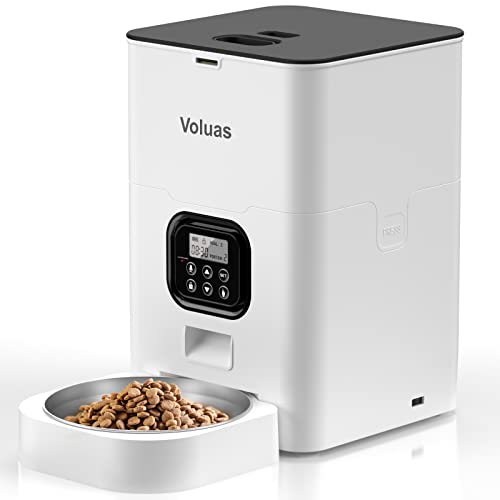
Timed (programmable) feeders use a motor and a clock to release a set portion at set times. This is what most people actually want, because it gives you portion control, the single most important feature if your dog has any tendency toward overeating. Examples here include the PetSafe 5-Meal, the VOLUAS 4L, PETLIBRO's Wi-Fi unit and the IMIPAW dual-power feeder.
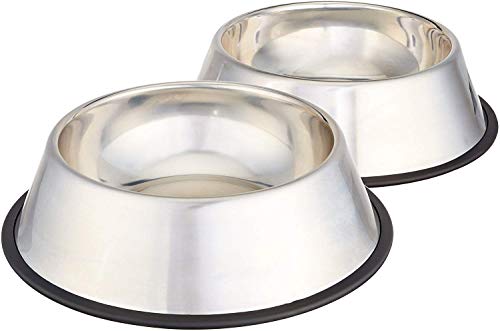
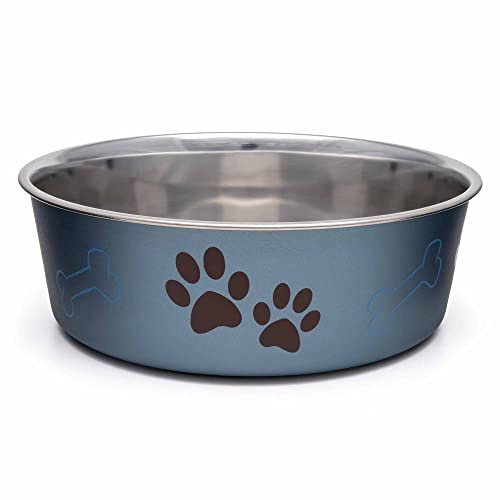
Gravity dispensers are simple hoppers that refill the bowl by gravity as the dog eats. They have no schedule, no portioning and usually no electronics, which makes them wonderfully reliable and impossible to "jam" in the mechanical sense. The Amazon Basics set and the Pet Lodge steel Chow Hound are gravity units. The catch: your dog decides how much it eats. For a self-regulating dog that's fine; for a food-motivated Labrador it's a fast track to obesity. Gravity is for topping up, not for dieting.
Portion accuracy. If weight is a concern, and for most dogs it should be, buy a timed feeder and use it to enforce measured meals. Free-feeding from a gravity hopper removes the main health benefit of automating feeding in the first place. Canine obesity is one of the most common preventable health problems, and a feeder that hands out unlimited food doesn't help.
Power and battery backup. Ask a blunt question: what happens in a blackout? Mains-only feeders stop dead. The best units run on batteries or offer dual power, mains with an automatic battery fallback. The PetSafe runs on D cells alone; the VOLUAS and IMIPAW add battery backup to a plug. If you're ever away overnight, backup power is not a luxury.
Wi-Fi/app vs. a simple timer. App control is genuinely useful, remote feeds, meal logs, low-food and jam alerts. But every added layer is another thing that can fail, and cloud/Wi-Fi outages are more common than a mechanical fault. If you buy a smart feeder like the PETLIBRO, confirm the schedule lives on the device itself and keeps running when the internet doesn't. A feeder that only works when the cloud is up is a fragile feeder.
Hopper size and kibble shape. Match capacity to your dog and your absences, a 40 oz hopper that's perfect for a terrier empties fast for a big dog. And know that jams are real: large, round or irregularly shaped kibble is the usual culprit in a motorized feeder. If your dog eats big or unusual pieces, favour a wider dispensing mechanism, test it for a few days before you rely on it, and prefer units with a jam alert.
Dry vs. wet food. The overwhelming majority of automatic feeders, including every timed unit here, are built for dry kibble only. Wet or raw food spoils at room temperature and gums up mechanisms. Purpose-built wet-food feeders use ice packs and sealed trays and are a different product entirely, don't try to force a kibble feeder to do that job.
Cleaning and hygiene. This is the part people skip and regret. Kibble leaves oily residue that goes rancid; any water bowl or reservoir grows biofilm, that slimy film that harbours bacteria, within days. Look for dishwasher-safe or fully removable bowls and hoppers, wash them regularly, and if you use a gravity water dispenser, clean it far more often than you think you need to. A gravity water bowl is not a filtered, recirculating fountain, and letting it sit is how you grow a science experiment.
Skip full automation, or add a strict human backup, if your dog is on a medical diet or medication tied to meals (insulin, for instance), if it's an aggressive eater or a clever escape artist that will tip, bash or bypass the unit, or if it's a large breed you're trying to portion-control from a small hopper. Automatic feeders reward calm, food-neutral dogs and predictable routines. They punish anyone who treats them as a substitute for actually paying attention.
We research these on specifications, brand track record and the pattern of thousands of verified owner reviews, not on personal lab testing, and we'll never pretend otherwise. Read the specifics, match the feeder to your dog's size, diet and temperament, and always keep a human in the loop. Used that way, a good automatic feeder is one of the small pieces of gear that genuinely makes day-to-day dog ownership easier.
Go Deeper
Detailed companion guides for automatic feeders & water fountains.
Are Automatic Dog Feeders Safe and Reliable? Jams, Power Failures and Portion Control, Honestly Assessed
A close, honest look at the three ways automatic feeders actually fail, mechanical jams, power loss, and portion drift, plus which dogs and situations…
Dog Water Fountains vs. Regular Bowls, Hydration, Cleaning, Filters and Noise, Compared Honestly
A practical, unbiased comparison of pet water fountains against plain bowls, whether fountains genuinely encourage more drinking, what filter and biofilm…