


Bowl size is a convenience choice, not a diet plan
It's tempting to think a bigger bowl means a bigger meal, but bowl size and portion size are two separate decisions that owners often blur together. The right-sized bowl should comfortably hold a dog's actual measured portion with a little room to spare, not be a fixed container that dictates how much food goes in it. Filling a small bowl to the brim or leaving a huge bowl mostly empty both work fine, as long as the amount of food inside is based on the dog's actual dietary needs.
Matching bowl capacity to the dog, roughly
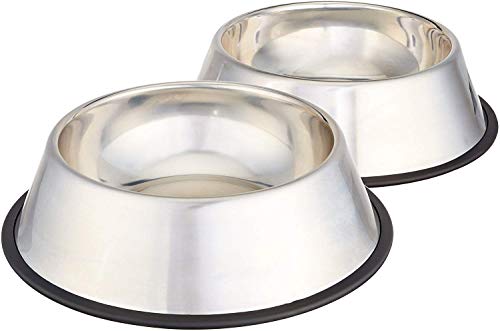
As a general guide, small breeds under around 10kg are usually well served by bowls in the 1-2 cup range, medium dogs around 10-25kg tend to need 2-4 cups of capacity, and large or giant breeds can require 4-8 cups or more depending on whether they're fed one large meal or split across two. These are starting points for choosing a bowl that won't overflow or look absurdly oversized, not portion recommendations in themselves.
Where actual portion sizes come from
Correct portion size depends on a dog's weight, age, activity level, body condition, and the specific food being fed, since calorie density varies significantly between brands and formulas. The feeding guide on a food bag is a starting point, not a fixed rule, it's calibrated to an "average" dog of a given weight that may not match an individual dog's metabolism or activity level. A body condition check (can you feel ribs easily without pressing hard, is there a visible waist from above) is a better ongoing gauge than sticking rigidly to a bag's chart, and a vet or vet nurse can help set an accurate starting point, especially for a dog that's over or underweight.
Why a mismatched bowl causes real problems
A bowl too small for a dog's portion means food gets piled up and spills over the rim, which is messy and can also encourage faster, gulping-style eating as a dog tries to get at food falling over the edge. A bowl dramatically oversized for the portion can make a small meal look sparse and, anecdotally, some dogs seem less interested in a small amount of food rattling around a large bowl than the same amount presented in a properly fitted one.
Depth and width matter as much as volume
Beyond raw capacity, shape matters for comfort. Deep, narrow bowls can be awkward for flat-faced breeds or dogs with long ears that dangle into the food, while wide, shallow bowls suit those dogs better even at the same total volume. For a dog on a slow feeder bowl specifically, the capacity needs to match the full portion, since a slow feeder too small for the meal just causes kibble to pile above the ridges and undoes the slowing effect entirely.
The practical approach
Measure the actual portion with a proper measuring cup or kitchen scale first, then choose a bowl with enough headroom to hold that amount comfortably without overflowing, that's the order that avoids both a messy, gulping-inducing overflow and an oddly oversized bowl that makes a normal meal look inadequate.