


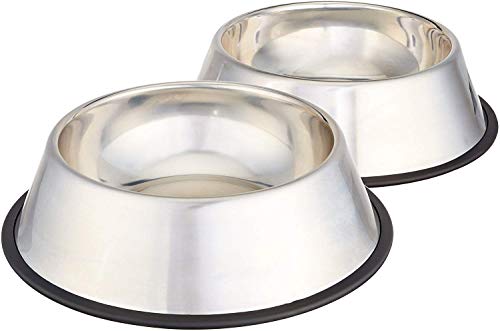

The short answer most owners underestimate
Food bowls should ideally be washed after every meal, or at minimum once a day, and water bowls should be rinsed and refilled daily with a full soap wash every two to three days. Studies looking at household pet bowls have consistently found them among the germiest items in a home when left unwashed for extended periods, often worse than what most people would tolerate on a dinner plate.
Why food residue is worse than it looks
Wet food and saliva left in a bowl create an ideal environment for bacterial growth within hours, not days. A bowl that looks "basically clean" to the eye can still carry a biofilm, a thin, sticky layer of bacteria that builds up on the surface and isn't removed by a quick rinse under the tap. This is especially true for plastic bowls, where microscopic scratches trap residue that a cloth can't reach, but it can happen on any material if food is left to dry and cake on.
Water bowls need attention too
Water might look clean, but saliva, food particles the dog carries over from eating, and airborne debris build up quickly, and a slimy film on the inside walls of a water bowl is a sign of established biofilm. Refilling a bowl with fresh water daily helps, but doesn't replace an actual wash with soap and hot water every few days, plus a more thorough scrub weekly if the dog drools heavily or the bowl sits somewhere warm.
A practical routine that actually gets followed
The realistic version of "wash after every meal" is: rinse and wipe the food bowl immediately after each feeding, run it through the dishwasher or hand-wash with soap once daily, and do the same rinse-refill routine for water at least once a day with a full wash every two to three days. Households with multiple dogs, a dog prone to drooling, or bowls kept outdoors in warm weather should lean toward the more frequent end of that range.
Dishwasher or hand-wash?
Stainless steel and most ceramic bowls are dishwasher-safe and the high heat of a dishwasher cycle is genuinely more effective at killing bacteria than hand-washing with lukewarm water. Plastic bowls can usually go in the dishwasher too, but the heat accelerates the scratching and warping that already makes plastic the least hygienic long-term option, another reason plastic tends to need replacing sooner than the other materials.
Signs a bowl needs washing right now
A sticky or slippery feel on the inside surface, a lingering smell even after rinsing, visible film on the water line, or a dog suddenly showing less interest in eating or drinking are all worth treating as a cue to wash immediately rather than waiting for the next scheduled clean. Chronic under-cleaning has also been linked to skin irritation around the muzzle, which overlaps with, but isn't identical to, the chin acne pattern more commonly associated with scratched plastic bowls specifically.