
Walk down any pet aisle and you'll find the same bowl in three different materials at three different price points, usually with no explanation of why one might be a better choice than another. Most owners pick based on looks or price and never think about the material again. But the bowl your dog eats and drinks from every single day is one of the few pieces of pet gear that gets near-constant contact with their mouth, and the material it's made from has a real effect on how sanitary it stays between washes and how long it lasts before it needs replacing. Here's what actually separates the three main options.
Stainless Steel, The Non-Porous Baseline
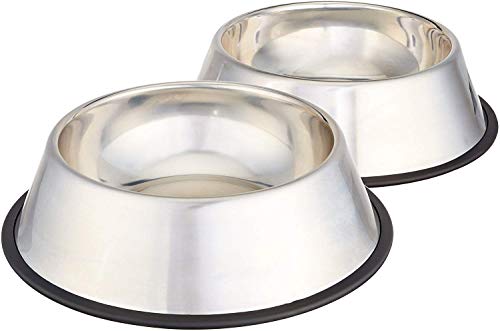
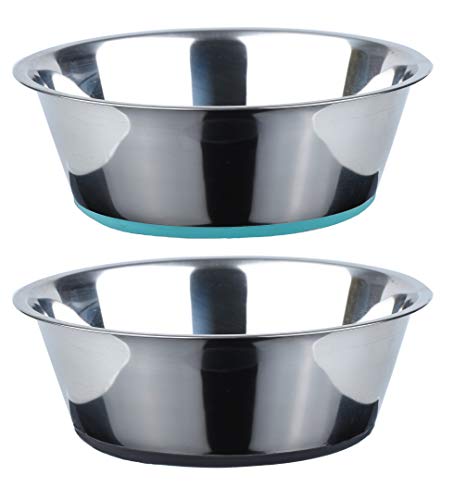
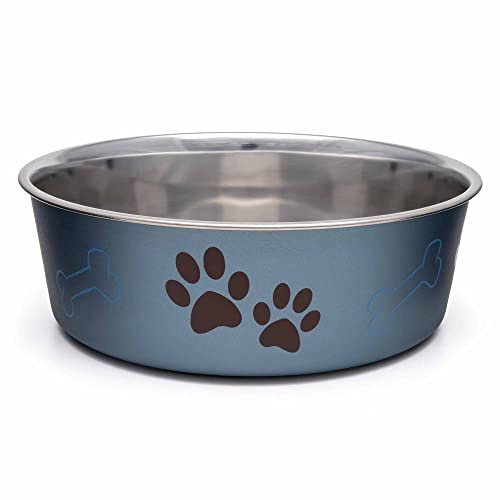
Stainless steel is the material most vets and groomers default to recommending, and the reasoning is straightforward: it's non-porous. That means there's no microscopic surface texture for bacteria, food residue, or moisture to work into and hide in between washes. A steel bowl that gets a normal wash with soap and water is, for practical purposes, actually clean afterward, in a way that's harder to guarantee with a scratched or textured surface.
Steel also doesn't absorb odors. Rinse out a steel bowl that had fish-based food in it an hour ago, and it won't carry that smell into the next meal the way a plastic bowl sometimes does after months of use. It's dishwasher safe, doesn't chip or crack under normal use, and doesn't degrade chemically over time the way plastic can.
The one weak point worth knowing about is peripheral rather than in the steel itself: most steel bowls have a rubber or silicone non-skid ring glued to the base to stop sliding on hard floors. That glued seam is the actual failure point, it can peel, curl, or trap moisture and food debris underneath after enough dishwasher cycles, and a peeling ring is a sign to replace the bowl rather than keep using it. The steel itself, though, is about as close to a maintenance-free material as this category gets.
Ceramic, Heavy and Stable, With One Non-Negotiable Check
Ceramic bowls have a genuine practical advantage that has nothing to do with hygiene: weight. A heavy ceramic bowl resists being pushed, flipped, or shoved across the floor by an enthusiastic eater in a way that a light plastic bowl simply can't. For dogs who treat mealtime as a full-contact activity, that stability alone is worth something.
But ceramic comes with a condition that a lot of buyers skip past: the glaze. A ceramic bowl is only as food-safe as the glaze covering it, and that glaze needs to be explicitly labeled lead-free and food-safe on the product listing, not assumed safe just because it's sold as a pet product. Older or imported ceramic pieces in particular have a history of glazes that weren't properly tested for lead content, and while reputable current pet-bowl manufacturers generally get this right, it's a detail worth actually checking rather than skipping.
The other issue is chips. The glaze is what makes ceramic non-porous and washable; the material underneath it is not. The moment a ceramic bowl chips, that exposed unglazed area becomes porous, and porous surfaces can trap bacteria and food residue in a way no amount of washing fully resolves. A chipped ceramic bowl should be retired, not kept in rotation because it still technically holds food and water. If you're drawn to ceramic for the weight and stability, buy from a listing that states the glaze certification clearly, and get in the habit of inspecting for chips regularly rather than only noticing once it's an obvious problem.
Plastic, Cheap Up Front, Costly in the Details
Plastic is the least expensive option on the shelf, and for a lot of owners that's reason enough to grab it without a second thought. But plastic has two real downsides that are worth weighing against the low price.
The first is scratching. Plastic scratches easily, from a dog's own teeth and claws during normal eating and drinking, from a spoon during food prep, even from the abrasive side of a kitchen sponge over time. Those scratches aren't just cosmetic. They're microscopic grooves that bacteria and food residue can lodge into, and a standard wash often doesn't fully reach into scratched grooves the way it cleans a smooth, non-porous surface. A plastic bowl that looks clean can still be harboring more bacteria than a steel bowl that gets the exact same washing routine, simply because of surface texture.
The second is a pattern widely reported by vets and groomers, though not conclusively proven by controlled research: a link between plastic bowls and what's commonly called "dog chin acne," a cluster of small red bumps, blackheads, or irritated skin around a dog's chin and lower lip. The working theory is that bacteria building up in a plastic bowl's scratched surface contacts the skin around the muzzle repeatedly during eating and drinking, triggering irritation similar to acne in humans. It hasn't been established as a hard causal mechanism in peer-reviewed research, and there are other possible causes of chin acne, including allergies and hormonal factors. But the pattern of owners reporting improvement after switching off plastic and onto stainless steel or glazed ceramic is common enough that it's a reasonable, low-cost thing to try for a dog with recurring chin irritation, even without a fully proven mechanism behind it.
Plastic also degrades chemically with repeated dishwasher heat cycles and UV exposure if a bowl lives outdoors, which can make an aging plastic bowl less food-safe than it was when new, in a way that isn't always visible.
Durability Over Years, Not Just Weeks
Material choice matters more the longer you own the bowl. A cheap plastic bowl might look fine after a month, but after a year of daily dishwasher cycles and normal wear, it's likely visibly scratched and discoloring. A steel bowl put through that same year generally looks close to identical to when it was new, aside from wear on any glued-on rubber base. Ceramic sits in between, it holds up well as long as the glaze stays intact, but a single hard drop can end its usable life instantly in a way that wouldn't touch a steel bowl at all. For a bowl that's used daily for years, the higher upfront cost of quality stainless steel over cheap plastic tends to work out cheaper in the long run, since it isn't getting replaced every year as it scratches and degrades.
Bottom Line
Stainless steel is the safest default for daily use across the board, non-porous, doesn't hold odor, and holds up to years of dishwasher cycles without degrading. Ceramic is a reasonable choice if you verify the glaze is lead-free and food-safe and you're committed to retiring it the moment it chips. Plastic is the one to think twice about for a primary daily bowl: it's cheap, but the scratching and bacteria-retention issues, plus the reported (if not fully proven) chin acne link, make it the weakest option of the three for long-term daily use.