
Most people wash their dog's bowl about as often as it looks dirty, which turns out to be a much lower bar than what actually keeps it sanitary. Bacteria doesn't need visible mess to build up, and by the time a bowl looks obviously grimy, it's usually been growing a bacterial film for days. Here's what's actually happening in an unwashed bowl, and the routine that keeps ahead of it.
What's Actually Building Up, Biofilm
The slimy layer that forms on the inside of a water bowl, or the invisible residue that coats a food bowl between washes, is called biofilm, a thin layer of bacteria, saliva proteins, and food particles that bacteria produce to protect themselves and adhere to a surface. Biofilm starts forming within hours of a bowl being used, well before it's visible or gives off any smell. That slippery texture you feel on the inside of a water bowl that's gone a few days without a wash is biofilm you can actually feel, but by the time it's that noticeable, it's already been developing for a while.
Studies looking at bacterial contamination on household pet bowls have found bacterial counts comparable to, and in some cases higher than, surfaces most people consider genuinely unsanitary, like bathroom fixtures. That's not because pet bowls are inherently dirtier than other household items, it's because they're washed far less frequently relative to how often they're used and refilled with fresh, bacteria-friendly organic material (food and saliva) multiple times a day.
The Actual Washing Frequency That Matters
Food bowls should be washed after every meal, or at an absolute minimum once a day. Wet or canned food left sitting between meals is a much faster breeding ground for bacteria than dry kibble residue, so if your dog free-feeds wet food or you leave food out between meals, that bowl needs washing more frequently than once a day, not less.
Water bowls need daily attention even though this is the one most owners skip, because a water bowl that still looks clear and clean can be growing biofilm on the inside walls that isn't visible until it's advanced enough to feel slimy. The routine that actually works: empty the bowl completely, rinse it, wash with soap or run it through the dishwasher, and refill with fresh water daily, not just topping up water that's already sitting in a bowl that hasn't been emptied in days. Topping up without emptying is one of the most common hygiene mistakes, because it looks like maintenance while actually just diluting the existing biofilm rather than removing it.
Dishwasher vs Hand-Washing
A dishwasher is generally the more thorough option when it's available, because hot water and detergent reach temperatures more reliably effective against bacteria than most people manage by hand. If your bowl is labeled dishwasher-safe, which most stainless steel and glazed ceramic bowls are, running it through a normal cycle daily or every other day is a legitimate, low-effort way to stay ahead of biofilm.
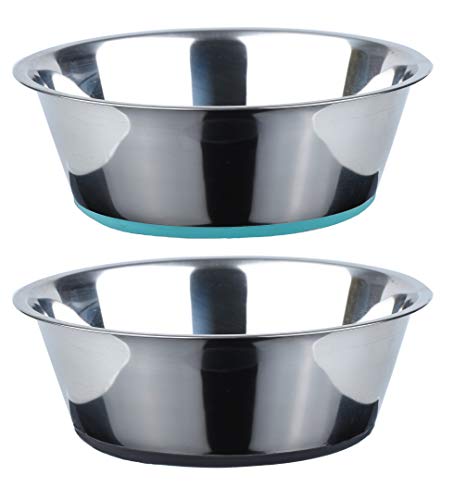
Hand-washing works fine too, as long as it's done properly rather than a quick rinse under the tap. Use hot water and dish soap, and actually scrub the inside surfaces and any grooves or seams with a brush or sponge rather than just swishing water around, a rinse without soap removes visible food but does little against biofilm, which needs to be physically scrubbed off. Pay particular attention to any seam where a rubber non-skid base meets the bowl, since that's a common spot residue accumulates that a casual rinse misses entirely. Avoid using the same sponge for your dog's bowls that you use for your own dishes without cleaning it thoroughly in between, since sponges themselves harbor bacteria and can cross-contaminate in either direction.
Sanitizing Beyond Regular Washing
Regular daily washing with soap and hot water is sufficient for normal use. But a deeper sanitizing pass, roughly weekly, adds a layer of protection: soak the bowl in a diluted bleach solution (roughly one tablespoon of bleach per gallon of water) for about ten minutes, then rinse extremely thoroughly and let it air dry before the next use, bleach residue left behind is a genuine irritant, so the rinse matters as much as the soak. A white vinegar soak is a gentler, non-bleach alternative, though it's less effective against certain bacteria. If your dog has recently been sick, especially with anything gastrointestinal, or you're introducing a new puppy or foster dog, sanitizing more frequently during that period is a sensible precaution.
Elevated Feeders Need More Attention, Not Less
Elevated feeding stands, particularly ones with a built-in catch basin or tray underneath the bowls to collect spills, are easy to under-clean because the tray isn't the part holding food or water directly, so it doesn't feel like it needs the same attention. But a catch tray that collects splashed water and dropped food and then sits unwashed for days is arguably a worse hygiene problem than a simple bowl, because it's collecting moisture and organic debris in a wider, harder-to-notice area. Wash the catch tray on the same schedule as the bowls themselves, not as an occasional afterthought, and check underneath and around any leg supports or joints where debris can collect out of easy sight.
A Simple Routine That Covers Both Bowls
Wash the food bowl after every meal or at least once daily with hot soapy water, scrubbing rather than rinsing. Empty, wash, and refill the water bowl daily with fresh water rather than topping it up. Run both through the dishwasher when convenient, since it's more thorough than most hand-washing. Add a weekly deeper sanitizing soak, particularly for water bowls, which accumulate biofilm faster due to constant moisture. And if you use an elevated feeder, wash the catch tray on the same schedule as the bowls, not separately or less often. None of this takes more than a couple of minutes a day, and it's the single habit that matters more than the material or price of the bowl itself.
Bottom Line
Biofilm builds up faster and more invisibly than most owners expect, which is why a bowl that looks clean can still be carrying meaningful bacteria. Daily washing for food bowls, daily emptying and refilling for water bowls, occasional dishwasher cycles or a deeper weekly soak, and consistent attention to elevated feeder trays covers the actual risk. The habit matters more than any single product choice, a great bowl washed rarely is worse than a basic one washed properly every day.