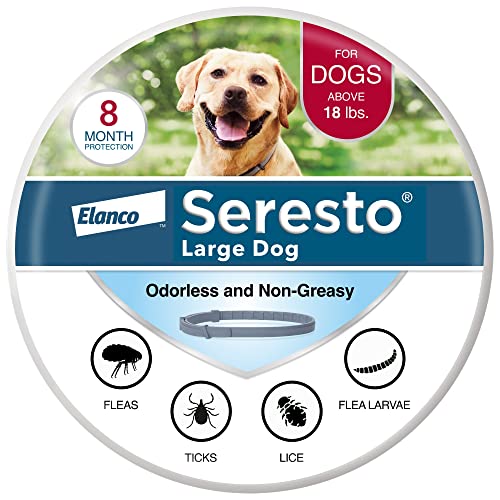


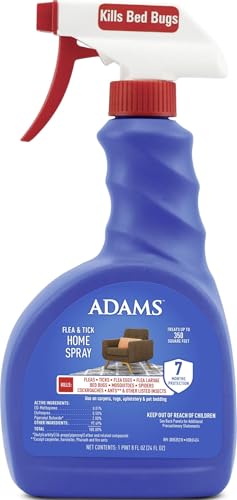

Kill every flea on your dog today and you can still have a flea problem next week. That's not a scare tactic, it's basic flea biology. Adult fleas on your dog's body are only a fraction of the total population in an infested home. The rest, eggs, larvae, and pupae, are sitting in your carpet, your dog's bedding, the couch cushions, and the shaded strip along your back fence, waiting their turn. Understanding that life cycle is the difference between a flea problem that clears up in a few weeks and one that keeps coming back no matter how many times you treat the dog.
Why Treating Only the Dog Doesn't Work
An adult female flea can lay around 40-50 eggs a day once she starts feeding, and those eggs don't stick to fur, they're designed to fall off. Every time your dog naps on the rug, walks across the living room, or curls up on their bed, they're seeding eggs into the environment. By the time you notice scratching, the visible fleas on your dog usually represent well under 5% of the total flea population in the house; the remaining 95%+ is distributed across eggs, larvae, and pupae in carpet fibers, bedding, upholstery, and cracks in flooring.
This is why a single flea treatment on the dog, even an effective one, often looks like it "didn't work." It did its job on the dog, but new adult fleas keep emerging from the environmental reservoir for weeks afterward, hopping onto your dog (or you) as soon as they mature. Environmental treatment isn't optional add-on advice; it's the part of the job that actually determines whether the infestation ends.
The Four Life Stages, and Where Each One Hides
Eggs are laid on the host but fall off almost immediately, settling wherever your dog spends time, carpet pile, upholstery seams, dog beds, and pet-accessible corners of the yard. They hatch in roughly 1-10 days depending on temperature and humidity.
Larvae emerge from the eggs and actively avoid light, burrowing down into carpet fibers, under furniture, into cracks in wood flooring, and into soil, mulch, or leaf litter outdoors. They feed on organic debris, including the feces of adult fleas (which is mostly undigested blood), and molt through several stages over roughly 5-20 days.
Pupae are the toughest stage to deal with. Larvae spin a sticky, debris-coated cocoon that's resistant to insecticides, drying out, and vacuuming pressure. Inside, the developing flea can stay dormant for anywhere from a few days up to several months, waiting for a trigger, vibration, warmth, carbon dioxide from a nearby breath, that signals a host is close. This is why a house that's been empty for a week and then reoccupied can suddenly seem to erupt with fleas: the pupae were waiting the whole time.
Adults emerge from the cocoon ready to feed within minutes and begin laying eggs within 24-48 hours of their first blood meal, restarting the cycle.
Washing and Vacuuming, Your First Real Tools
Before any product goes down, mechanical removal does a surprising amount of work.
- Wash all bedding, dog and human, in hot water on the hottest cycle the fabric tolerates, then dry on high heat. This kills eggs, larvae, and most pupae in fabric. Do this for your dog's bed, blankets, and any human bedding your dog accesses, and repeat weekly during an active infestation.
- Vacuum thoroughly and often, carpets, rugs, upholstered furniture (including under cushions), floor edges and baseboards, and cracks between floorboards. Vacuuming physically removes eggs and larvae and can even stimulate dormant pupae to emerge (which sounds bad, but it's actually useful, an emerged flea can be killed, while a dormant pupa in its cocoon often can't be).
- Empty the vacuum canister or bag immediately into an outdoor bin, or seal the bag and dispose of it outside. Fleas can survive and crawl back out of a vacuum canister left sitting.
- Focus on the areas your dog favors most, their bed, favorite couch spot, and well-traveled paths, since egg and larval density is highest there.
Timeline and Persistence, What to Actually Expect
Because pupae can lie dormant for months, no single treatment, mechanical or chemical, clears an infestation in one pass. A realistic expectation is that breaking the cycle takes several weeks to a few months of consistent effort, not a weekend.
A practical rhythm during an active infestation:
Patience is the unglamorous truth about flea control. The infestation didn't happen overnight, and because of that dormant pupal stage, it won't fully resolve overnight either, but consistent washing, vacuuming, and on-dog prevention, kept up over the full cycle, is what actually gets ahead of it rather than chasing it.