


Once you've committed to breaking the flea life cycle at home, the next question is usually which product to actually use, and that's where a lot of pet owners get nervous, for good reason. Flea sprays, foggers, and diatomaceous earth are all sold as home solutions, but they vary a lot in how they work, how risky they are around pets and kids, and how carefully they need to be applied. None of them are "set and forget." Here's an honest look at the main options and how to use any of them safely.
Read the Label Before You Read Anything Else
This sounds obvious, but it's the single most important safety step and the one most often skipped. Every legally sold flea and pest product carries a label with legally binding instructions: which surfaces or areas it's approved for, required ventilation time, re-entry time for people and pets, whether it's safe around specific animals (some pest products are genuinely dangerous to cats even when marketed for "home" use), and disposal instructions. Manufacturer instructions exist because the product was tested under those specific conditions, deviating from them (using more than directed, skipping ventilation time, applying indoors when it's labeled for outdoor use only) is where most home mishaps happen. If you take one thing from this article, make it this: follow the label exactly, every time, even on a repeat application.
Flea Sprays
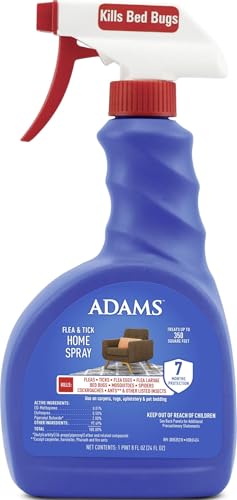
Sprays are the most common household option, typically applied directly to carpets, upholstery, baseboards, and pet bedding areas. Many combine an adulticide (kills adult fleas) with an insect growth regulator, or IGR (prevents eggs and larvae from developing into adults), this combination is generally more effective than an adulticide alone, since it addresses more than one life stage.
Safety basics for sprays:
- Remove pets and children from the treated area before spraying, and keep them out for the full re-entry period stated on the label, often several hours.
- Ventilate the space by opening windows and running fans during and after application, per label directions.
- Don't spray directly on your dog's food or water bowls, and store or cover these before treating the kitchen or feeding area.
- Wash your dog's bedding separately rather than spraying it directly unless the label specifically says the product is fabric-safe for that use.
- Cover fish tanks and remove birds from the room, sprays can be more dangerous to these pets than to dogs or cats.
Foggers ("Bug Bombs")
Foggers release an aerosolized insecticide that settles over every exposed surface in a room, which sounds thorough but comes with real limitations. They don't reach fleas hidden deep in carpet pile, under furniture, or inside cracks, exactly the spots larvae and pupae favor, so foggers are often less effective against the immature life stages than a targeted spray, despite treating a wider area.
Foggers carry the highest safety profile of the three options discussed here, because they aerosolize insecticide throughout an entire enclosed space:
- All pets, people, and, critically, any exposed food, dishes, and food-prep surfaces must be removed or covered before setting one off.
- The home must be vacated for the full time stated on the label, typically several hours, and then ventilated thoroughly before anyone (human or animal) re-enters.
- Never use more than one fogger per room or exceed the coverage area on the label, overuse doesn't improve results and increases residue and inhalation risk.
- Foggers are generally a poor fit for homes with fish tanks, caged birds, reptiles, or small mammals, since these pets are more sensitive to airborne insecticide and often can't be relocated during the treatment window.
Given these constraints, many pest professionals consider targeted spray or steam treatment of specific problem areas a better first choice than a whole-room fogger for most home flea situations.
Diatomaceous Earth (DE)
Food-grade diatomaceous earth is a fine powder made from fossilized algae that works mechanically rather than chemically, it damages the outer coating of insects like fleas, causing them to dehydrate. It's popular because it's non-toxic when used correctly and can be applied to carpets, cracks, and some yard areas.
That popularity comes with a caveat that's often left out of DE recommendations: the fine dust is an inhalation irritant for both pets and people. Breathing in DE dust can irritate the lungs, throat, and eyes of dogs, cats, and humans alike, particularly during and shortly after application while the dust is still airborne or easily disturbed.
Safe DE use looks like this:
- Only use food-grade DE, never pool-grade or filter-grade DE, which contains a different, more hazardous form of silica.
- Apply lightly, a fine dusting worked into carpet or cracks, not a thick visible layer. More is not more effective and just increases airborne dust.
- Keep pets and people out of the room during application and for a short period after while dust settles.
- Leave it down for the time recommended on the packaging (often 1-3 days) before vacuuming it up, then vacuum thoroughly to remove both the powder and the fleas it's affected.
- Avoid applying near your dog's face, food, or water, and don't apply it as a direct-on-dog treatment unless a product is specifically labeled and formulated for that use, most household DE products are for environmental use only.
When to Call a Professional Exterminator
DIY treatment handles most home flea situations, but it's reasonable to bring in a licensed pest control professional if: the infestation persists after 4-6 weeks of consistent washing, vacuuming, and product use; the infestation is severe or covers a large area (whole-house carpet, multiple rooms, a large yard); anyone in the home has health conditions that make pesticide exposure a bigger concern (respiratory issues, pregnancy, infants); or you simply want a treatment plan tailored to your specific home rather than working through trial and error. A professional can also apply commercial-grade products under controlled conditions that aren't available over the counter, often with a single more thorough treatment rather than repeated DIY rounds.
The Combined Approach Works Best
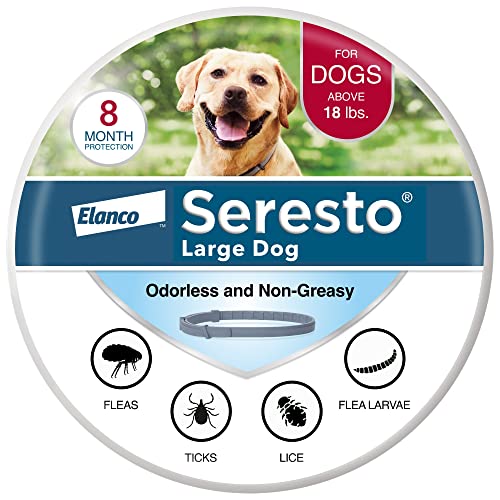
None of these environmental products replace a vet-recommended, on-dog flea preventive, the two work together. Environmental treatment reduces the reservoir of eggs, larvae, and pupae in your home and yard; on-dog prevention stops newly emerged adult fleas from re-establishing on your dog and starting the cycle again. Talk to your vet about the right on-dog option for your dog's age, weight, and health before combining it with any environmental treatment, and always default to the product label over general advice, including this article, when the two conflict.