Premise & Environmental Control for Dogs
Comprehensive technical analysis of material density, anatomical weight distribution, Indentation Load Deflection (ILD) thresholds, and veterinary standards for premise & environmental control.


Recommended Products
See the full ranking →

Treating your dog for fleas is only half the job. Fleas spend most of their life cycle off your dog, in carpets, bedding, cracks in flooring, and shaded patches of yard, which means a flea problem that seems solved on your dog can bounce right back if the environment around them is still infested. Environmental, or "premise," control is the step that actually breaks the cycle.
Adult fleas you see on your dog are only a small fraction of the total flea population in your home at any given time, often estimated at well under half, with the rest hidden as eggs, larvae, and pupae in the surrounding environment. A female flea can lay a large number of eggs daily, and those eggs don't stay put; they fall off your dog wherever they happen to be sitting, sleeping, or walking, scattering across carpets, rugs, sofa cushions, and bedding.
Eggs hatch into larvae, which burrow away from light into carpet fibers, under furniture, and into cracks in flooring, feeding on organic debris including adult flea droppings. Larvae then spin a cocoon and become pupae, and this is the stage that makes fleas so stubborn, because pupae can lie dormant for weeks or even months, resistant to many treatments, waiting for a trigger like vibration, warmth, or carbon dioxide from a passing host to signal it's safe to emerge as an adult. This is why a flea problem can flare up again well after you think you've treated it; you may simply have a batch of pupae waiting to hatch.
Understanding this cycle explains why treating your dog alone rarely solves an established infestation, and why environmental treatment needs to target eggs, larvae, and pupae, not just the adult fleas you can see.
Start with mechanical removal, because vacuuming is one of the most effective and lowest-risk tools available. Vacuum carpets, rugs, upholstered furniture, and along baseboards thoroughly and frequently, the suction and vibration can physically remove eggs and larvae and can even stimulate dormant pupae to hatch prematurely, which is actually useful because it exposes them to your ongoing treatment rather than letting them wait it out. Empty the vacuum canister or bag outside immediately after each session so removed fleas don't simply climb back out.
Wash all pet bedding, blankets, and any washable fabric your dog regularly contacts in hot water, and dry on a high heat setting, since heat is effective at killing fleas at every life stage. Pay particular attention to areas your dog sleeps or rests most, as flea egg density tends to be highest there.
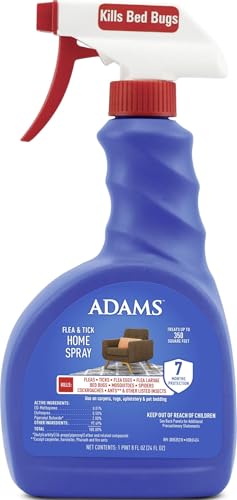
For carpets, furniture, and areas that can't be washed, a household flea treatment product labeled specifically for indoor use may be appropriate, particularly one that addresses both adult fleas and the developing stages. Read labels carefully for pet and child safety, some products require pets and people to stay off treated surfaces for a set period, and it's important to follow that timing exactly. If you're unsure which product is appropriate for your home, a vet or a licensed pest control professional can advise on options suited to your situation, especially in a household with young children, other pets, or anyone with respiratory sensitivities.
Outdoor areas need attention too, particularly shaded, humid spots where fleas thrive, under decks, along fence lines, in dense garden beds, and anywhere your dog regularly rests outside. Fleas generally don't survive well in direct sun on dry, exposed lawn, so focusing effort on the shaded and sheltered zones tends to be more effective than blanket-treating an entire yard.
Keeping grass mowed short and clearing leaf litter, mulch piles, and other debris reduces the humid, shaded microhabitats fleas need to complete their life cycle. If wildlife such as stray cats, rodents, or other animals have access to your yard, they can reintroduce fleas regardless of how well you treat the space, so limiting that access where practical is worth considering as part of a longer-term strategy.
Outdoor flea treatment products exist, but they should be chosen and applied carefully, particularly around vegetable gardens, water sources, or areas frequented by children and other pets. As with indoor products, following label directions on application rate and re-entry timing matters, and a pest control professional is a reasonable option if the yard infestation is significant or ongoing.
Because of the dormant pupae stage, a single round of environmental treatment often isn't enough. Effective premise control typically means combining vacuuming, washing, and treatment on a repeated schedule, commonly over several weeks, timed so that any pupae that hatch after the first round are caught by ongoing treatment before they can reproduce. Skipping follow-up rounds is one of the most common reasons a flea problem seems to return "out of nowhere."
Environmental control also needs to run alongside consistent flea prevention on your dog, and on any other pets in the household, including indoor-only cats who can still pick up fleas from a housemate. Treating the environment while your dog remains unprotected, or treating your dog while the home is still infested, tends to just prolong the problem rather than solve it. The two need to happen together.
Most flea infestations can be managed with diligent home effort, but a heavy, established, or repeatedly returning infestation is a reasonable point to bring in a licensed pest control service, particularly if you've gone through multiple treatment cycles without improvement. Professionals have access to treatments and equipment not typically available to consumers and can assess whether the infestation extends beyond what home methods can reach.
If your dog is showing signs of significant flea burden, visible hair loss, skin irritation, scabbing, or unusual scratching and discomfort, that's a conversation for your vet rather than something to manage through environmental control alone. Skin infections and flea allergy dermatitis can develop from an untreated infestation and need proper veterinary evaluation, and a vet can also advise on safe, effective preventative products to use going forward so you're not starting the whole cycle over again.
Go Deeper
Detailed companion guides for premise & environmental control.
Breaking the Flea Life Cycle in Your Home and Yard
Why treating only your dog never works, where flea eggs, larvae, and pupae actually hide, and the washing, vacuuming, and timeline that break the cycle.
Home and Yard Flea Treatments, Sprays, Foggers, and Diatomaceous Earth, Safety First
An honest look at flea sprays, foggers, and diatomaceous earth for home and yard use, with safe-use steps around pets and kids and when to call a pro.