

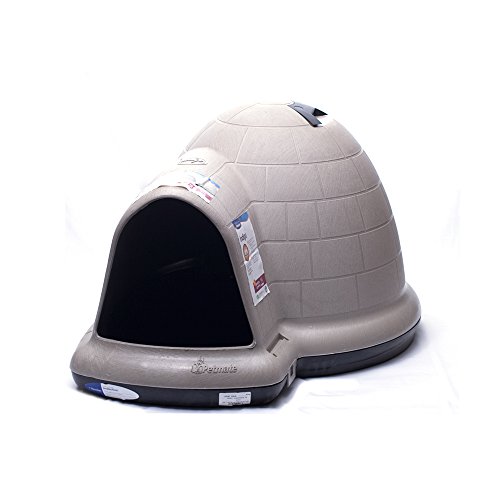


Why Sizing Is the First Decision, Not an Afterthought
It's tempting to size a dog house the way you'd size a crate, as large as reasonably possible for maximum comfort. Outdoors, that logic works against you. The right outdoor dog house is snug enough to let a dog's body heat build up and hold, while still giving enough room to stand at full height, turn around completely, and lie down stretched out in any direction. Get the size right first, and every other decision, material, insulation, climate features, actually has a chance to work as intended.
A General Sizing Approach
Measure your dog rather than going by breed name alone, since individual dogs vary. You want:
- Length: nose-to-tail length plus a few extra inches, so the dog can lie fully stretched out.
- Height: shoulder height plus a few inches of clearance, so the dog can stand without ducking.
- Width: enough for the dog to turn around and lie down in more than one position, but not so wide that it feels like an open room.
- Small dogs (under 25 lb, Chihuahuas, dachshunds, small terriers): compact houses in the roughly 24-30 inch range are typically appropriate.
- Medium dogs (25-50 lb, beagles, cocker spaniels, border collies): mid-size houses, often in the 30-36 inch range.
- Large dogs (50-90 lb, Labradors, German shepherds, golden retrievers): larger houses, commonly 36-44 inches, sometimes with a higher roofline.
- Giant breeds (90 lb+, mastiffs, Great Danes, Saint Bernards): need the largest available houses, and it's worth double-checking interior height and doorway width specifically, since giant breeds are often let down by a doorway or ceiling that's too low even when the floor footprint is generous.
Coat Type Changes the Calculation Too
Size isn't only about body dimensions, coat type affects how much natural insulation a dog is carrying, which in turn affects how much the house itself needs to compensate.
- Double-coated, cold-climate breeds (Siberian huskies, Alaskan malamutes, Bernese mountain dogs, Great Pyrenees) carry substantial natural insulation and tolerate cold far better than they tolerate heat. For these breeds, ventilation and shade often matter more than winter insulation.
- Short-coated or lean breeds (greyhounds, boxers, Doberman pinschers, whippets) have little natural insulation and lose heat quickly. These dogs benefit most from a smaller, well-insulated, wind-sealed house and are generally poor candidates for spending extended time outdoors in cold weather regardless of house quality.
- Single-coated or curly-coated breeds (poodles, some terrier types) vary more individually, check with your vet about your specific dog's cold tolerance rather than assuming breed type alone tells the full story.
Plastic vs. Wood, What Actually Differs
Plastic and resin houses:
- Lighter weight, easier to move, hose down, and clean.
- Naturally weather- and rot-resistant; no repainting or resealing required.
- Insulation depends on wall construction, double-walled or foam-core plastic houses insulate meaningfully better than thin single-wall molded plastic.
- Can heat up in direct summer sun if the material and color absorb heat, so shade placement matters more.
- Lighter houses can shift or tip in strong wind unless anchored or weighted.
- Heavier and more stable in wind once in place.
- Naturally better at insulating than thin plastic, especially with a solid-panel or double-wall build.
- Requires ongoing maintenance, sealant, weatherproof paint, or stain reapplied periodically, particularly on the roof and joints, or the wood will eventually absorb moisture, warp, or rot.
- Heavier and harder to reposition or move seasonally.
- Generally a better fit for owners willing to do occasional upkeep in exchange for sturdier winter insulation.
Matching the House to Your Actual Climate
Cold, snowy winters: prioritize a snug fit, real insulation (double-wall plastic or a wood house with an insulated liner), a raised floor, an offset entrance or door flap to block wind, and wood or heavy-duty double-wall plastic construction for the added insulating value. Positioning matters as much as the house itself, a wind-sheltered spot makes a measurable difference.
Hot, humid summers: prioritize ventilation (multiple vents, ideally cross-ventilation), a light-colored or reflective roof, an elevated floor for airflow underneath, and generous shade over the entire house for most of the day, not just partial shade. In consistently hot climates, oversizing slightly for airflow is more useful than the snug winter-style fit.
Mixed or variable climates (most of the continental US, much of Australia's temperate zones): look for a house with removable or adjustable features, a door flap that can come off in summer, vents that can be opened or closed, and bedding that can be swapped between straw for winter and a breathable mat for summer. A single moderately-sized, well-ventilated house with seasonal bedding changes usually outperforms trying to buy two separate houses for two seasons.
Wet, rainy climates: prioritize roof pitch and overhang (to shed water away from the doorway), elevated flooring, and rot-resistant materials, plastic/resin has a natural advantage here, while wood needs diligent resealing to avoid moisture damage over time.
Putting It Together
Start with your dog's actual measurements, not just their breed label, then weigh coat type and your regional climate before choosing material. A house sized and insulated for a husky in Minnesota is the wrong choice for a greyhound in Arizona, even if both dogs are roughly the same weight. And whatever you choose, remember that even the best-matched outdoor house is a supplement to responsible care, indoor access, supervision, water, and shade remain essential, particularly during heat waves, cold snaps, and storms, and it's worth checking local ordinances on outdoor housing before relying on any structure as a dog's primary shelter.