


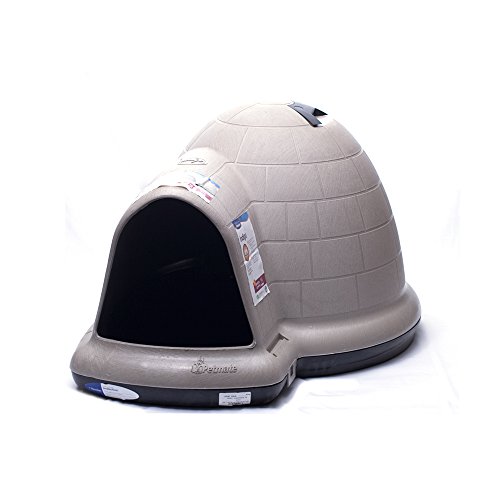

Sizing it right for warmth, not just comfort
It's tempting to buy a roomy dog house, but bigger isn't better for insulation. A dog's own body heat is a big part of what keeps a dog house warm, and too much empty air space around them makes that harder to maintain. The general rule is the same as for crates: enough room to stand, turn around, and lie down stretched out, with a little to spare, not a house so large your dog is heating half-empty space overnight.
Getting the dog house off the ground
Ground contact is one of the biggest sources of heat loss, especially on concrete, pavers, or bare soil. A dog house with a raised floor, either built-in short legs or a base platform a few inches off the ground, creates an air gap that meaningfully reduces cold transfer and also keeps the floor drier during rain. If your existing house sits directly on the ground, even adding a simple pallet or purpose-built platform underneath helps.
Roof and weatherproofing
An angled or peaked roof sheds rain and snow far better than a flat one, which can pool water and eventually leak. Look for a roof that overhangs the walls slightly, keeping rain off the entrance and walls rather than running straight down them. Cedar and similar naturally weather-resistant woods hold up outdoors longer than untreated pine, and any wood should be sealed or treated to resist moisture without using anything toxic near an area your dog will chew or lick.
Insulation materials and the entrance
Double-wall construction with a foam or similar insulating layer sandwiched between an inner and outer wall performs far better than a single-wall house, which loses heat quickly. If you're building or retrofitting one, rigid foam board between the walls is a common approach. For bedding, straw is a better cold-weather insulator than blankets or towels, it traps air for warmth and, unlike fabric, doesn't hold moisture against your dog's coat, which can make them colder rather than warmer. An open doorway also lets warm air straight out and cold air straight in, undoing a lot of that insulation work, a flexible flap over the entrance, in heavy vinyl or similar weatherproof material, blocks drafts while still letting your dog come and go freely, and positioning the entrance away from prevailing wind adds another layer of protection at no extra cost.
Matching the house to your climate and your dog's coat
A husky or other double-coated breed tolerates cold outdoor conditions very differently to a short-coated or small breed, and house design should reflect that. In hot climates, ventilation and shade matter as much as insulation, a well-ventilated, shaded house with airflow prevents heat buildup in summer. Whatever the climate, an outdoor dog house is a supplement to, not a replacement for, bringing your dog inside during extreme heat, cold snaps, storms, or overnight in most climates.
