
Best Outdoor Dog Houses
Best Outdoor Dog Houses, ranked from aggregated owner ratings and reviews, not first-hand testing. Real pros, cons, and who each pick is best for.


Our Top 3 Picks
Quick Comparison
| Product | Best for | Buy | |
|---|---|---|---|
| Petmate Indigo Igloo Dog House | Best Overall | See Amazon | View |
| DRATO Large Waterproof Dog House | Best Value | See Amazon | View |
| Fancyango Large Dog House with Air Vents | Best Insulated / Winter | See Amazon | View |
| Zooba 48" XL Outdoor Dog House | Best for Large Breeds | See Amazon | View |
| YITAHOME Plastic Dog House | Best Plastic / Weatherproof | See Amazon | View |
| Veehoo 47" 2-in-1 X-Large Dog House | Best 2-in-1 Shade Shelter | See Amazon | View |
Buying an outdoor dog house without regrets
Start with your climate, because it decides everything else. In cold, wet regions you are buying insulation: thick or foam-filled walls, a dome or double-wall design, a door flap and a raised floor, with insulated bedding added on top. In hot regions you are buying airflow and shade: vents, light colours, and ideally an elevated cot or open canopy rather than a sealed box that bakes in the sun. A house that is perfect in one climate can be dangerous in the other, so do not just buy the highest-rated model, buy the one built for your weather.
Size before features
Measure your dog standing and lying down and buy a house just big enough to stand, turn and lie in, checking interior, not exterior, dimensions. Too big and body heat cannot warm the space in winter; too small and the dog will not use it. Large and giant breeds are the hardest to fit, most plastic boxes are smaller inside than they look, which is why a genuinely XL house like the Zooba 48" matters for big dogs. For a growing puppy, size for the adult and pad it out with bedding meanwhile.
The features that actually earn their place
An elevated floor keeps bedding off cold, wet or hot ground and is worth prioritising. Ventilation stops heat and condensation building up, essential in summer, balanced against warmth in winter. A door flap blocks wind and rain and makes a cold-climate house far warmer. A sloped or dome roof and offset entrance shed water and keep wind out. Weight or anchoring matters for light plastic houses, which will move in strong wind. Match material to your priorities: plastic for waterproof, low-maintenance, easy-clean shelter; wood for better default insulation and weight if you will re-seal and maintain it.
Placement and upkeep
Even a great house fails if it sits in a puddle or faces into the wind. Place it on high, well-drained ground, entrance away from prevailing weather, shaded in summer. Add weather-appropriate bedding, clean it regularly to keep fleas, mould and damp at bay, and check your dog often. None of this replaces the most important rule below.
The welfare and safety bottom line
A dog is a companion animal. An outdoor house provides shelter and shade during supervised outdoor time, it is not a substitute for indoor living, family company, or supervision. Extreme heat and cold are dangerous and can be fatal: dogs can suffer heatstroke fast inside a hot box and hypothermia in cold, wind and damp. Bring your dog indoors in weather extremes and overnight in the cold. Many councils and municipalities have laws on outdoor tethering and the shelter dogs must be given, so check your local rules. Buy the best house you can for the shelter it provides, and use it as part of responsible care, never as a way to keep a dog outside full time.
Full Ranking, Reviewed
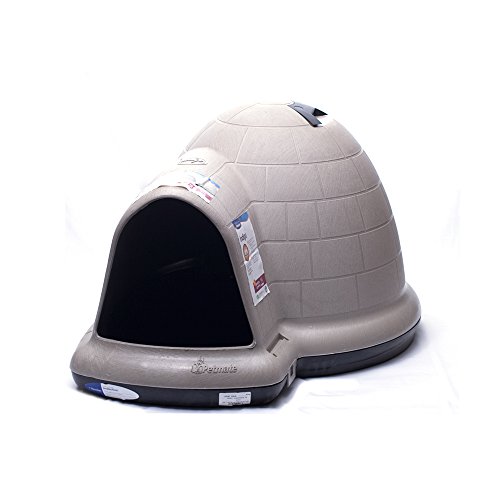
Best for Large dogs (50-90 lb) in cold or wet climates who need a durable, insulating shelter
- Igloo dome shape sheds rain and snow while trapping body heat inside
- Structural-foam walls made in the USA for insulation and impact resistance
- Offset entrance with a Microban-treated interior helps block wind and resist bacteria
- Raised interior floor rim keeps bedding off the cold, wet base
- Long-standing design with a large, well-regarded owner base
- Dome shape and thick walls perform well against wind, rain and cold
- No tools required to assemble the two-piece shell
- Round footprint takes up more yard space than a boxy house of the same interior size
- A separate door flap and insulation kit are sold separately for the harshest winters
Verdict: The Petmate Indigo remains the safe default for cold-and-wet climates: the dome shape and USA-made foam walls handle weather better than most flat-roofed plastic boxes, and the huge review base makes its performance predictable. Confirm your dog fits the 50-90 lb window before buying.

Best for Owners wanting a well-reviewed weatherproof house with vents and a raised floor without a premium price
- Roughly 38.6 x 36.3 x 38 in footprint suits small through large dogs
- Side air vents improve airflow to reduce summer heat build-up
- Elevated base lifts the floor off the ground to stay dry and cooler
- Waterproof plastic panels wipe clean and resist rot
- Among the best-regarded picks in this group
- Ventilation plus elevated floor address both damp and heat
- Panel design assembles and disassembles for cleaning
- Lightweight plastic can shift or blow in strong wind without anchoring
- Thin walls offer little insulation, so it is shade-and-rain shelter rather than a winter house
Verdict: The DRATO earns Best Value on the strength of its strong owner rating and a spec sheet that covers the essentials, vents and an elevated floor, at a sensible price. Treat it as warm-season and rain shelter, and stake or weight it down in exposed, windy yards.

Best for Medium to large dogs needing a sturdy, thicker-walled house for cooler conditions
- Heavier-duty plastic shell built for medium to large dogs
- Air vents let you balance airflow against retained warmth
- Elevated floor separates bedding from the cold, wet ground
- Weatherproof panels designed for indoor or outdoor placement
- Strong owner reputation for build quality
- Sturdier feel than budget plastic houses, useful in cooler weather
- Raised floor and vents help manage condensation
- Plastic construction still needs added bedding or an insulation kit for genuine cold
- No integrated door flap, so wind can enter the opening
Verdict: For colder-leaning conditions the Fancyango is the pick in this group: owners rate its build highly, and the thicker shell plus raised floor hold warmth better than thin budget boxes. Add insulated bedding and a door flap for true winter use.

Best for Large and giant breeds needing a roomy elevated shelter for warm-weather shade
- 48-inch XL footprint gives big dogs room to stand and turn
- Steel frame with breathable mesh panels for heavy airflow
- Elevated cot-style base keeps the dog off hot or wet ground
- Tool-light assembly and a design meant to be easy to clean
- Genuinely sized for XL and giant breeds, unlike most plastic boxes
- Mesh-and-frame build maximises airflow for hot climates
- Elevated platform stays cooler and drier than a floor-level house
- Open mesh design is shade-and-rain shelter, not a cold-weather house
- Fabric-and-frame construction is less chew-proof than rigid plastic
Verdict: When the priority is size, the Zooba 48-inch is the standout for large and giant breeds. Its mesh-and-steel design leans hot-climate shade rather than winter warmth, so choose it for summer shelter and supervised outdoor time, not as a cold-weather den.
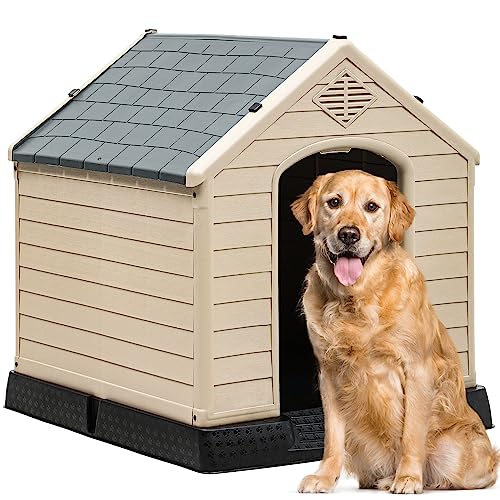
Best for Owners wanting a rot-proof, easy-clean plastic house for small to large dogs
- Waterproof plastic shell for indoor or outdoor use
- Air vents help release heat and moisture in warm weather
- Elevated floor keeps the interior dry and off the ground
- Panels wipe down easily and resist odours and rot
- Solidly rated by a large base of owners
- Plastic construction is easy to hose out and will not warp like wood
- Vents plus elevated floor cover the warm-weather basics
- Thin walls give minimal insulation against real cold
- Light weight means it should be anchored in windy locations
Verdict: The YITAHOME is the well-rounded weatherproof plastic pick: a reliable owner track record, easy cleaning, and the standard vents-and-elevated-floor combo. It is best as a three-season shelter, with bedding and a windbreak added if temperatures drop.

Best for Warm climates where an elevated cot with a shade canopy matters more than a closed den
- 2-in-1 design combines an elevated cot bed with a tent-style shade canopy
- 47-inch X-large size fits larger dogs
- Raised cot keeps the dog off hot ground and improves under-body airflow
- Weatherproof materials suited to outdoor patios and yards
- Elevated cot-plus-canopy runs cooler than an enclosed plastic box in heat
- A solid owner rating across a modest review base
- Doubles as a shaded day bed and a light rain shelter
- Open canopy offers no insulation and little wind protection
- Not a cold-weather solution, best for hot-climate daytime shade
Verdict: The Veehoo is the hot-climate specialist: its elevated cot and shade canopy keep a dog cooler than any closed box, which is exactly what a summer yard needs. Just remember it is shade and light-rain shelter only, not a winter den or an unsupervised full-time home.

Frequently Asked Questions
Can my dog live outside full time in a dog house?
No. Dogs are companion animals that need family company and protection from weather, and no dog house makes full-time outdoor living safe or humane. An outdoor house is shelter and shade for supervised time outside, not a home. Bring your dog indoors in heat, cold, storms and overnight, and check local laws, many areas restrict how long a dog may be kept or tethered outdoors.
What size outdoor dog house should I buy?
Buy a house just big enough for your dog to stand up, turn around and lie down, and no bigger. An oversized house cannot trap body heat, so your dog stays cold in winter. Measure your dog standing and lying down, add a few inches, and check the interior dimensions rather than the exterior footprint. For a puppy, size for the adult dog and add bedding while they grow.
How do I keep a dog house warm in winter and cool in summer?
For winter, choose thick or foam-filled walls or a dome shape, add a door flap to block wind, a raised floor to stay off frozen ground, and insulated bedding. For summer, prioritise ventilation, light colours and an elevated or open shade design placed out of direct sun, a sealed box in full sun can become dangerously hot. Most plastic houses need bedding and a door flap added for genuine cold.
Is a plastic or wooden dog house better?
Neither is universally better. Plastic is waterproof, rot-proof, light and easy to hose clean, but thin plastic gives little insulation and needs anchoring in wind. Wood insulates better by default and is heavier so it stays put, but it can rot, warp and harbour fleas unless you seal and maintain it. Choose plastic for low-maintenance, easy-clean weatherproofing, and wood for insulation and weight if you will maintain it.