



How to Choose an Outdoor Dog House
An outdoor dog house looks like a simple purchase, but the wrong one can be too cold in winter, an oven in summer, or so flimsy it blows across the yard in the first storm. This guide walks through the decisions that actually matter, sizing, insulation, weatherproofing, floor height, ventilation and material, so you can match a house to your dog and your climate. Our assessments are based on aggregated verified owner reviews and manufacturer specifications, not hands-on lab testing, and we call out where the marketing and the real-world use part ways.
Start with a welfare reality check
Before anything else: a dog is a companion animal, and an outdoor house is shelter and shade, not a substitute for living indoors with the family. Dogs are social, and long stretches alone outside harm their wellbeing. A good outdoor house gives a dog somewhere cool and dry during supervised yard time, a break from sun or a passing shower, but it does not replace bringing the dog inside for heat, cold, storms and company. Extreme weather is genuinely dangerous: heatstroke can kill in minutes inside a poorly ventilated box, and cold, wind and damp cause hypothermia in smaller and older dogs. Many areas also have laws restricting how long a dog may be tethered or left outdoors and what shelter must be provided, so check your local council or municipal rules before setting up any outdoor housing. Treat everything below as advice for better shelter, not a licence to leave a dog outside full time.
Get the size right
Counter-intuitively, bigger is not better. A dog house should be just large enough for your dog to stand up, turn around and lie down comfortably, and no larger. A cavernous house cannot trap body heat, so in cold weather your dog stays cold. Measure your dog standing and lying down, then add a few inches, and check the house's interior dimensions rather than its outside footprint, which includes the walls. If you are buying for a puppy that will grow, size for the adult dog and add extra bedding while they are small. Doorway height matters too: your dog should be able to enter with only a slight duck, not a full crawl.
Insulation for cold and heat
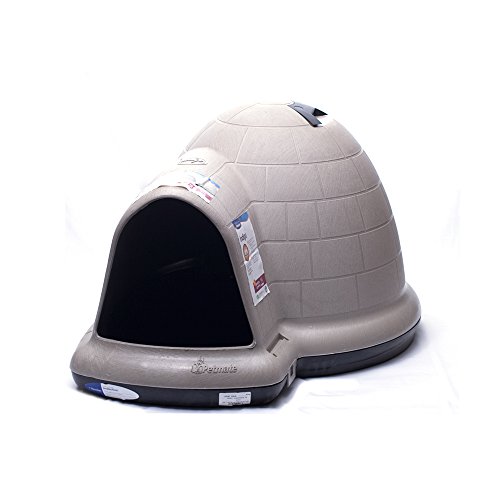
Insulation cuts both ways. In cold climates you want thick, structural walls, ideally double-walled or foam-filled, that hold body heat in, plus a door flap to block wind and a raised floor to keep the dog off frozen ground. Igloo-style dome houses are popular in the cold because the shape has less surface area to lose heat and sheds snow. In hot climates the priority flips: you want reflective or light-coloured surfaces, generous ventilation and, ideally, an elevated or open design that lets heat escape rather than a sealed plastic box that bakes in the sun. A dark, unventilated house in full sun can become lethally hot. No mass-market plastic house is truly insulated on its own; for real winter cold you will add insulated bedding, a door flap and often a separate insulation kit.
Weatherproofing and placement
Weatherproof means the house keeps rain, wind and damp out and survives UV and temperature swings without cracking. Look for a sloped or dome roof that sheds water, an offset or side entrance so wind and rain do not blow straight in, and drainage or a raised floor so water never pools inside. Placement is half the battle: put the house on high, well-drained ground, face the entrance away from prevailing wind, and give it shade in summer. Lightweight plastic houses need staking or weighting down, they will move in strong wind, and an empty one can tip. A house that is waterproof on paper still leaks if it sits in a puddle or faces into the weather.
Elevated floor and ventilation
An elevated floor, whether a moulded raised base or a cot-style platform, is one of the most valuable features on an outdoor house. It keeps the sleeping surface off cold, wet or hot ground, improves airflow underneath, and reduces the damp and condensation that make a house cold and smelly. Ventilation is its partner: air vents near the roofline let warm, moist air escape and prevent the box from turning into a sauna or trapping condensation. The trade-off is that more ventilation means less retained heat, so cold-climate owners balance vents against warmth (some vents can be partly closed), while hot-climate owners want as much airflow as possible. Cross-ventilation plus a raised floor is the combination that keeps a house both dry and breathable.
Material, plastic versus wood
Most outdoor houses are plastic or wood, and each has honest trade-offs.
Plastic (including structural foam) is waterproof, rot-proof, light, easy to hose clean and resistant to fleas and mould. Structural-foam plastic can also insulate reasonably well. The downsides: thin budget plastic offers little insulation, can crack in extreme cold or UV over years, and is light enough to need anchoring. Plastic suits owners who want low maintenance and easy cleaning.
Wood looks natural, insulates better than thin plastic by default, and is heavier so it stays put in wind. But wood absorbs water, can rot, warp and harbour fleas and mould if it is not sealed and maintained, and it is harder to clean thoroughly. Wood suits owners willing to re-seal and maintain it and who want a sturdier, better-looking, better-insulating house.
There is no universally best material, choose plastic for low-maintenance weatherproofing and easy cleaning, wood for insulation, weight and looks if you will maintain it.
Matching a house to your situation
Pull it together by climate and dog. Cold and wet climate: a thick-walled or dome-style house with a door flap and raised floor, plus insulated bedding. Hot climate: an elevated, well-ventilated or open shade design in a light colour, placed in shade. Large or giant breed: prioritise genuine interior size and structural strength, many plastic boxes simply are not big enough. Small, old or short-coated dogs: they lose heat fastest and should not be relied on to stay warm outdoors, bring them in when it is cold. Whatever you choose, add appropriate bedding, keep it clean and dry, and check on your dog, especially in weather extremes. The best house in the world is still only part of responsible outdoor care.