


What Actually Makes a Training Treat "High-Value"
Most dog owners start training with whatever treat is already in the cupboard, leftover biscuits, a handful of kibble, maybe a dental chew snapped into pieces. It works for the first few sessions, and then progress stalls. The dog gets bored, distracted, or simply decides the treat isn't worth disengaging from something more interesting. At that point the problem usually isn't the training method. It's the treat.
A genuinely good training treat does four jobs at once: it's small enough to deliver dozens of times per session, soft enough to be swallowed almost instantly, smelly and tasty enough to actually compete with the environment, and low-calorie enough that none of that adds up to a weight problem. Most treats on a supermarket shelf are built to satisfy a dog eating one or two a day, not a dog getting rewarded every few seconds during a training session. That mismatch is why treat choice matters more than most people expect.
Size, Aim for Pea-Sized, Not Snack-Sized
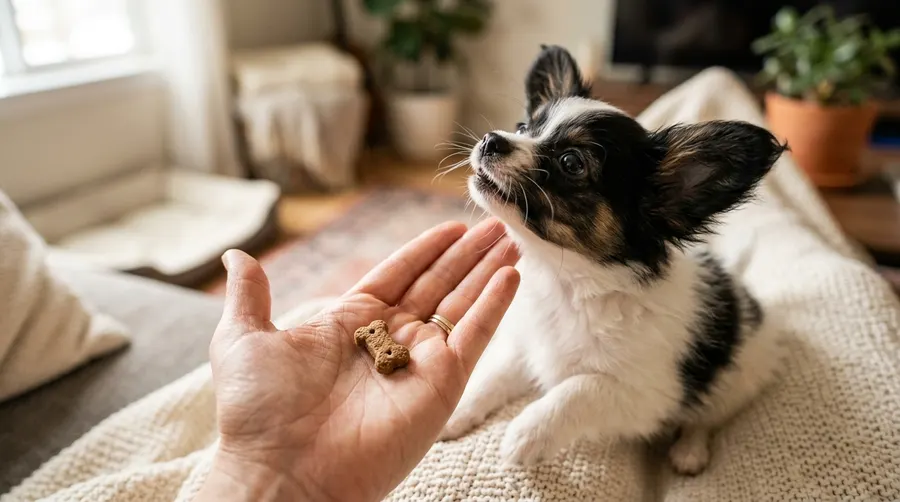
The single biggest upgrade most people can make is simply going smaller. A treat that takes three seconds to chew breaks the flow of a training session and gives the dog's attention somewhere else to go in the meantime. A pea-sized piece, by contrast, is gone in under a second, the dog barely breaks eye contact, and you can deliver a reward almost as fast as the behaviour happens, which is what makes marker-based training (a clicker or a verbal "yes") actually work.
If a treat is larger than a pea, don't hesitate to break it into two or three pieces by hand. This is especially true for freeze-dried treats and soft training bits, which snap apart easily, and it instantly stretches a bag further while keeping each reward calorie-light.
Texture, Soft and Fast Beats Crunchy and Slow
Crunchy biscuits have their place, they're shelf-stable, cheap, and fine for low-key reinforcement at home. But for active training, soft or semi-moist treats almost always win. They don't require real chewing, they don't leave crumbs that distract a dog sniffing the floor, and they disappear fast enough to keep the pace of a session high. Save crunchy biscuits for casual reinforcement and lean on soft treats whenever you need speed and focus.
Matching Value to the Distraction Level
Not every treat needs to be the smelliest thing in the house. In fact, using your highest-value treat for every single rep trains a dog to expect fireworks constantly, and you lose your best tool for the moments that actually need it. It helps to think in tiers:
- Low-value (everyday, low-distraction): kibble, plain biscuits, fine for reinforcing known behaviours at home with nothing else competing for attention.
- Mid-value (moderate distraction): soft, meat-first training bits, good for the backyard, a quiet street, or a training class.
- High-value (hard distraction, new skills, recall): freeze-dried single-protein treats or real jerky, save these for the dog park, recall around wildlife, vet visits, or teaching a brand-new behaviour where you need every possible edge.
The 10% Rule, and How to Actually Follow It
Veterinary guidance generally holds that treats, including training rewards, shouldn't make up more than about 10% of a dog's daily calorie intake. That sounds simple until you're running a 15-minute training session with 40+ tiny rewards, which can add up faster than it looks, especially with calorie-dense treats like liver or jerky.
A few practical ways to stay inside that budget:
Ingredient Quality and Single-Protein Options
For most dogs, ingredient quality is about taste and value rather than health necessity, a meat-first treat simply smells and tastes more interesting than one built around grain fillers, which is why it works better around distractions. But for dogs with food sensitivities, allergies, or that are mid-elimination-diet, ingredient quality becomes a real constraint. Single-ingredient treats (a single freeze-dried protein, with nothing else on the label) are the safest bet here, since there's no binder, preservative, or secondary protein source to trigger a reaction. If a dog reacts to chicken specifically, look for a beef, lamb, or salmon-based treat instead, and check the label for by-product meals or artificial flavoring if you're trying to keep things clean.
Puppies Need a Slightly Different Approach
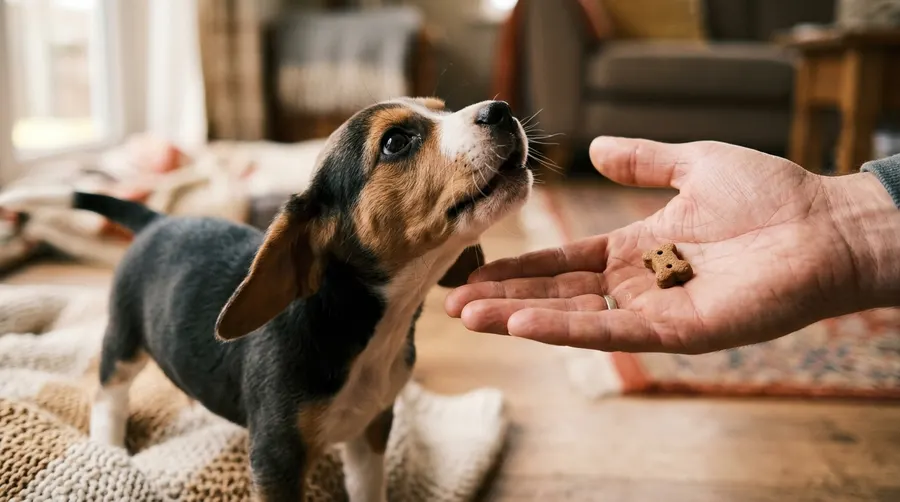
Young puppies, especially during teething, do better with soft treats sized and formulated for their smaller mouths and developing teeth. It's also a good window to introduce protein variety early, rotating between chicken, lamb, salmon, and beef treats while a puppy is young can reduce the odds of developing a sensitivity to any single protein later on.
The Bottom Line
There's no single "best" training treat, there's a best treat for each situation. Keep a low-cost, low-calorie option on hand for everyday reinforcement, a soft meat-forward treat for moderate distractions, and something genuinely high-value in reserve for the moments that matter. Go smaller than feels necessary, watch the daily total, and adjust meals rather than skipping training when the calories start to add up.