
Best Dog Training Treats
Best Dog Training Treats, ranked from aggregated owner ratings and reviews, not first-hand testing. Real pros, cons, and who each pick is best for.


Our Top 3 Picks
Quick Comparison
| Product | Best for | Buy | |
|---|---|---|---|
| Zuke's Mini Naturals Dog Training Treats, Chicken | Best Overall | See Amazon | View |
| Milk-Bone Flavor Snacks Minis Dog Biscuits | Best Value | See Amazon | View |
| Pet Botanics Training Rewards Soft & Chewy, Bacon | Best Small/Low-Calorie | See Amazon | View |
| Blue Buffalo Bits Beef Training Treats | Best Soft/High-Value | See Amazon | View |
| Stewart Freeze Dried Dog Treats, 100% Beef Liver | Best Freeze-Dried/Natural | See Amazon | View |
| Wellness Soft Puppy Bites, Lamb and Salmon | Best for Puppies | See Amazon | View |
How to Choose a Dog Training Treat
The right training treat depends less on the brand and more on three practical questions: how small is each piece, how fast can the dog eat it, and how many calories does that add up to across a real session.
Start with size. Anything larger than a pea slows down a training session, because the dog stops to chew instead of staying focused on you. If a treat is too big, break it up by hand before the session starts rather than mid-session, freeze-dried and soft training bits both snap apart easily.
Prioritise soft over crunchy for active training. Crunchy biscuits are fine for casual, low-frequency reinforcement at home, but they take longer to eat and can leave crumbs that pull a dog's attention to the floor instead of you. Soft, semi-moist treats disappear in under a second, which keeps the pace of a session high and makes marker-based training (clicker or verbal cue) actually effective.
Match value to difficulty. Not every rep needs your best treat. Use a low-cost biscuit for known behaviours in a quiet setting, a soft meat-first treat for moderate distractions like a training class or backyard, and reserve a genuinely high-value option, usually a single-protein freeze-dried treat or real jerky, for recall around distractions, new environments, or teaching a brand-new skill. Saving the strongest treat for the hardest moments keeps it meaningful instead of becoming just another background reward.
Watch the calorie math. A 15-minute session can easily involve 30-50 individual rewards, and that adds up fast, especially with calorie-dense treats. Vets generally recommend treats stay under about 10% of a dog's daily calories. The easiest ways to manage this: go smaller rather than skipping rewards, trim the regular meal slightly on heavy-training days, and rotate in plain kibble alongside higher-value treats during long sessions so not every rep is a full-calorie hit.
Check the ingredient list if your dog has sensitivities. Most dogs don't need to worry about this, a treat with a few plant-based binders alongside real meat is perfectly fine. But for a dog with a known food sensitivity or allergy, single-ingredient treats (one protein, nothing else on the label) remove the guesswork, and switching protein sources (beef, lamb, salmon instead of chicken) can help if a dog reacts to a specific one.
For puppies, prioritise softness and protein variety. Puppies in the teething stage do better with treats formulated to be gentle on developing teeth and gums. It's also a reasonable window to rotate proteins early, since exposure to a variety of proteins as a puppy can reduce the odds of developing a sensitivity to any single one later.
Most owners end up keeping two treats on hand rather than one: an everyday low-cost option for routine reinforcement, and a high-value option kept specifically for harder training moments. That combination covers nearly every situation without overspending or overfeeding.
Full Ranking, Reviewed

Best for Owners who want one reliable, soft, pea-sized treat that works across almost every training scenario
- Real chicken listed as the first ingredient
- Semi-moist, bite-sized pieces roughly the size of a pea
- Low enough in calories per piece to allow frequent rewarding without overfeeding
- 16 oz resealable bag sized for regular, ongoing training use
- Small enough to deliver rapid-fire rewards without breaking training rhythm
- Strong, meaty smell that competes reasonably well with real-world distractions
- Soft texture works for puppies, seniors, and dogs with dental issues
- Semi-moist texture can dry out or turn sticky if the bag isn't resealed properly
- Includes some plant-based binders (glycerin, gums) alongside the chicken, so it isn't a true single-protein treat for dogs on an elimination diet
Verdict: The most balanced option here, small, soft, genuinely chicken-forward, and versatile enough to be the only training treat most dogs need day to day.

Best for Owners who go through a lot of treats and want the lowest cost per reward
- Large 36 oz canister with a high treat count per bag
- About 5 calories per mini biscuit per the brand's own listing
- Crunchy, shelf-stable biscuit texture instead of soft/chewy
- 15% protein content per the brand's specs
- Big canister keeps cost per treat very low for daily use
- Low calorie count per biscuit makes it easier to stay under a sensible daily treat limit
- Crunchy texture gives some dogs a clear, distinct "treat" cue
- Crunchy biscuits take longer to chew than soft treats, which can slow down a fast-paced training session
- Grain-based filler ingredients mean it's a lower-value reward than meat-first treats when a dog is genuinely distracted
Verdict: Not the most exciting treat to a distracted dog, but the best cost-per-reward on this list, good as the everyday, low-stakes half of a treat rotation.

Best for Trainers running long sessions who need dozens of tiny rewards without filling the dog up
- Roughly 500 treats per 20 oz bag, among the smallest pieces reviewed here
- Soft, chewy texture that disappears in one bite with no crumbling
- Bacon flavor formulated specifically as a training reward rather than a repurposed biscuit
- Resealable bag to keep treats fresh through daily use
- Tiny size lets you reward every single rep of a session without the dog filling up
- One-bite texture keeps the dog's focus on the handler, not on chewing
- High treat count per bag makes cost-per-piece very low despite the small size
- Ingredient list leans on preservatives and by-products rather than a clean, single-protein formula
- Strong bacon scent can linger on hands and pockets after a session
Verdict: The pick when volume matters more than anything else, ideal for shaping, clicker work, or any session that needs 40+ rewards without overloading calories.

Best for Dogs that need a genuinely meat-forward reward to compete with tough distractions
- Real beef listed as the first ingredient
- Soft training-bit format built for quick, repeated rewarding
- Contains DHA, marketed to support cognitive development
- No chicken by-product meal, useful for dogs sensitive to poultry proteins
- Meat-first recipe gives a noticeably stronger scent and taste than biscuit-style treats
- Soft bits are easy to pinch into smaller pieces for toy breeds
- Beef base is a useful rotation option for dogs that react to chicken
- Costs more per ounce than basic biscuit-style treats
- Still contains grain and plant ingredients, so it isn't a single-ingredient treat
Verdict: A solid step up in value from biscuit-style treats without going all the way to freeze-dried, good for parks and moderate distractions.
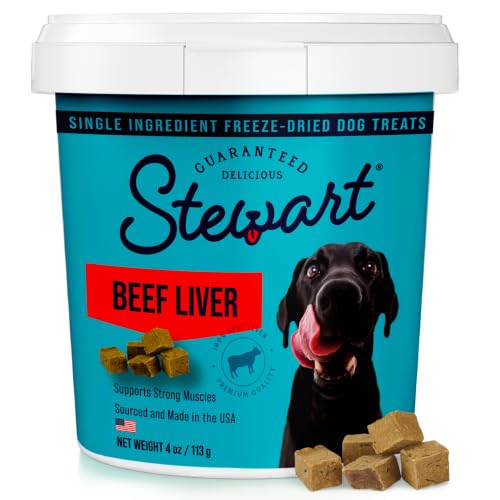
Best for Dogs with food sensitivities, or any dog that needs the single highest-value reward you can offer
- Single ingredient: 100% beef liver, nothing else on the label
- Freeze-dried for a light, crumbly texture that breaks apart easily by hand
- High-protein and intensely aromatic, typically the top value tier for hard training environments
- 4 oz tub sized for occasional high-value use rather than everyday feeding
- Single-ingredient formula is about as close to hypoallergenic as a treat gets
- Strong natural smell and taste usually outperforms multi-ingredient treats for recall and distraction-proofing
- Easy to snap into pea-sized or even smaller pieces by hand
- Small 4 oz tub empties quickly if used as a primary daily training treat rather than a special-occasion reward
- Rich, calorie-dense liver can cause loose stool in sensitive dogs if overfed
Verdict: Save it for the moments that matter, recall around distractions, new environments, or any session where a mid-tier treat isn't cutting it.

Best for Puppies in early training who need a soft, gentle, grain-free reward
- Formulated specifically for puppies, soft enough for developing teeth and gums
- Grain-free lamb and salmon recipe
- Natural ingredient list without artificial flavors, aimed at young dogs
- 8 oz bag sized for puppy-scale portions
- Soft texture is gentle on puppy teeth and gums during teething
- Lamb and salmon recipe offers a protein rotation away from chicken or beef
- Grain-free formula suits puppies showing early food sensitivities
- Smaller 8 oz bag means more frequent repurchasing for daily puppy training
- Pieces run a bit larger than the tiniest reward-style treats on this list, so very small puppies may need them broken in half
Verdict: A gentle, purpose-built option for the puppy stage, swap to a smaller, meatier treat once basic obedience is underway.

Frequently Asked Questions
How small should a training treat actually be?
Aim for pea-sized or smaller. Anything bigger slows the session down because the dog stops to chew instead of staying engaged, and it also makes it much harder to stay within a sensible daily calorie budget. Most soft treats and freeze-dried treats can be broken into smaller pieces by hand if they come pre-sized larger than that.
Are freeze-dried treats worth the higher price?
For everyday reinforcement, not really, a soft meat-first treat or even a low-cost biscuit does the job. Freeze-dried, single-ingredient treats earn their price in specific moments: recall around real distractions, introducing a brand-new behaviour, or any situation where you need the strongest possible reward. Most owners get the best value keeping a small tub on hand for those moments rather than using it as the everyday treat.
How do I avoid overfeeding my dog on training days?
The most reliable fix is going smaller rather than cutting back on rewards, pea-sized pieces let you reward generously without the calories climbing fast. It also helps to slightly trim your dog's regular meal on heavy-training days, and to rotate in plain kibble alongside treats during long sessions so not every reward is a full-calorie hit. Vets generally suggest keeping all treats, including training rewards, under about 10% of daily calorie intake.
My dog has a sensitive stomach or food allergy, what should I look for?
Look for single-ingredient treats where the label lists just one protein and nothing else, no by-product meals, fillers, or artificial flavoring. If your dog reacts to a specific protein like chicken, switching to a beef, lamb, or salmon-based treat is often enough to resolve it. When in doubt, introduce any new treat gradually and watch for changes in stool or skin before making it a regular part of training.