


Why an unrestrained dog is a real risk, not just a good habit
A dog riding loose in a moving car is doing two dangerous things at once: it's a projectile if you brake hard or crash, and it's a distraction that can cause the crash in the first place. Neither risk shows up until the moment you need it not to. Restraining your dog properly is less about following a rule and more about controlling what happens to a 20-80 lb object during a sudden stop.
There isn't one single "correct" way to do this, there are four main approaches, and the right one depends on your dog's size, your vehicle, and the length of the trip. What matters is picking one and doing it properly, because a poorly fitted or badly placed restraint can be nearly as risky as none at all.
Option 1, Harness plus seatbelt tether
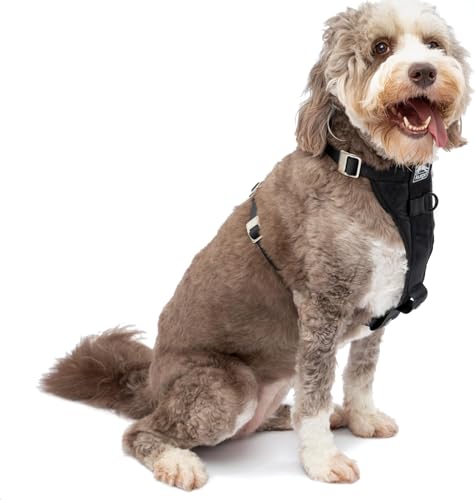
This is the most common setup for medium-to-large dogs who ride in the back seat. A properly fitted harness, not a walking harness pressed into service, but one built with a sturdy chest plate and reinforced attachment point, connects to a short tether that loops through the seatbelt buckle or clips to a LATCH anchor.
A few things determine whether this setup actually does anything useful in a collision:
- Fit is everything. A harness that's loose enough to slip over the dog's head under load isn't restraining anything. Adjust every strap snug enough that you can fit two fingers underneath, no more.
- Tether length matters. Too long and the dog can still be thrown into the front seats or footwell. A short tether that limits movement to roughly the width of the seat is safer than a long lead clipped to a harness.
- Anchor point matters. Clipping to a headrest post is common but not always the strongest anchor, check your harness manufacturer's instructions for the anchor method they actually engineered the product around.
- Back seat, middle position, is generally best for a single dog, since it keeps the dog furthest from side-impact zones and away from any airbag.
Option 2, Hard-sided crate
A well-secured hard-sided crate is one of the more effective ways to contain a dog in a crash, provided it's genuinely secured, wedged against seatbacks or cargo tie-downs so it can't slide, tip, or become a projectile itself. An unsecured crate sliding across a cargo area in a hard stop defeats the entire purpose.
Crates belong in the cargo area of an SUV or wagon, or firmly strapped down in the back seat of a sedan, never loose on a seat, and never in the front. Size the crate so the dog can stand, turn, and lie down comfortably; a crate that's too large lets the dog build up momentum inside it during a sudden stop.
Option 3, Soft-sided carrier
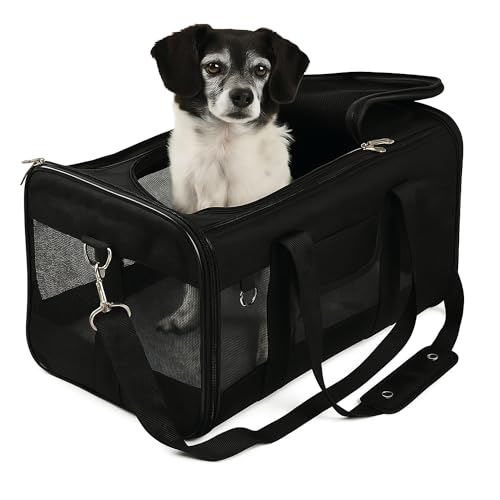
Soft carriers work for small dogs and cats but only provide meaningful protection when they're secured with a seatbelt or strap through their structural loops, not sitting free on a seat, and never held on a lap. A carrier on a lap turns your dog into an airbag obstruction and turns you into a much less effective driver. If you're using a soft carrier, treat it the same way you'd treat a child's booster seat: buckled in, on the seat, every time.
Option 4, Vehicle barrier or divider
Barriers and cargo dividers keep a dog confined to the cargo area of an SUV or wagon and stop it from launching into the front seats, useful for preventing driver distraction and blocking forward momentum in a moderate stop. On their own, though, most barriers don't restrain the dog within the cargo space itself, so they're best used alongside a secured crate rather than as a standalone safety solution for a hard crash.
The one thing to never do, collar-only restraint
Clipping a leash from a collar to a seatbelt or anchor point is not a safety measure, it's a way to keep a dog from jumping out at a rest stop. In a sudden stop or collision, the sudden tension on a collar concentrates force on the neck and trachea, which is exactly the injury pattern a harness's wide chest plate is designed to avoid. If a harness isn't an option yet, a secured crate or carrier is a far better interim solution than a collar clip.
Cabin vs. cargo area, which is safer?
Neither location is automatically safer, it depends on the restraint. A well-fitted harness tether in the back seat cabin keeps the dog close to you and away from the airbag zone. A secured crate in the cargo area keeps the dog fully contained but relies entirely on the crate itself absorbing and containing crash forces, and on it being tied down so it can't shift. For road trips, many owners combine methods: a crate in the cargo area plus a barrier, or a harness tether in the back seat for shorter local drives.
Never in the front seat
Regardless of which method you use, the front passenger seat is off-limits if the vehicle has an active passenger airbag. A deploying airbag hits with enough force to seriously injure or kill a dog restrained or not, and a crate in the front seat blocks airbag deployment entirely, which is itself dangerous in a crash. Back seat or cargo area, every time.
A simple way to decide
If your dog already rides calmly and you want a restraint that's easy to use for every trip, a properly fitted harness and short tether in the back seat is the lowest-friction option. If your dog is anxious, prone to chewing at straps, or you drive with the cargo area empty, a well-secured crate offers more complete containment. Either way, the goal is the same: nothing in the vehicle should be free to move independently of the car in a sudden stop.