Why travel disrupts a dog's normal drinking habits
At home, a dog waters itself, the bowl is in the same spot, refilled on the same rhythm, and drinking happens in small sips throughout the day without anyone thinking about it. Travel breaks that pattern in several ways at once: the bowl isn't there, the water tastes different, the routine stops, and stress or excitement can suppress thirst even when the body needs fluids. A dog that would normally drink steadily through a day can go hours in a car or on a plane without taking a single sip, simply because nothing prompted it to.
That matters more on travel days than any other, because travel usually also increases fluid loss, more panting from heat, excitement, or anxiety, more physical activity at rest stops, and often drier air in a car cabin or aircraft cargo hold or cabin. The combination of lower intake and higher output is exactly the setup for dehydration, and it creeps up quietly rather than announcing itself.
How much water does a traveling dog actually need
As a baseline, dogs need roughly 1 ounce of water per pound of body weight per day under normal conditions, so a 40 lb dog needs somewhere around 40 ounces (5 cups) daily. That number climbs with heat, exercise, and stress, all of which are common on travel days. A dog hiking in warm weather or panting through a long car ride in a hot climate can reasonably need noticeably more than its baseline.
Rather than trying to hit an exact number, the more useful approach on the road is offering water on a schedule rather than waiting for the dog to ask. Dogs don't reliably self-regulate hydration the way they self-regulate food, especially when distracted by a new environment, so build water breaks into the trip the same way you'd build in bathroom breaks, every 1 to 2 hours in the car, and more frequently during exercise or heat.
Gear that actually makes drinking possible away from home
A dog that would happily drink from its usual bowl often won't drink from an unfamiliar surface, a puddle, or a stranger's tap water that tastes or smells different. A handful of purpose-built tools remove that friction:
- Portable collapsible bowls, silicone or fabric bowls that fold flat for a bag and pop open at a rest stop or trailhead. The lower the learning curve for the dog, the more likely they'll actually drink from it.
- No-spill travel bottles, bottle-and-tray combinations where squeezing the bottle fills a small trough the dog can lap from, useful in the car where a full bowl of water would slosh everywhere on a corner or a hard stop.
- Clip-on or carabiner bowls, silicone cups that clip to a bag or crate door, handy for hikes where carrying a separate bowl is one more thing to manage.
- Insulated water bottles, keeping water cool in hot weather matters more than it sounds; dogs are more likely to drink water that isn't lukewarm, and cool water helps a bit with body temperature regulation too.
Hydration by mode of travel
In the car, water should be available at every stop, and for longer drives, a spill-resistant bowl clipped or wedged securely means the dog can drink between stops too without a mess. Never leave water access as an afterthought on multi-hour drives, dehydration and heat stress build cumulatively over a long trip even with air conditioning running.
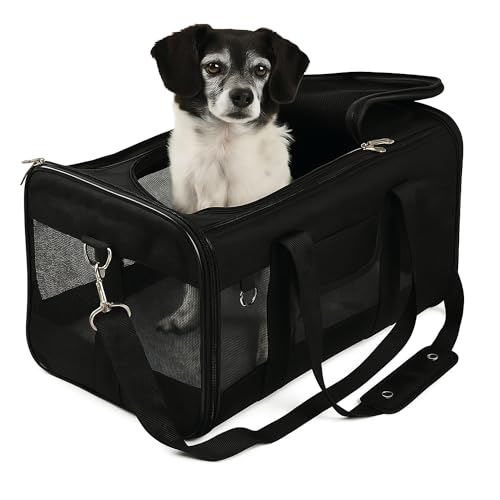
On a plane, dogs typically can't be given loose water in a bowl inside a carrier due to spill risk, so many owners freeze a small dish of water that melts gradually during the flight and offer bottled water at layovers or once through security. Airline cargo holds and even climate-controlled cabins can be drier than normal air, so hydrating well in the hours before a flight helps offset lower intake during it.
On a hike, carry more water than you think you'll need, for the dog, not just yourself, and offer it proactively every 20 to 30 minutes in warm weather rather than waiting for panting to become heavy. A dog working hard on a trail loses fluid faster than it will ask you to replace it.
Recognizing dehydration before it becomes serious
Early signs are easy to miss because they look like ordinary tiredness: dry or tacky gums instead of the normal wet slickness, thick or stringy saliva, reduced skin elasticity (a gentle skin-tent pinch on the shoulders that's slow to snap back), sunken-looking eyes, and lower energy than usual. As dehydration progresses, signs can include excessive panting, lethargy, loss of appetite, and dry nose and gums that stay tacky. Severe dehydration is a veterinary emergency, if a dog is showing signs of collapse, disorientation, or won't respond to offered water at all, stop the trip and get veterinary care rather than waiting to see if it resolves.
A quick note on motion sickness
Some dogs drink less on car trips specifically because nausea from motion sickness suppresses thirst and appetite. If a dog is drooling excessively, lip-licking, yawning repeatedly, or vomiting in the car, motion sickness rather than simple stubbornness may be the reason it's avoiding water, that's a conversation for a vet about anti-nausea options rather than something to push through by offering more water at once, since a nauseous dog is more likely to vomit water back up than absorb it. Small, frequent sips tend to work better than a large amount offered all at once for a queasy traveler.
The simple habit that covers most of this
Offer water on a fixed schedule rather than waiting for signs of thirst, bring gear your dog has already practiced with, and check gums and energy level periodically on longer trips. None of this requires special equipment or expertise, it just requires treating hydration as an active part of the itinerary rather than something that takes care of itself.