


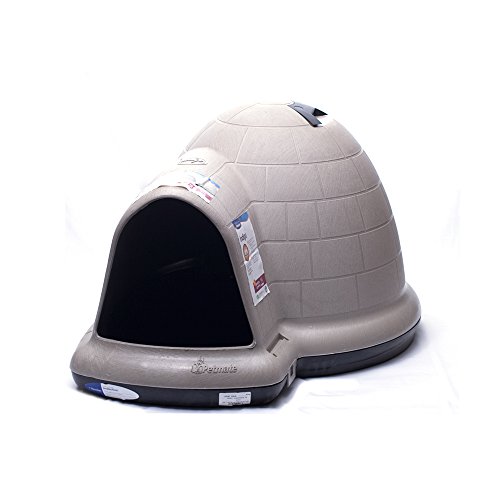

Wire crates, the most common all-rounder
Wire crates are the default choice for a lot of households, largely because they're versatile. Good airflow keeps them cooler in warm weather, the open sides let a dog see their surroundings (which some dogs find reassuring and others find overstimulating), and most fold flat for storage or travel. Many wire crates include a divider panel, making them a practical option for a puppy who'll need the space adjusted as they grow. The main downsides are less draft protection in cold rooms and less of a true "den" feeling for dogs who prefer more enclosed, cave-like security, both fixable with a crate cover.
Plastic crates, more enclosed, more secure-feeling
Plastic crates (sometimes called travel or airline crates) have solid walls with ventilation slots rather than open wire sides, which gives a more enclosed, den-like feel that some anxious or shy dogs settle into more easily than an open wire design. They block drafts better, making them a reasonable option for colder rooms or dogs sensitive to temperature. They're also the standard requirement for most airlines if you're flying with a dog, check the specific airline's size and design requirements well ahead of travel, since not every plastic crate is automatically airline-approved. The trade-off is less visibility and airflow compared to wire, and they generally don't fold flat, so storage takes more space.
Soft-sided crates, light, portable, not for every dog
Soft-sided crates are fabric over a lightweight frame, and their biggest advantage is portability, easy to fold, carry, and set up for trips, hotel stays, or dog sports events. They work well for calm, already-trained dogs who won't chew, scratch, or push against the fabric walls. They're a poor choice for puppies still teething, dogs who chew when anxious, or genuine escape artists, since fabric offers essentially no resistance to a determined dog. They're best thought of as a travel accessory for a dog who's already comfortable and reliable in a crate, not a primary training tool.
Matching the type to your situation
A few practical questions narrow the choice quickly. Flying with your dog: you'll likely need an airline-approved plastic crate regardless of preference. A young, still-teething puppy or a known chewer: wire or heavy-duty plastic holds up far better than soft-sided. A dog who seems more settled with visibility of the room: wire. A dog who seems to want to hide away and feel enclosed: plastic, or a wire crate with a cover over it. Frequent travel to hotels, events, or a second home: a soft-sided crate as a secondary option once the dog is already confidently crate trained elsewhere.
It doesn't have to be one or the other
Plenty of households end up owning more than one type for different purposes, a wire crate as the main home base, and a soft-sided crate for trips once the dog is a reliable, calm traveller. There's no single best material; there's a best fit for your specific dog and how you'll actually use it.
