


They solve the same problem differently
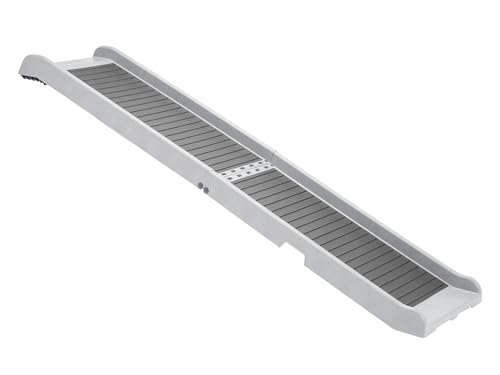
Both a ramp and a set of pet steps exist to get a dog onto furniture, a bed, or into a car without jumping. The real difference is in the physical movement each one asks for: a ramp is a continuous, gradual incline, while steps ask the dog to flex and extend their spine at each individual riser, more like a small staircase. For most healthy, average-build dogs, either works fine. The choice matters more once you factor in the dog's size, breed, and any joint or spinal risk.
Space and footprint
Steps are more compact and take up less floor space, which matters in a small apartment or a tight gap beside a bed. A ramp gentle enough to be genuinely comfortable needs real length, roughly two to three times the height it's covering, so a ramp reaching a tall bed can be a metre or more long. If floor space is the deciding factor, steps usually win; if the height being covered is significant, a long ramp may simply not fit the room.
Which dogs do better on which
Long-backed breeds prone to IVDD, dogs recovering from spinal surgery, and very small or very young puppies generally do better on a ramp, since it avoids the repeated flexion of individual steps. Larger, athletic dogs with no joint issues, and dogs who already climb household stairs confidently, often adapt to pet steps just as easily and some prefer them since the shorter distance means a faster ascent. Senior dogs with weak hind legs can struggle with steps if their rear end can't consistently manage the push-off at each riser, which tips the recommendation toward a ramp for that group specifically.
Stability and confidence
Dogs with poor eyesight or balance issues sometimes find a ramp's continuous surface easier to judge than a series of discrete risers, where misjudging a single step's height is a common stumble point. On the other hand, some dogs feel more confident with the clear visual break of each step rather than a long uninterrupted incline. There's genuine individual variation here, so if you're unsure, a folding or portable model of whichever type lets you trial it before committing to a permanent fixture is a reasonable way to test what your specific dog prefers.
The honest answer
Neither option is universally better, the right pick depends on your dog's size, age, joint health, and the specific height you're covering. If your dog has any diagnosed back or joint condition, ask your vet which they'd recommend for that dog specifically, since IVDD-risk breeds and post-surgical dogs often have real, individual reasons to favour a ramp over steps that a general guide can't account for.