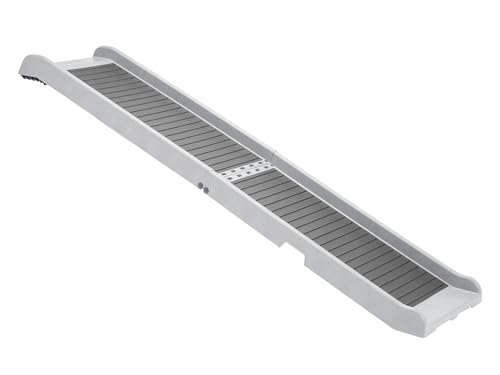



Angle matters more than any other spec
The single most important number on a dog ramp is its incline angle, not its material or price. A steep ramp defeats the purpose of buying one at all, since it can put nearly as much strain on joints and spine as jumping did. As a general guide, aim for an angle under 20 to 25 degrees for most dogs, and go gentler again, closer to 15 degrees, for senior dogs, arthritic dogs, or breeds prone to IVDD like dachshunds and corgis. A steeper angle might suit a young, healthy, athletic dog comfortably, but it's the wrong call for anything with a joint or spinal vulnerability.
Working out the length you need
Ramp length is a function of the height you need to cover and the angle you want. To reach a car boot roughly 70cm off the ground at a gentle 15-degree angle, you need a ramp somewhere around 2.5 to 2.7 metres long, which is longer than most people expect before they measure it. Shorter ramps advertised as "compact" or "travel-size" almost always mean a steeper angle to cover the same height, so check the actual angle spec, not just the folded storage length, before assuming a compact ramp suits an arthritic or IVDD-prone dog.
Width and footing
Width matters for larger dogs and for any dog unsteady on their feet: a narrow ramp under 30cm gives little margin for a wobble, while a wider ramp, especially one with raised side rails, gives a nervous or unsteady dog room to correct their stride without stepping off the edge. Surface texture matters just as much as width. A smooth or glossy ramp surface is genuinely dangerous, since a single slip is often enough to make a dog refuse to use the ramp again. Look for a textured, grippy, or carpeted surface, and check it stays grippy when wet if it'll be used outdoors or near a pool.
Matching angle and length to your specific use
A car ramp, a bed ramp, and a couch ramp each cover different heights, so don't assume one ramp suits every spot in the house. Measure the actual height at each location, work out the length needed to keep the angle gentle, and check the ramp folds or stores in a way that's realistic for your space if you're not leaving it permanently set up. For a multi-height household, it's often more practical to size the ramp to the tallest, most demanding use, like the car boot, and accept it's slightly longer than strictly necessary for the lower bed height.
When to just ask your vet
If your dog has a diagnosed joint or spinal condition, ask your vet for a specific maximum angle recommendation for that dog rather than relying on general guidance, since post-surgical dogs and dogs at different stages of arthritis sometimes need meaningfully gentler inclines than a healthy dog of the same breed and size.