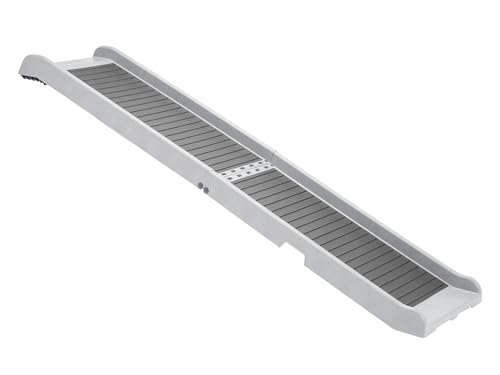



Start flat, not angled
The most common mistake is introducing a ramp already propped up against the car or bed on day one. Lay it flat on the floor first, so your dog can walk across it like any other surface and get used to the texture and the slight give underfoot without also managing an incline. Let them sniff it, walk over it a few times, and reward calmly each time, with no pressure to hurry.
Build the angle gradually
Once your dog is relaxed walking the flat ramp, prop it at a very shallow angle against a low step or a stack of books, nowhere near its final height. Lure them across with a treat held at nose height, moving slowly enough that they're walking, not lunging. Increase the angle in small stages over several short sessions rather than jumping straight to the full height in one go. A dog that has one bad or scary experience partway up a ramp often becomes reluctant to try again, so patience early on saves a lot of retraining later.
Never lift or push a nervous dog onto it
It's tempting to physically place a hesitant dog on the ramp to speed things along, but this usually backfires, since the dog associates the ramp with being forced rather than with a choice they made themselves. Let them approach and retreat as many times as they need. Treats placed a short distance up the ramp, then progressively further, work better than any physical guidance for building genuine confidence.
Use consistent commands and reward the whole action
Pick a simple word, "ramp" or "up," and use it every time, paired with praise or a treat the moment all four paws are on the surface, not just at the top. For dogs who are food-motivated, a treat trail up the ramp works well early on; for dogs more motivated by praise or play, a calm, encouraging voice and a toy waiting at the top can do the same job. Consistency across sessions matters more than any specific technique, since dogs learn the routine from repetition.
Troubleshooting a dog that won't commit
If your dog repeatedly approaches then backs away, the angle is likely still too steep for their comfort, or the surface feels unstable or slippery underfoot, check both before assuming it's a confidence problem alone. Senior or arthritic dogs sometimes need a longer training period simply because stepping onto a moving or unfamiliar surface is genuinely harder for them physically, not just mentally. If a dog remains persistently fearful of the ramp after a week or two of gentle sessions, or if you suspect pain rather than nerves is behind the reluctance, that's worth mentioning to your vet, since reluctance to use a ramp is sometimes the first visible sign of a joint or spinal issue rather than a training problem at all.