


Why jumping is the problem, not the destination
For a senior or arthritic dog, the injury risk isn't reaching the car seat or the sofa, it's the repeated jarring impact of jumping up and, more importantly, jumping down. Every landing sends force through the front legs, shoulders, and spine, and in a dog with arthritis or early joint disease that repeated impact accelerates pain and wear. A ramp removes the jump entirely, replacing it with a gradual incline the dog walks up and down under their own control, at their own pace.
What actually improves with a ramp
Owners of arthritic or senior dogs generally report less hesitation getting in and out of the car, easier access to a bed or sofa without assistance, and fewer of the stumbles or hard landings that come with a dog misjudging a jump as their joints stiffen. It also reduces the physical strain on you, since lifting a heavier dog in and out of a car or onto furniture is hard on your own back and risky if the dog struggles or twists during the lift.
Not a substitute for a vet diagnosis
A ramp helps with the mechanics of getting up and down, but it doesn't address the underlying condition. If your dog has started refusing jumps, moving stiffly after rest, or showing reluctance on stairs, that's worth a vet visit before you assume a ramp alone solves the problem. Arthritis, hip dysplasia, and spinal issues each call for different management, and a vet can tell you whether a ramp is enough or whether pain management, weight adjustment, or physical therapy needs to sit alongside it.
Getting a resistant dog to actually use one
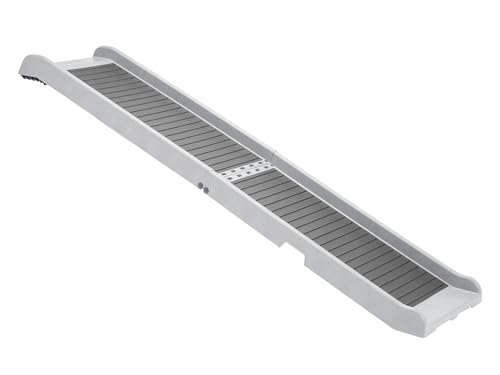
Many senior dogs are wary of a new ramp at first, especially if their balance or eyesight has declined. Introduce it flat on the ground before angling it against the car or bed, use treats and a calm, patient pace rather than lifting the dog onto it, and expect several short sessions rather than one successful attempt. Non-slip ramp surfaces matter enormously here; a dog that slips once on a ramp will often refuse to use it again.
Matching the ramp to the dog, not just the car
A ramp that's too steep defeats the purpose for an arthritic dog, since a steep incline puts almost as much strain on the joints as the jump did. Look for a longer ramp with a gentler angle over a short, steep one, and check the weight rating against your dog's actual size, particularly for larger senior dogs. If your dog's mobility issues are significant, ask your vet whether a ramp, steps, or a combination suits their specific condition best, since IVDD-prone breeds and dogs with hip or spinal issues sometimes do better on one than the other.