


Why a tie-out unattended is a welfare risk, not just a rule of thumb
No. Never leave a dog on a tie-out unattended, even for short periods. This is one of the clearest points of agreement among vets and trainers. A tie-out is a supervised, short-duration tool. It is not a substitute for a fenced yard or a crate when you can't watch your dog. Leaving a tethered dog alone, even in a familiar backyard, removes the one safeguard that catches problems before they become emergencies: a person nearby who can step in.
What can go wrong without supervision
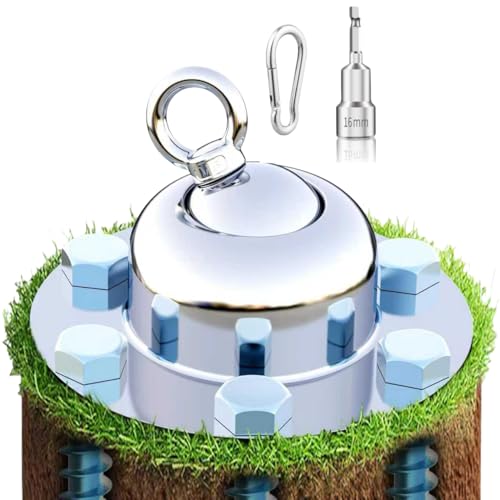
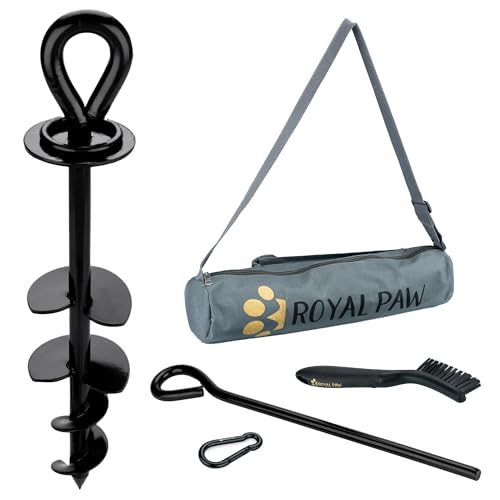
The welfare risks of tethering compound quickly once no one is watching. A dog can wind the cable around a fixed point until there's no slack left, which becomes a genuine strangulation risk. Anchor failure is another real hazard, a stake can work loose in soft ground, leaving a dog dragging a cable free in the yard or onto a road, at which point it's effectively an escape. Weather exposure changes fast: a dog tied out in direct sun with no shade or water can overheat within a short window, and one caught in a sudden storm has no way to reach shelter. There's also the risk of other animals, a stranger, or even a delivery person approaching a dog that has no way to retreat, which can trigger fear-based aggression.
"Just a few minutes" is where most incidents happen
Almost nobody plans to leave a dog on a tie-out for an extended stretch. It's usually "I'll just grab the mail" or "I'm only inside for a minute", and those short periods are precisely when tangling, anchor failure, or an unexpected visitor causes a problem. If you need to step away, even briefly, bring the dog inside or into a secure enclosed space rather than trusting the tie-out to hold without eyes on it.
What supervised actually means
Supervised doesn't mean glancing out the window every so often. It means being present and able to intervene within seconds if the line length shortens through tangling or your dog reacts to something. If you're doing yard work or relaxing outside with your dog tied out nearby, that generally counts. If you're indoors, on a call, or the dog is out of sight, it doesn't, and that gap is where the real risk to your dog's welfare sits.
If you genuinely can't supervise, use something else
If more than one dog is tied out in the same yard, unattended time carries an extra layer of risk. Two cables can tangle around each other, and a scuffle between dogs that would normally break apart on their own can turn dangerous when neither dog can retreat. If you have more than one dog needing outdoor time, either supervise both closely on separate tie-outs spaced well apart, or use a shared secure pen instead.
Life doesn't always allow constant supervision, and that's a fair reason to rethink the setup rather than push a tie-out past what it's meant for. For genuinely unsupervised time outside, a secure fenced yard, a covered and ventilated crate indoors, or a properly anchored exercise pen are all far safer options than any tie-out, precisely because they remove the tangling, escape, and strangulation risk that supervision exists to catch.