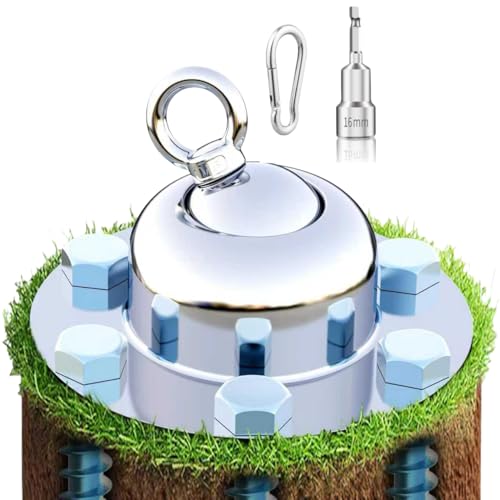



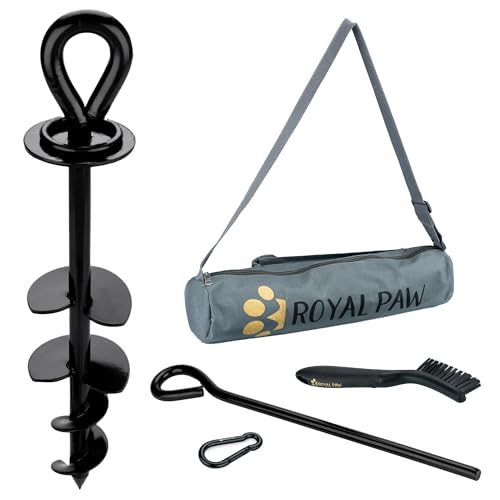
What a tie-out stake actually is
A tie-out stake is a metal spike or corkscrew anchor driven into the ground, with a cable running from it to your dog's collar or harness. It's a quick way to give a dog room to move and toilet outside without a fenced yard, and plenty of owners use one occasionally without any problem. The important word is occasionally, a tie-out stake is a short-term management tool for supervised time outdoors, not a long-term containment solution for a fenced yard.
Where the real risks come from
Most tie-out injuries don't come from the stake itself but from what happens at the end of the cable. A dog that hits the end of the line at a run can jolt the neck hard enough to cause a real neck injury, especially when the tie-out cable is clipped to a flat collar rather than a well-fitted harness. Cables can wrap around legs, furniture, fence posts, or the dog's own body as it circles a fixed point, and a determined or frightened dog can sometimes pull a lightweight ground stake straight out of soft or wet ground. There's also the risk of a loose dog, wildlife, or a stranger approaching a tethered dog that has no way to retreat, dogs on a tie-out sometimes react defensively simply because they can't move away from something that startles them.
What makes a tie-out safer, if you use one
If a tie-out is part of your routine, a few habits meaningfully cut the risk of tangling and strangulation. Use a properly fitted harness so any sudden pull loads the chest and shoulders instead of the throat. Choose an anchor rated well above your dog's size. Check the anchor is fully seated in the ground before you step away. A swivel clip at both ends of the cable reduces tangling, and clearing the tie-out area of obstacles the line could wrap around matters just as much as the hardware itself. Above all, stay within sight and keep sessions short, this is supervised time outside, not unattended containment.
When a tie-out is the wrong tool
A tie-out is not appropriate for a young puppy still learning boundaries, a dog with any history of neck or trachea problems, an anxious or reactive dog that might panic at the end of the line, or any dog left unattended, even for a few minutes. If your yard has no secure fencing, a portable exercise pen or a supervised walk on a regular leash is often a safer way to give your dog outdoor time than a stake and cable.
The bottom line
Used briefly, with a harness, supervision, and a solid anchor, a tie-out stake can be a reasonable stopgap. Used as a way to leave a dog outside unattended, it becomes one of the more common and preventable causes of backyard injury. If you find yourself relying on one every day, treat that as a signal to invest in real fencing or a secured play area instead.