


The basic setup
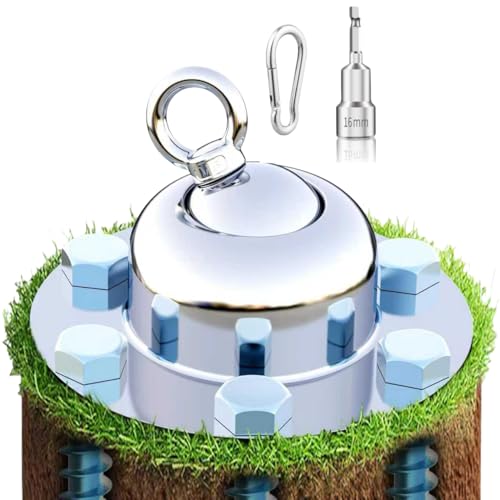
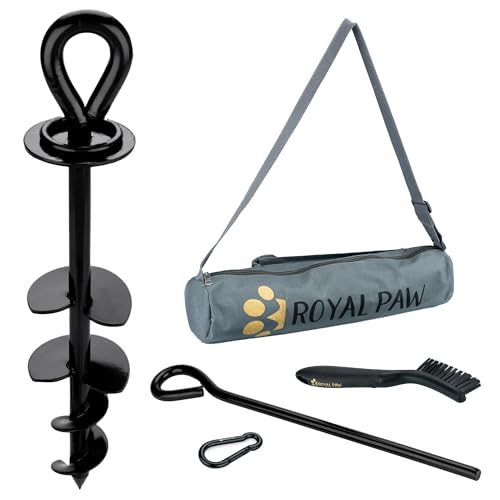
A single ground stake anchors one end of a cable to a fixed point in the yard, so your dog's range of movement is a circle centred on that spot. A trolley (or runner) system instead runs a cable or zipline between two fixed anchor points, often tree-to-tree or between two posts, with a pulley clip that slides along it, and a second line dropping down to the dog's harness. Instead of a circle, your dog gets a long, straight (or gently curved) corridor to move along.
Why a trolley reduces tangling
The main practical advantage of a trolley system is fewer tangles. With a single stake, a dog that circles the anchor repeatedly winds the cable shorter and shorter, eventually leaving them stuck with barely any slack, a real strangulation risk if it happens while unsupervised. A trolley's overhead line keeps the connecting cable running mostly straight down from the pulley, so there's much less for the dog to wind around, and no fixed point at ground level for the line to wrap.
Why a trolley is not automatically safer
A trolley system isn't risk-free just because it tangles less. The dog can still hit the end of the run at speed and jolt the neck, the pulley clip can jam, and if the drop line is too long it can catch on furniture or the dog's own legs anyway. The anchor points also need to be genuinely solid, a trolley strung between two fence posts is only as safe as those posts.
Space and yard shape decide which suits you
A single ground stake is simpler to set up and works fine in an open, obstacle-free patch of yard. A trolley system suits a long, narrow yard, or a space with trees or fixed structures already positioned to anchor a runner line, and it gives a more energetic dog room to actually move rather than just standing at the end of a short radius. Neither replaces a fenced yard or supervision, both are still tethering, with the same rules around never leaving a dog unattended for long periods.
Choosing between the two
If your yard is open and roughly square, a single stake with a properly rated anchor is usually enough. If it's long and narrow, or you're finding your dog constantly tangled around a stake, a trolley system is worth the extra setup effort, just budget time to install solid anchor points rather than improvising with whatever is nearby.
A trolley system is only as safe as its weakest anchor point, so both ends need to hold as firmly as a single stake would on its own, a healthy, well-rooted tree or a securely set post, not a fence panel or a small shrub. Run the overhead cable at a height that keeps the drop line clear of the ground and away from anything the dog could catch it on as it moves along the run, and check the pulley clip periodically for wear, since it's a moving part that a fixed stake simply doesn't have.
Neither a trolley nor a single stake changes the core rule: both are tethering, both need a properly fitted harness rather than a collar, and neither is appropriate for genuinely unattended time. The choice between them comes down to yard shape and how much your dog tangles, not which one lets you skip watching your dog.